Reviews may remain divided on the final season of Stranger Things, but it was a blockbuster outing for AMC (AMC). In collaboration with Netflix (NFLX), the biggest theater chain in the world aired the series finale in 231 U.S. theaters on the festive occasion of New Year's Eve and New Year's Day. The move turned out to be a lucrative one for AMC, with the company's revenues from the two-day show coming in at a staggering $15 million. For context, for the entire quarter ended Sept. 30, 2025, the company clocked revenues of $1.3 billion.
Sounding enthusiastic about the collaboration, with hints for more such in the future, AMC CEO Adam Aron said, “I have every confidence that more enticing joint projects will emerge for Netflix and AMC in 2026 and beyond, all the while with AMC respecting its obligations to treat its many studio partners in an even-handed manner.”
And here is where AMC has to make a strategic decision: Should it opt for conflict or collaboration with streaming giants such as Netflix? Or should it be just a one-off? Meanwhile, Stranger Things, as a spectacle show, may be an exception, as most of the offerings from these streaming platforms are not apt for theater viewing.
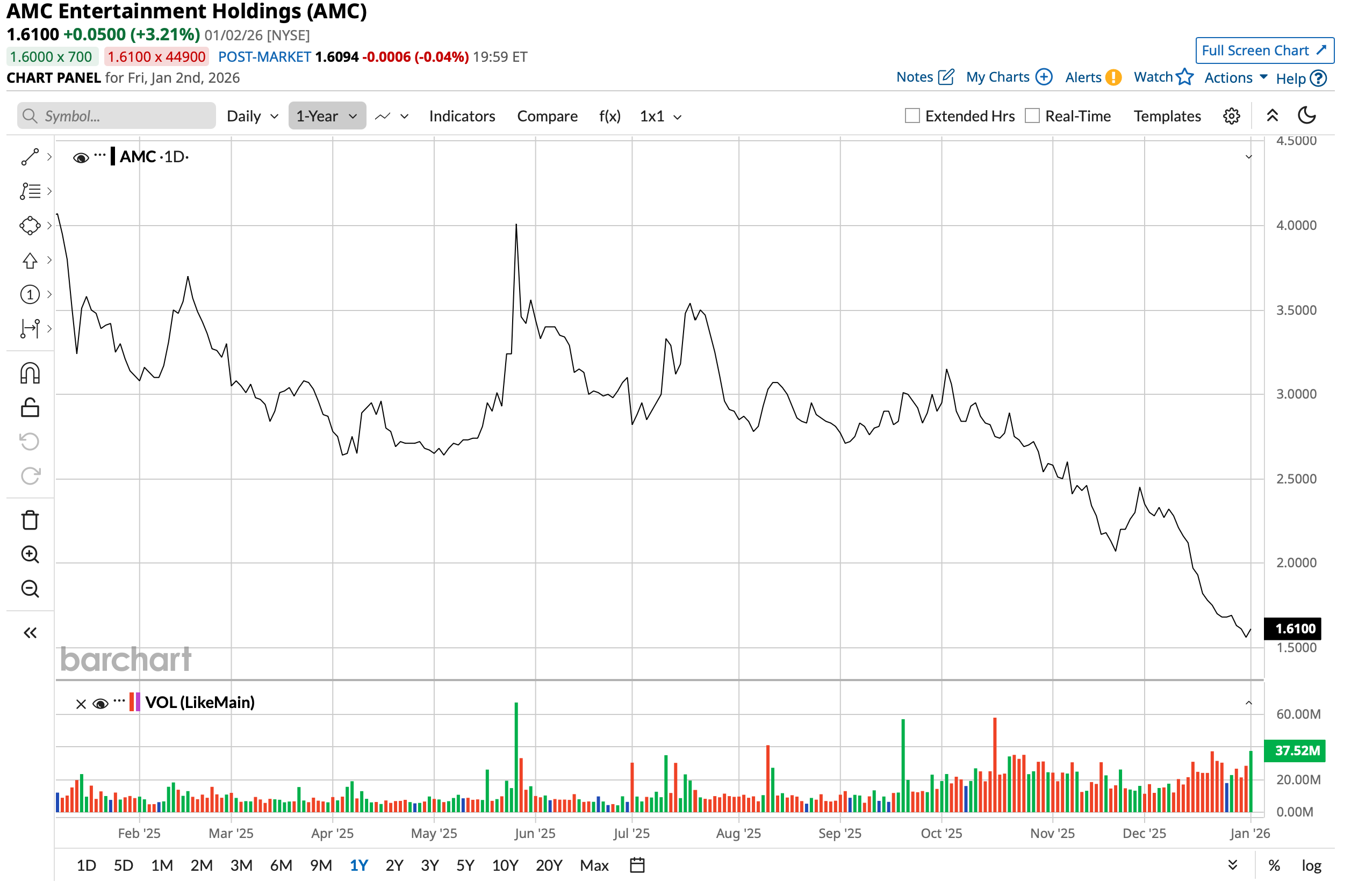
However, the wider question for AMC shareholders is whether the stock will finally be a hit in 2026, after nosediving by more than 60% over the past year. Let's find out.
About AMC
Founded in 1920, AMC is the largest movie theater company in the United States and the world by the number of screens and theaters operated. With roughly 860 theaters and about 9,600 screens across the U.S. and Europe, AMC generates revenue through box-office ticket sales, concession sales, premium formats, and other private events such as film festivals. The company's current market cap currently stands at $825.8 million.
Once one of the primary entertainment choices for the masses, AMC has endured a tough time since streaming platforms have become mainstream. Although it grabbed headlines during the pandemic era as a meme stock, which propelled its market cap to record highs of about $28 billion, reality caught up to it in the subsequent years. Amid its unprofitable nature, the company's revenues have grown at the humble CAGR of just 5.4% in the last decade.
In more recent times, the latest Q3 results saw the company's losses coming in much wider than expected at $0.58 per share. Not only was this much higher than the consensus estimate of a loss of $0.19 per share, but it also multiplied from the previous year's figure of a loss of $0.06 per share. Revenues, though surpassing estimates, declined by 3.6% from the prior year to $1.3 billion, although the overall box office collections were also down yearly in the same period.
AMC also stemmed its net cash outflow from operations to $14.9 million in Q3 2025 from $31.5 million in the previous year. Yet, the company closed the quarter with a cash balance of $365.8 million, much lower than its borrowings of just over $4 billion.
Moreover, confidence could not be derived from the key operating metrics, too, with attendance and average screen count decreasing by 10.3% and 1.9% to 58,377 and 9,354, respectively.
Can AMC Make a Comeback?
The deal with Netflix was certainly an interesting strategic move by AMC, and it did pay off, but for how long? Is this strategy repeatable? Questions remain, but what it does say about AMC's management is that they are not looking to be inert. They are actively making efforts to revive the business, despite the structural changes that the entertainment landscape has seen in the past decade.
For instance, AMC has been reviewing its theater list, dropping those that lag and investing more in the solid performers. They've rolled out larger premium screens, upgraded sound, recliner seats, and other features that make it easier to charge higher tickets and get guests to spend extra. The company has also experimented with changing prices by showtime and given special offers to Stubs members, like certain discounts, to bring in crowds and keep them loyal. Moreover, food and drink sales per customer have reached new peaks, proving they're doing better at pulling in money outside admissions.
Adding in things like concerts or special screenings, along with more high-end choices, has drawn a different kind of audience and raised concession totals. Those steps helped AMC come in above sales estimates in a few quarters this year, with good turnout for major movies and the premium setups. Seemingly, the changes are really helping the top line.
Moreover, the worldwide box office outlook for 2026 looks stronger too, with several big sequels, reboots, and spinoffs coming out, from Avengers and Spider-Man to Toy Story, Star Wars, Super Mario Bros., and other familiar titles.
Still, there are some serious issues, hovering like a supervillain. One key worry is pushing ticket prices up. The average rose from $11.43 in Q3 2024 to $12.25 in Q3 2025, and that could push customers away when money is tight.
Finally, even with sales picking up lately, AMC's debt load is still huge, limiting what it can do with cash, holding back new spending, and putting pressure on profits. Longer term, the trend toward streaming and watching at home keeps cutting into theater visits, making it unclear if crowds will ever fully return to pre-pandemic numbers.
Analyst Opinion
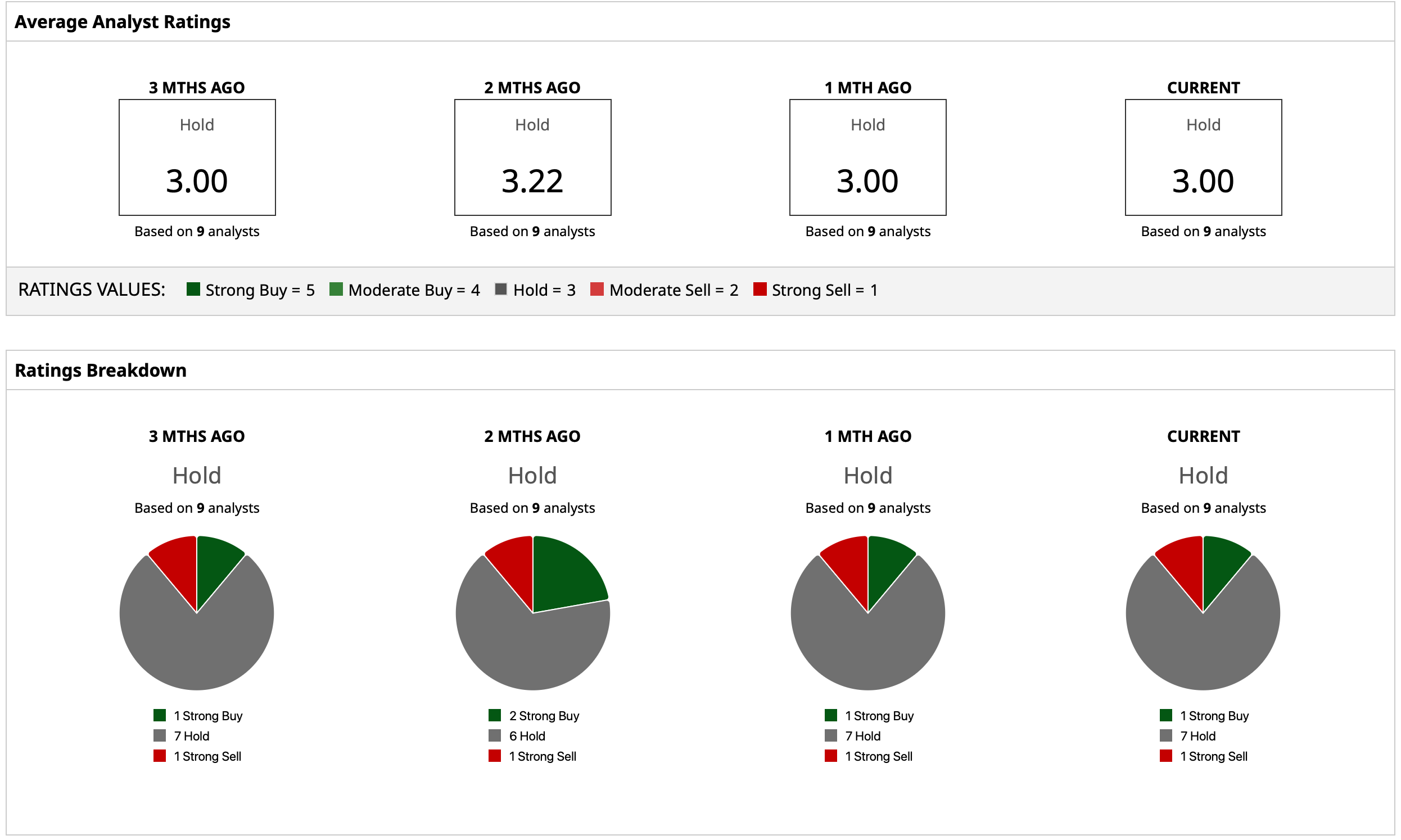
Thus, analysts have deemed the AMC stock a consensus “Hold” with a mean target price of $3.22, which denotes an upside potential of about 100% from current levels. Out of nine analysts covering the stock, one has a “Strong Buy” rating, seven have a “Hold” rating, and one has a “Strong Sell” rating.
On the date of publication, Pathikrit Bose did not have (either directly or indirectly) positions in any of the securities mentioned in this article. All information and data in this article is solely for informational purposes. For more information please view the Barchart Disclosure Policy here.
More news from Barchart
- If You Like Digital Asset Treasury Stocks, You Need to Mark Your Calendars for January 15
- Baidu Is Spinning Off Its AI Chip Unit. Should You Buy BIDU Stock First?
- Why ConocoPhillips Is One of the Top Oil Stocks to Buy After Venezuela
- Chevron, ConocoPhillips, and Gold: Your Critical Watchlist After the U.S.–Venezuela Oil Market Shock