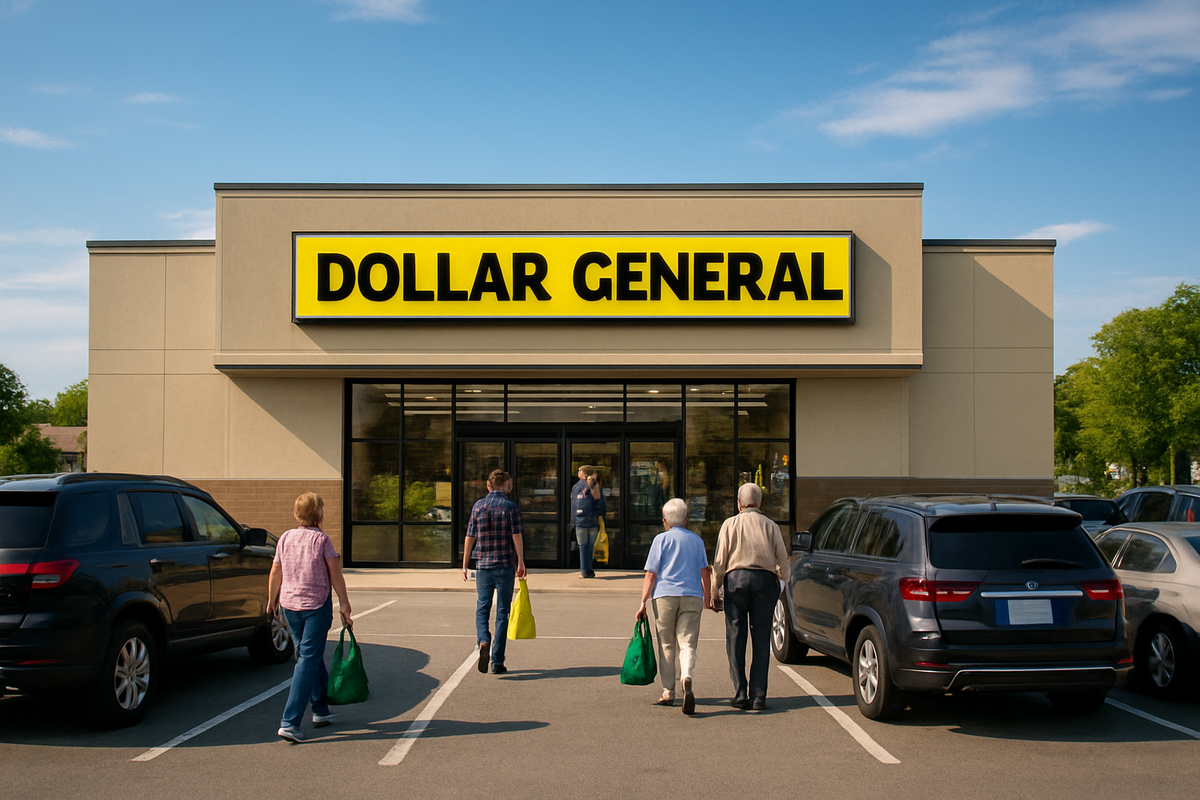
As of January 12, 2026, the retail sector is witnessing a dramatic divergence in performance, with value-oriented giants leading the charge. Dollar General (NYSE: DG) has emerged as a primary beneficiary of this shift, with its stock price staging a remarkable recovery over the past year. After hitting multi-year lows in late 2024, shares of the Goodlettsville-based retailer have surged nearly 75%, trading in the $150 range as the company reaps the rewards of a disciplined operational turnaround and a macroeconomic environment that favors essential, low-cost goods.
The implications of this surge extend beyond a simple stock rally; it signals a fundamental shift in American consumer behavior. With persistent inflation and record-high household debt, shoppers across all income brackets are "trading down" to discount retailers for their daily needs. For Dollar General, this has translated into robust foot traffic and a significant expansion in market share, particularly as higher-income households—those earning over $100,000 annually—increasingly identify as active value seekers.
A "Back to Basics" Triumph: The Path to Recovery
The journey to Dollar General’s current dominance was not without its hurdles. In August 2024, the company faced a reckoning when its stock plummeted 30% in a single day following a dismal second-quarter report and lowered guidance. The crisis prompted the return of veteran CEO Todd Vasos, who immediately implemented a "Back to Basics" strategy designed to fix systemic operational issues. This strategy focused on SKU rationalization, inventory management, and a massive reinvestment in store labor. By mid-2025, the company had successfully removed nearly 1,000 underperforming items from its shelves, allowing it to focus on high-velocity essentials like milk, bread, and household cleaners.
A critical component of this turnaround was the allocation of $150 million toward increasing store staffing levels. This investment directly addressed long-standing complaints regarding "out-of-stock" items and poor customer service. Furthermore, the company took aggressive steps to mitigate "shrink"—a retail term for theft and lost inventory—by removing self-checkout lanes in high-theft areas and reducing cluttered off-shelf displays. These measures paid off handsomely; by the Q3 2025 earnings report in December, Dollar General reported a 107-basis-point increase in gross margin and net sales of $10.6 billion, soundly beating analyst expectations.
The market reaction has been overwhelmingly positive. Investors who had once written off the discount giant as a victim of its own rapid expansion now view it as a lean, efficient machine. The company’s "Project Elevate" and "Project Renovate" initiatives have modernized approximately 20% of its store base annually, driving 3% to 5% comparable sales lifts in mature locations. This operational health, combined with a 2.5% rise in same-store sales, has solidified Dollar General’s position as a leader in the current retail landscape.
The Great Divide: Winners and Losers in the Trade-Down Economy
The success of Dollar General (NYSE: DG) is mirrored by its peers in the value space but stands in stark contrast to the struggles of mid-tier retailers. Walmart (NYSE: WMT) has also hit all-time highs in early 2026, bolstered by its 60% grocery mix and a newly profitable e-commerce division. Similarly, Dollar Tree (NASDAQ: DLTR) saw its stock rally over 60% in 2025 after divesting the struggling Family Dollar brand and successfully transitioning to a multi-price model that allows for items up to $7.00, significantly expanding its margins.
Conversely, the "losers" in this environment are those heavily reliant on discretionary spending. Target (NYSE: TGT) has faced a difficult 18 months, with its stock down nearly 30% year-over-year as of January 2026. Target’s heavy concentration in apparel, home decor, and electronics has made it vulnerable as consumers prioritize "needs" over "wants." While Walmart and Dollar General captured the grocery and essential-goods traffic, Target struggled to maintain its "cheap chic" appeal in a market where "cheap" is the only priority for many.
Other mid-tier retailers like Kohl’s (NYSE: KSS) and Macy’s (NYSE: M) have also suffered. Kohl’s reported a 5.1% decrease in net sales in late 2025, as its middle-income customer base migrated to off-price competitors like Ross Stores (NASDAQ: ROST) and TJ Maxx (NYSE: TJX). These off-price retailers have become the new destination for "aspirational" shoppers who still want brand-name apparel but refuse to pay department store prices. The result is a "K-shaped" retail recovery where the bottom and top ends of the value spectrum thrive while the middle is hollowing out.
Macroeconomic Forces and the New Consumer Reality
The wider significance of Dollar General’s resurgence lies in its alignment with broader industry trends. The U.S. economy in early 2026 is characterized by a "spending hangover." Following a period where consumers "front-loaded" purchases in late 2025 to beat anticipated 2026 tariffs, spending has pulled back sharply. This has created a fertile ground for value retailers. Furthermore, the rise of "Buy Now, Pay Later" (BNPL) transactions, which hit a record $20.2 billion during the 2025 holiday season, suggests that even the "value seekers" are stretching their budgets to the limit.
Historically, Dollar General has performed well during economic downturns, but the current trend is unique because of the "high-income trade-in." Data from 2025 suggests that nearly 23% of consumers earning over $200,000 now identify as active value shoppers. This is not a temporary shift; it is a structural change in how Americans shop. Dollar General’s expansion of fresh produce to over 5,500 stores has allowed it to capture this demographic, turning a rural discount shop into a viable daily grocery alternative.
Regulatory and policy implications also loom large. With 2026 bringing new discussions on trade tariffs and labor laws, the cost of goods sold is expected to rise. However, Dollar General’s recent focus on private-label brands gives it a strategic advantage. By controlling more of its supply chain and offering cheaper alternatives to national brands, the company can maintain its margins even as inflationary pressures persist. This mirrors the success seen by European discount giants like Aldi and Lidl, who have long dominated their markets through similar strategies.
Looking Ahead: Sustainability and Strategic Pivots
As we move deeper into 2026, the question for Dollar General is whether this growth is sustainable. The company has announced an ambitious plan to open 450 new U.S. stores and conduct 4,250 remodels this year. While this expansion is aggressive, it is more calculated than the rapid-fire growth of the early 2020s. The focus remains on rural and underserved urban areas where competition is thin and the demand for convenience is high.
Short-term challenges include the potential for continued margin pressure from rising labor costs and the ongoing battle against retail shrink. However, analysts are bullish, with 2026 EPS projections reaching approximately $7.15. The company’s strategic pivot toward a "pure-play" essential goods model, combined with its digital expansion—including a revamped app and loyalty program—positions it to maintain its momentum. The goal is to move beyond being a "stop-gap" retailer and become a permanent fixture in the consumer’s weekly shopping routine.
Conclusion: A Resilient Future for Value Retail
The story of Dollar General in 2026 is one of resilience and strategic clarity. By returning to its core strengths—operational efficiency, labor investment, and a focus on essentials—the company has not only saved itself from a downward spiral but has also positioned itself at the center of a new retail reality. The stock’s 75% gain is a testament to the market’s confidence in Todd Vasos’s leadership and the enduring power of the value proposition.
For investors, the coming months will be about watching "same-store sales" and "margin expansion" as the primary indicators of health. As the "K-shaped" economy continues to define the winners and losers of the retail world, Dollar General stands as a beacon for those looking for stability in an uncertain market. The "Value Renaissance" is here, and it is reshaping the American landscape one dollar at a time.
This content is intended for informational purposes only and is not financial advice.