Computer processor maker Intel (NASDAQ: INTC) announced better-than-expected revenue in Q3 2026, with revenue up 20.9% year on year to $16.51 billion. On the other hand, next quarter’s revenue guidance of $15.5 billion was less impressive, coming in 8.9% below analysts’ consensus estimates. Its non-GAAP profit of $0.52 per share was 30.6% above analysts’ consensus estimates.
For more on Intel, read our free full research report.
Intel (INTC) Q3 2026 highlights:
- Revenue $16.51 billion vs S&P analysts’ consensus estimates of $16.42 billion (20.9% year-on-year growth, 0.6% beat)
- Adjusted EPS $0.52 vs S&P analysts’ consensus estimates of $0.40 (30.6% beat)
- Adjusted operating income $3.23 billion vs analysts’ consensus estimates of $2.65 billion (19.6% margin, 22% beat)
- Revenue guidance $15.5 billion at the midpoint for Q4 2026, below analysts’ consensus estimates of $17.02 billion
- Adjusted EPS guidance $0.25 at the midpoint for Q4 2026, below analysts’ consensus estimates of $0.44
- Operating margin 15.3%, up from 5% in the same quarter last year
- Free cash flow margin 9.9%, up from 0.9% in the same quarter last year
- Inventory days outstanding 126, up from 118 in the previous quarter
- Market capitalization $502 billion
“Our Q3 results demonstrate improving execution, meaningful progress expanding supply and continued advancement of our process technology,” said Lip-Bu Tan, Intel CEO. “Despite near-term headwinds across the PC industry, demand for our CPUs remains robust, reinforcing our confidence in the long-term growth opportunities for our business. Our immediate priority is to unlock additional supply to meet extraordinary demand for our Xeon family, while strengthening our product portfolio and roadmap. We are moving with urgency and focus to capitalize on these opportunities to deliver sustainable growth and long-term shareholder value.”
Revenue growth
Reviewing a company’s long-term revenue performance reveals insights into its quality. Any business can have short-term success, but a top-tier one grows for years. Intel’s demand was weak over the last five years as its revenue fell at a 5% annual rate. That outcome points to poor business quality. Semiconductors are a cyclical industry, and long-term investors should be prepared for periods of high growth followed by periods of revenue contractions.
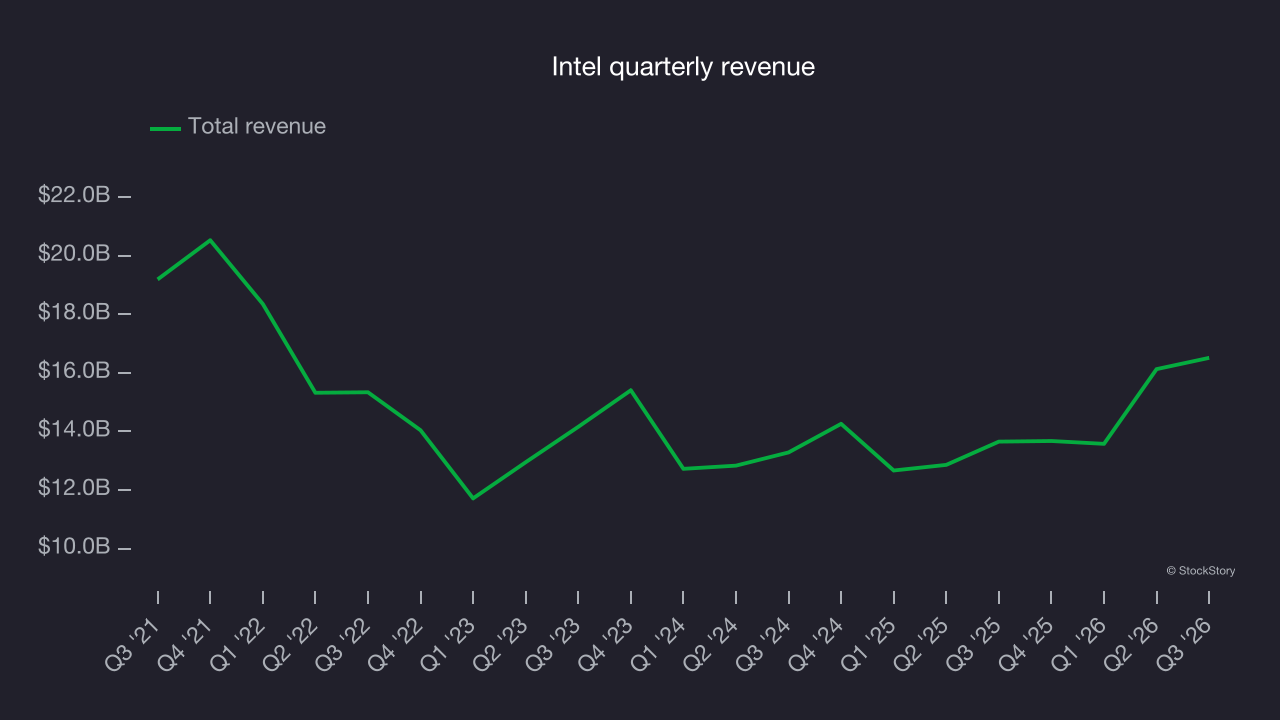
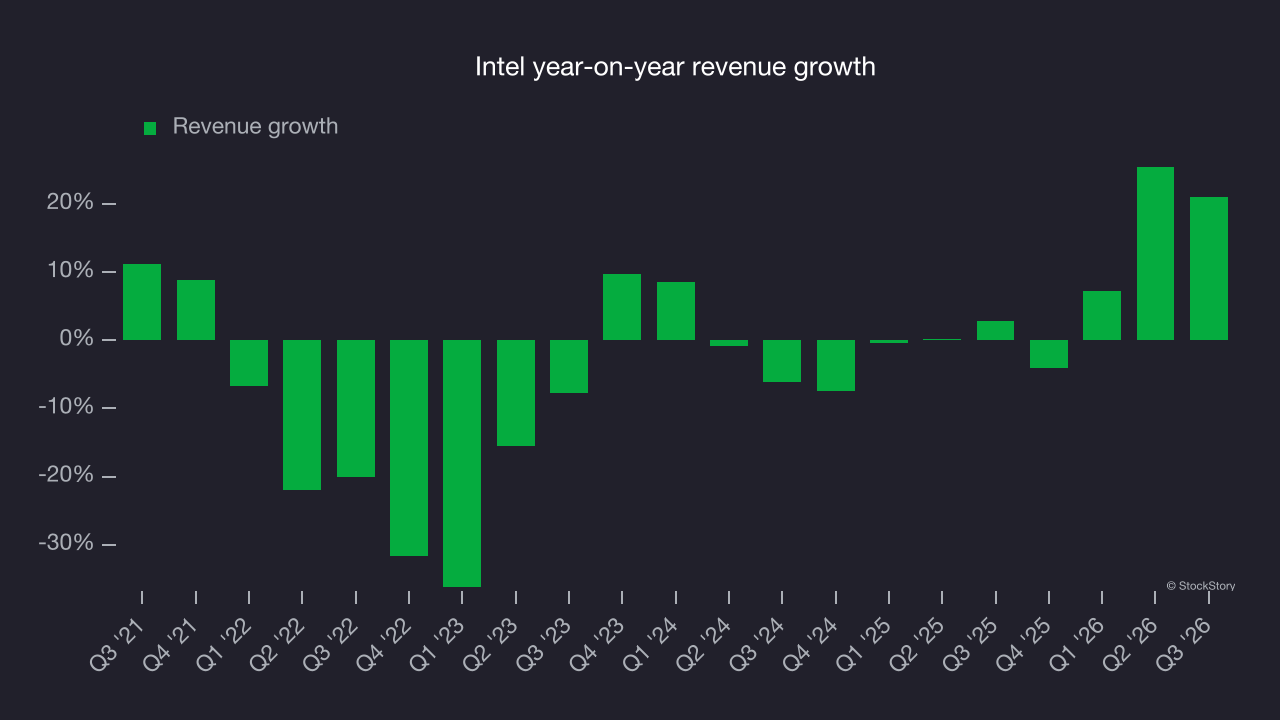
This quarter, Intel reported strong year-on-year revenue growth of 20.9%, and its $16.51 billion of revenue topped Wall Street’s consensus estimates by 0.6%. Beyond the beat, the company appears to be in the early days of an upcycle, as this was the third consecutive quarter of growth. A typical upcycle tends to last 8-10 quarters. Company management is currently guiding for a 13.4% year-on-year increase in revenue next quarter.
Looking further ahead, sell-side analysts expect revenue to grow 17.2% over the next 12 months, according to S&P. Although this projection implies its newer products and services will fuel better top-line performance, it is still below the sector average.
Product demand & outstanding inventory
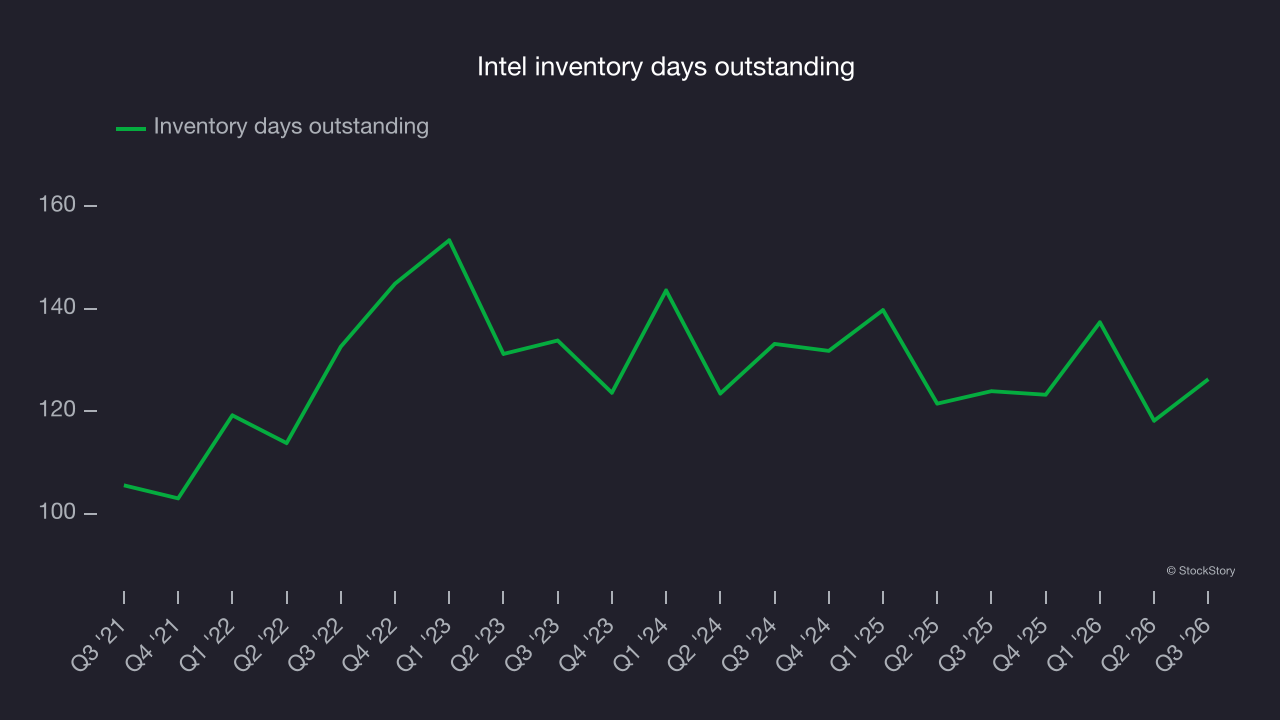
Days Inventory Outstanding (DIO) is an important metric for chipmakers, as it reflects a business’s capital intensity and the cyclical nature of semiconductor supply and demand. In a tight supply environment, inventories tend to be stable, allowing chipmakers to exert pricing power. Steadily increasing DIO can be a warning sign that demand is weak, and if inventories continue to rise, the company may have to downsize production.
This quarter, Intel’s DIO came in at 126, which is 3 days below its five-year average. These numbers show that despite the recent increase, there’s no indication of an excessive inventory buildup.
Key takeaways from Intel’s Q3 results
It was good to see Intel beat analysts’ EPS expectations this quarter. We were also excited its operating income outperformed Wall Street’s estimates by a wide margin. On the other hand, its revenue and EPS guidance for next quarter both missed meaningfully and its inventory levels increased. Overall, this print was mediocre. Investors were likely hoping for more, and shares traded down 17.6% to $76.09 immediately following the results.
Is Intel an attractive investment opportunity right now? The latest quarter is only one part of assessing longer-term business quality. Quality, combined with valuation, can help determine if the stock is a buy. Read our full research report here (it’s free).