
Prudential has followed the market’s trajectory closely. The stock is down 5.2% to $97.86 per share over the past six months while the S&P 500 has lost 2.3%. This was partly driven by its softer quarterly results and might have investors contemplating their next move.
Is now the time to buy Prudential, or should you be careful about including it in your portfolio? See what our analysts have to say in our full research report, it’s free.
Why Do We Think Prudential Will Underperform?
Even with the cheaper entry price, we're cautious about Prudential. Here are three reasons why PRU doesn't excite us and a stock we'd rather own.
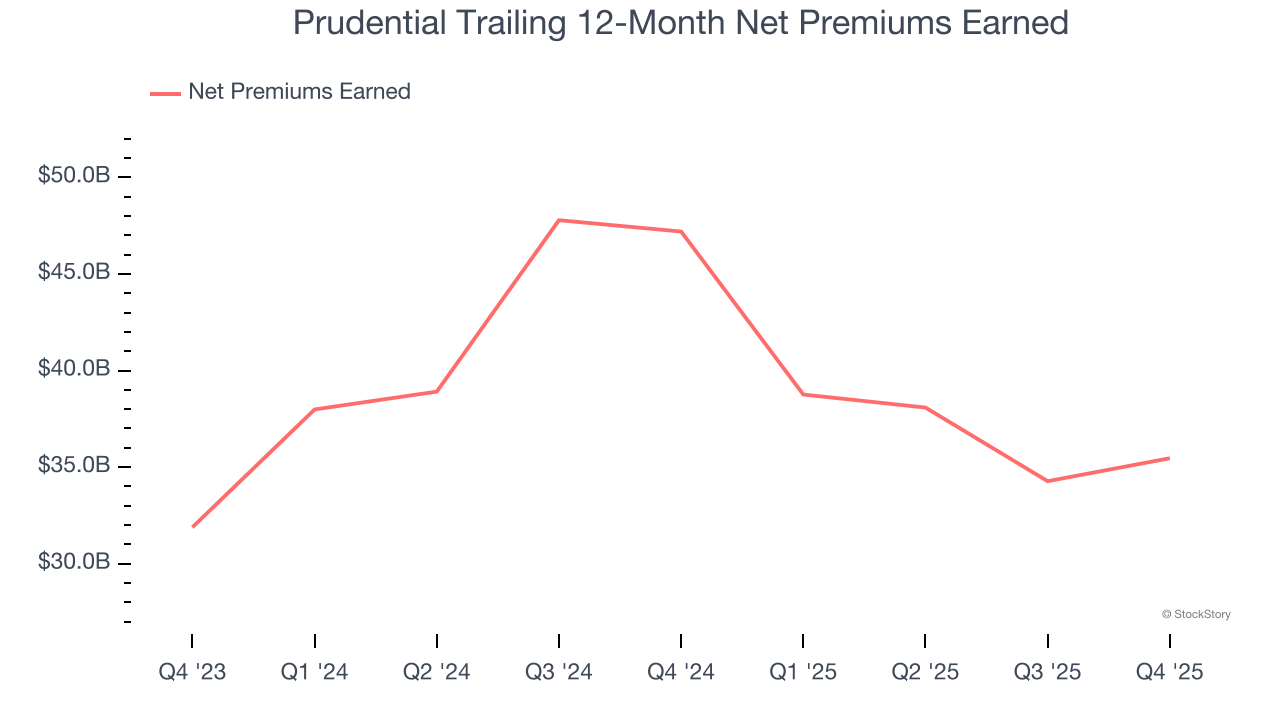
1. Net Premiums Earned Hit a Plateau
When insurers sell policies, they protect themselves from extremely large losses or an outsized accumulation of losses with reinsurance (insurance for insurance companies). Net premiums earned are therefore gross premiums less what’s ceded to reinsurers as a risk mitigation and transfer strategy.
Prudential’s net premiums earned was flat over the last five years, much worse than the broader insurance industry. This shows that policy underwriting underperformed its other business lines.
2. Substandard BVPS Growth Indicates Limited Asset Expansion
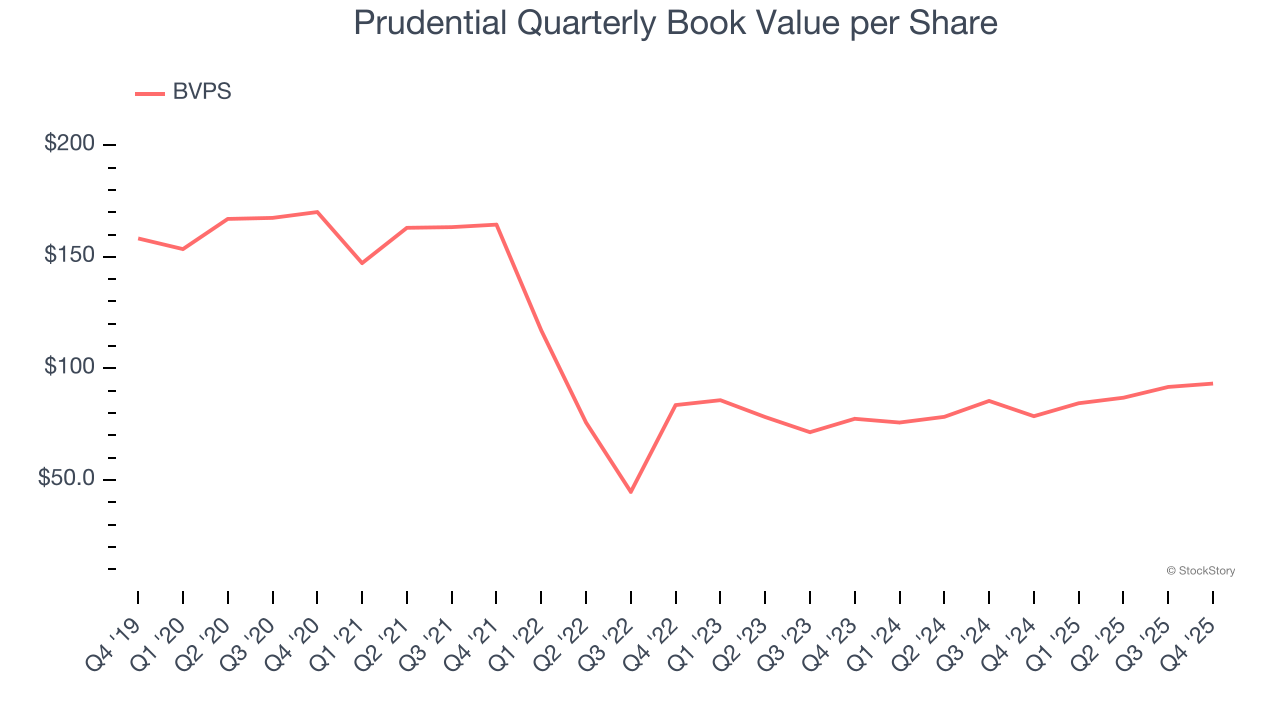
For insurers, book value per share (BVPS) is a vital measure of financial health, representing the total assets available to shareholders after accounting for all liabilities, including policyholder reserves and claims obligations.
Disappointingly for investors, Prudential’s BVPS grew at a tepid 9.7% annual clip over the last two years.
3. High Interest Expenses Increase Risk
The debt-to-equity ratio is a widely used measure to assess a company's balance sheet health. A higher ratio means that a business aggressively financed its growth with debt. This can result in higher earnings (if the borrowed funds are invested profitably) but also increases risk.
If debt levels are too high, there could be difficulties in meeting obligations, especially during economic downturns or periods of rising interest rates if the debt has variable-rate payments.
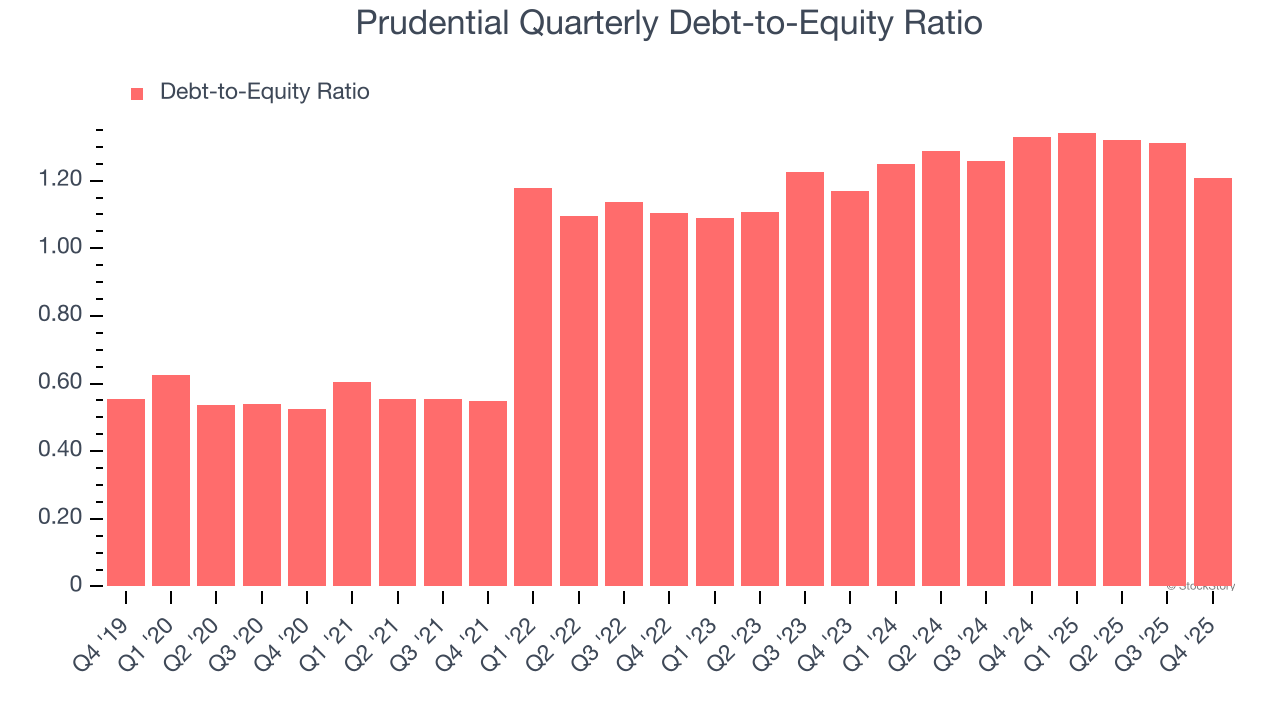
Prudential currently has $39.56 billion of debt and $32.79 billion of shareholder's equity on its balance sheet, and over the past four quarters, has averaged a debt-to-equity ratio of 1.3×. We think this is dangerous - for an insurance business, anything above 1.0× raises red flags.
Final Judgment
Prudential falls short of our quality standards. After the recent drawdown, the stock trades at 1× forward P/B (or $97.86 per share). This valuation is reasonable, but the company’s shaky fundamentals present too much downside risk. There are better investments elsewhere. Let us point you toward a top digital advertising platform riding the creator economy.
Stocks We Would Buy Instead of Prudential
ALSO WORTH WATCHING: Top 5 Momentum Stocks. The best time to own a great stock is when the market is finally noticing it. These aren't just high-quality businesses. Something is happening with them right now. Elite fundamentals meeting near-term momentum — both boxes checked at the same time.
Find out which stocks our AI platform is flagging this week. See this week's Strong Momentum stocks — FREE. Get Our Strong Momentum Stocks for Free HERE.
Stocks that have made our list include now familiar names such as Nvidia (+1,326% between June 2020 and June 2025) as well as under-the-radar businesses like the once-micro-cap company Tecnoglass (+1,754% five-year return). Find your next big winner with StockStory today.