The past six months have been a windfall for F5’s shareholders. The company’s stock price has jumped 59.6%, setting a new 52-week high of $430.57 per share. This was partly thanks to its solid quarterly results, and the run-up might have investors contemplating their next move.
Is now the time to buy F5, or should you be careful about including it in your portfolio? See what our analysts have to say in our full research report, it’s free.
Why Is F5 Not Exciting?
We’re happy investors have made money, but we’re cautious about F5. Here are three reasons why there are better opportunities than FFIV, plus one stock we’d rather own.
1. Weak ARR Points to Soft Demand
While reported revenue for a software company can include low-margin items like implementation fees, annual recurring revenue (ARR) is a sum of the next 12 months of contracted revenue purely from software subscriptions, or the high-margin, predictable revenue streams that make SaaS businesses so valuable.
F5’s ARR came in at $195 million in Q1, and over the last four quarters, its year-on-year growth averaged 3.3%. This performance was underwhelming and suggests that increasing competition is causing challenges in securing longer-term commitments. 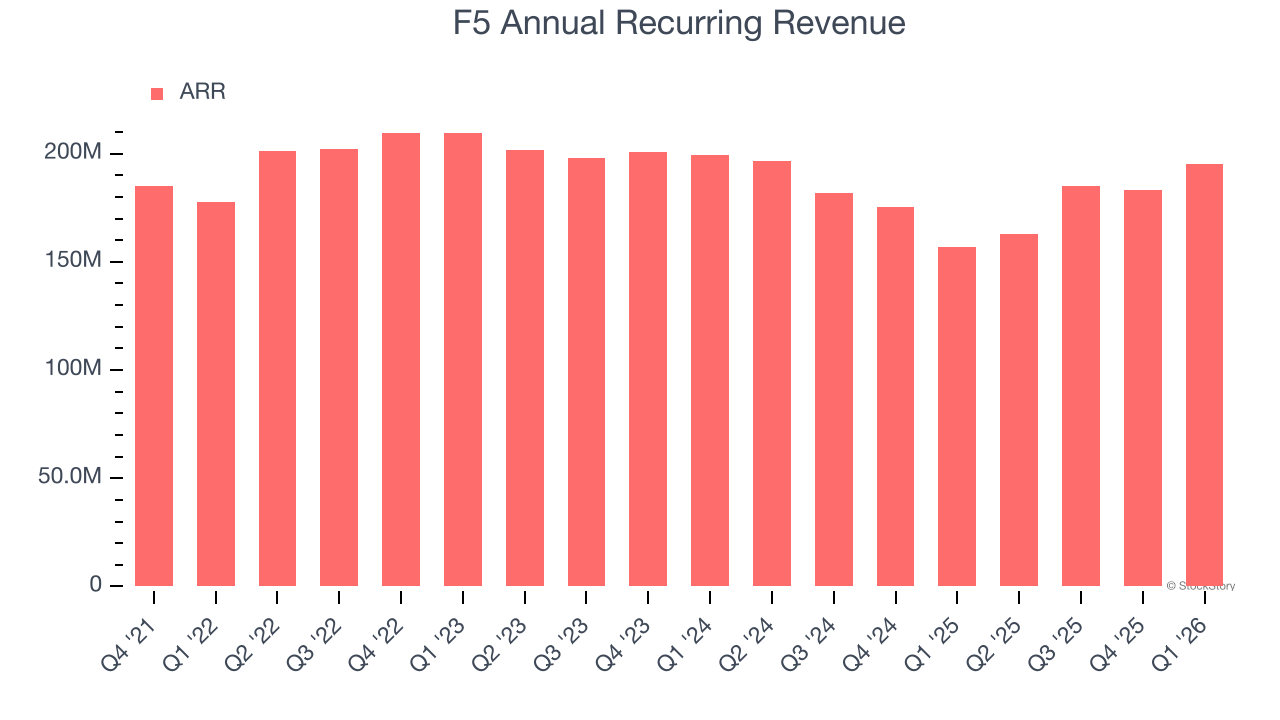
2. Projected Revenue Growth Is Slim
Forecasted revenues by Wall Street analysts signal a company’s potential. Predictions may not always be accurate, but accelerating growth typically boosts valuation multiples and stock prices while slowing growth does the opposite.
Over the next 12 months, sell-side analysts expect F5’s revenue to rise by 5.8%, a slight deceleration versus its 5.4% annualized growth for the past five years. This projection doesn’t excite us and suggests its products and services will see some demand headwinds.
3. Operating Margin in Limbo
While many software businesses point investors to their adjusted profits, which exclude stock-based compensation (SBC), we prefer GAAP operating margin because SBC is a legitimate expense used to attract and retain talent. This is one of the best measures of profitability because it shows how much money a company takes home after developing, marketing, and selling its products.
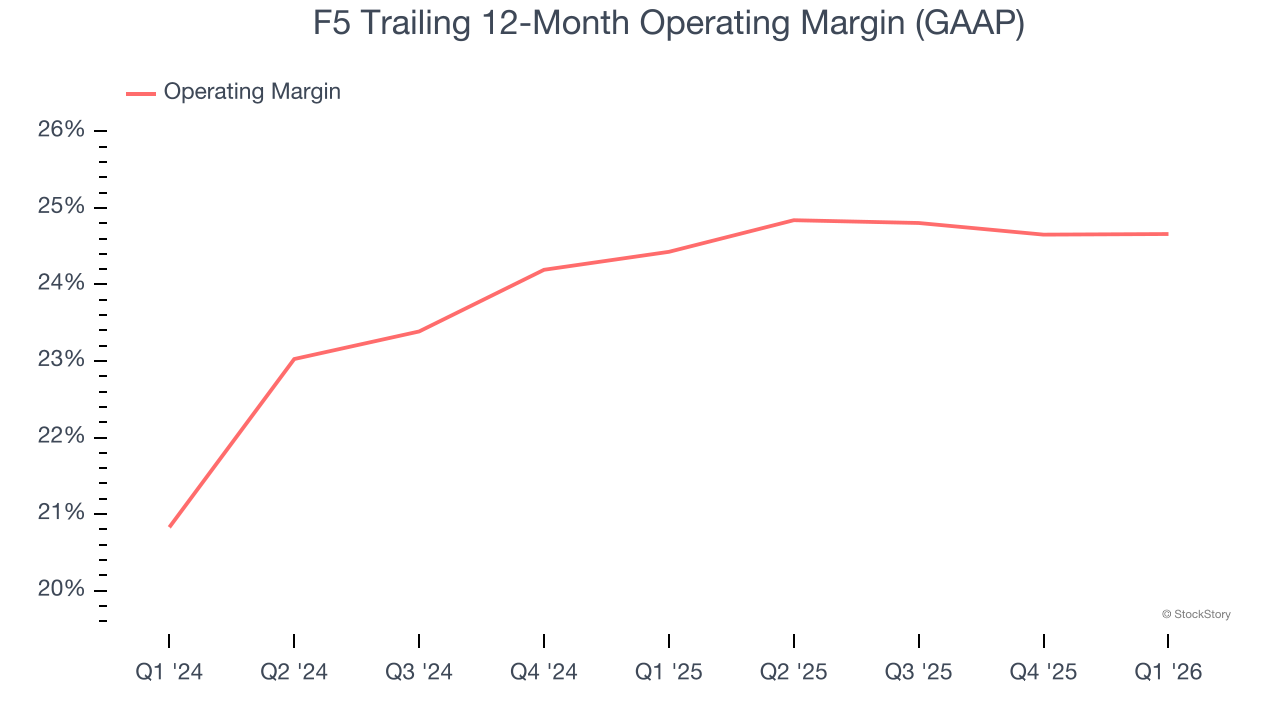
Looking at the trend in its profitability, F5’s operating margin might have fluctuated slightly but has generally stayed the same over the last two years. This raises questions about the company’s expense base because its revenue growth should have given it leverage on its fixed costs, resulting in better economies of scale and profitability. Its operating margin for the trailing 12 months was 24.7%.
Final Judgment
F5 isn’t a terrible business, but it doesn’t pass our quality test. Following the recent rally, the stock trades at 7.2× forward price-to-sales (or $430.57 per share). Beauty is in the eye of the beholder, but our analysis shows the upside isn’t great compared to the potential downside. We’re fairly confident there are better stocks to buy right now. We’d suggest looking at the Amazon and PayPal of Latin America.
High-Quality Stocks for All Market Conditions
ALSO WORTH WATCHING: Top 5 Momentum Stocks. The best time to own a great stock is when the market is finally noticing it. These aren’t just high-quality businesses. Something is happening with them right now. Elite fundamentals meet near-term momentum — both boxes checked at the same time.
Find out which stocks our AI platform is flagging this week. See this week’s Strong Momentum stocks — FREE. Get Our Strong Momentum Stocks for Free HERE.
Stocks that have made our list include now familiar names such as Nvidia (+1,326% between June 2020 and June 2025) as well as under-the-radar businesses like the once-micro-cap company Kadant (+351% five-year return). Find your next big winner with StockStory today.