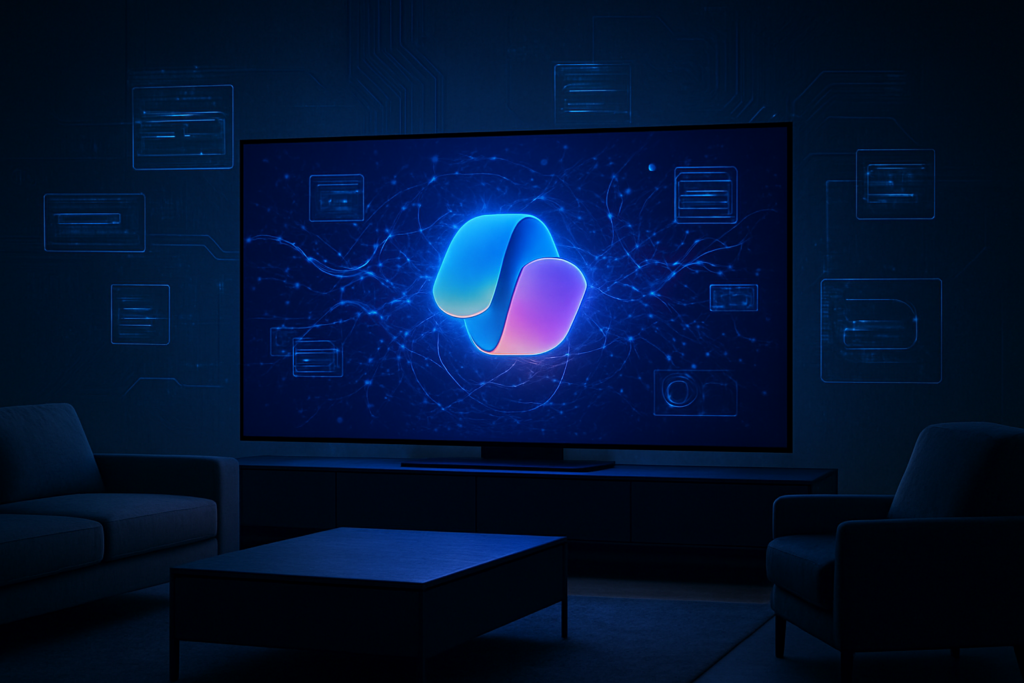
The intersection of artificial intelligence and consumer hardware has reached a new point of friction this December. LG Electronics (KRX: 066570) is currently navigating a wave of consumer indignation following a mandatory firmware update that forcibly installed Microsoft (NASDAQ: MSFT) Copilot onto millions of Smart TVs. What was intended as a flagship demonstration of "AI-driven personalization" has instead sparked a heated debate over device ownership, digital privacy, and the growing phenomenon of "AI fatigue."
The controversy, which reached a fever pitch in the final weeks of 2025, centers on the unremovable nature of the new AI assistant. Unlike third-party applications that users can typically opt into or delete, the Copilot integration was pushed as a system-level component within LG’s webOS. For many long-time LG customers, the appearance of a non-deletable "AI partner" on their home screens represents a breach of trust, marking a significant moment in the ongoing struggle between tech giants’ AI ambitions and consumer autonomy.
Technical Implementation and the "Mandatory" Update
The technical implementation of the update, designated as webOS version 33.22.65, reveals a sophisticated attempt to merge generative AI with traditional television interfaces. Unlike previous iterations of voice search, which relied on rigid keyword matching, the Copilot integration utilizes Microsoft’s latest Large Language Models (LLMs) to facilitate natural language processing. This allows users to issue complex, context-aware queries such as "find me a psychological thriller that is shorter than two hours and available on my existing subscriptions."
However, the "mandatory" nature of the update is what has drawn the most technical scrutiny. While marketed as a native application, research into the firmware reveals that the Copilot tile is actually a deeply integrated web shortcut linked to the TV's core system architecture. Because it is categorized as a system service rather than a standalone app, the standard "Uninstall" and "Delete" options were initially disabled. This technical choice by LG was intended to ensure the AI was always available for "contextual assistance," but it effectively turned the TV's primary interface into a permanent billboard for Microsoft’s AI services.
The update was distributed through the "webOS Re:New" program, a strategic initiative by LG to provide five years of OS updates to older hardware. While this program was originally praised for extending the lifespan of premium hardware, it has now become the vehicle for what critics call "forced AI-washing." Affected models range from the latest 2025 OLED evo G5 and C5 series down to the 2022 G2 and C2 models, meaning even users who purchased their TVs before the current generative AI boom are now finding their interfaces fundamentally altered.
Initial reactions from the AI research community have been mixed. While some experts praise the seamless integration of LLMs into consumer electronics as a necessary step toward the "Agentic OS" future, others warn of the performance overhead. On older 2022 and 2023 models, early reports suggest that the background processes required to keep the Copilot shortcut "hot" and ready for interaction have led to noticeable UI lag, highlighting the challenges of retrofitting resource-intensive AI features onto aging hardware.
Industry Impact and Strategic Shifts
This development marks a decisive victory for Microsoft (NASDAQ: MSFT) in its quest to embed Copilot into every facet of the digital experience. By securing a mandatory spot on LG’s massive global install base, Microsoft has effectively bypassed the "app store" hurdle, gaining a direct line to millions of living rooms. This move is a central pillar of Microsoft’s broader strategy to move beyond the "AI PC" and toward an "AI Everywhere" ecosystem, where Copilot serves as the connective tissue between devices.
For LG Electronics (KRX: 066570), the partnership is a strategic gamble to differentiate its hardware in a commoditized market. By aligning with Microsoft, LG is attempting to outpace competitors like Samsung (KRX: 005930), which has been developing its own proprietary AI features under the Galaxy AI and Tizen brands. However, the backlash suggests that LG may have underestimated the value users place on a "clean" TV experience. The move also signals a potential cooling of relationships between TV manufacturers and other AI players like Google (NASDAQ: GOOGL) and Amazon (NASDAQ: AMZN), as LG moves to prioritize Microsoft’s ecosystem over Google Assistant or Alexa.
The competitive implications for the streaming industry are also significant. If Copilot becomes the primary gatekeeper for content discovery on LG TVs, Microsoft gains immense power over which streaming services are recommended to users. This creates a new "AI SEO" landscape where platforms like Netflix (NASDAQ: NFLX) or Disney+ (NYSE: DIS) may eventually need to optimize their metadata specifically for Microsoft’s LLMs to ensure they remain visible in the Copilot-driven search results.
Furthermore, this incident highlights a shift in the business model of hardware manufacturers. As hardware margins slim, companies like LG are increasingly looking toward "platformization"—turning the TV into a service-oriented portal that generates recurring revenue through data and partnerships. The mandatory nature of the Copilot update is a clear indication that the software experience is no longer just a feature of the hardware, but a product in its own right, often prioritized over the preferences of the individual purchaser.
Wider Significance and Privacy Concerns
The wider significance of the LG-Copilot controversy lies in what it reveals about the current state of the AI landscape: we have entered the era of "forced adoption." Much like the 2014 incident where Apple (NASDAQ: AAPL) famously pushed a U2 album into every user's iTunes library, LG's mandatory update represents a top-down approach to technology deployment that ignores the growing "AI fatigue" among the general public. As AI becomes a buzzword used to justify every software change, consumers are becoming increasingly wary of "features" that feel more like intrusions.
Privacy remains the most significant concern. The update reportedly toggled certain data-tracking features, such as "Live Plus" and Automatic Content Recognition (ACR), to "ON" by default for many users. ACR technology monitors what is on the screen in real-time to provide targeted advertisements and inform AI recommendations. When combined with an AI assistant that is always listening for voice commands, the potential for granular data collection is unprecedented. Critics argue that by making the AI unremovable, LG is essentially forcing a surveillance-capable tool into the private spaces of its customers' homes.
This event also serves as a milestone in the erosion of device ownership. The transition from "owning a product" to "licensing a service" is nearly complete in the Smart TV market. When a manufacturer can fundamentally change the user interface and add non-deletable third-party software years after the point of sale, the consumer's control over their own hardware becomes an illusion. This mirrors broader trends in the tech industry where software updates are used to "gate" features or introduce new advertising streams, often under the guise of "security" or "innovation."
Comparatively, this breakthrough in AI integration is less about a technical "Sputnik moment" and more about a "distribution milestone." While the AI itself is impressive, the controversy stems from the delivery mechanism. It serves as a cautionary tale for other tech giants: the "Agentic OS" of the future will only be successful if users feel they are in the driver's seat. If AI is viewed as an uninvited guest rather than a helpful assistant, the backlash could lead to a resurgence in "dumb" TVs or a demand for more privacy-focused, open-source alternatives.
Future Developments and Regulatory Horizons
Looking ahead, the fallout from this controversy is likely to trigger a shift in how AI is marketed to the public. In the near term, LG has already begun a tactical retreat, promising a follow-up patch that will allow users to at least "hide" or "delete" the Copilot icon from their main ribbons. However, the underlying services and data-sharing agreements are expected to remain in place. We can expect future updates from other manufacturers to be more subtle, perhaps introducing AI features as "opt-in" trials that eventually become the default.
The next frontier for AI in the living room will likely involve "Ambient Intelligence," where the TV uses sensors to detect who is in the room and adjusts the interface accordingly. While this offers incredible convenience—such as automatically pulling up a child's profile when they sit down—it will undoubtedly face the same privacy hurdles as the current Copilot update. Experts predict that the next two years will see a "regulatory reckoning" for Smart TV data practices, as governments in the EU and North America begin to look more closely at how AI assistants handle domestic data.
Challenges remain in the hardware-software balance. As AI models grow more complex, the gap between the capabilities of a 2025 TV and a 2022 TV will widen. This could lead to a fragmented ecosystem where "legacy" users receive "lite" versions of AI assistants that feel more like advertisements than tools. To address this, manufacturers may need to shift toward cloud-based AI processing, which solves the local hardware limitation but introduces further concerns regarding latency and continuous data streaming to the cloud.
Conclusion: A Turning Point for Consumer AI
The LG-Microsoft Copilot controversy of late 2025 serves as a definitive case study in the growing pains of the AI era. It highlights the tension between the industry's rush to monetize generative AI and the consumer's desire for a predictable, private, and controllable home environment. The key takeaway is that while AI can significantly enhance the user experience, forcing it upon a captive audience without a clear exit path is a recipe for brand erosion.
In the history of AI, this moment will likely be remembered not for the brilliance of the code, but for the pushback it generated. It marks the point where "AI everywhere" met the reality of "not in my living room." As we move into 2026, the industry will be watching closely to see if LG’s competitors learn from this misstep or if they double down on mandatory integrations in a race to claim digital real estate.
For now, the situation remains fluid. Users should watch for the promised LG firmware patches in the coming weeks and pay close attention to the "Privacy and Terms" pop-ups that often accompany these updates. The battle for the living room has entered a new phase, and the remote control is no longer the only thing being contested—the data behind the screen is the real prize.
This content is intended for informational purposes only and represents analysis of current AI developments.
TokenRing AI delivers enterprise-grade solutions for multi-agent AI workflow orchestration, AI-powered development tools, and seamless remote collaboration platforms.
For more information, visit https://www.tokenring.ai/.