CORPUS CHRISTI, TX / ACCESS Newswire / November 24, 2026 / As businesses accelerate cloud adoption, one of their hardest technology problems remains deceptively simple: How do you move critical systems while minimizing disruption to the business that depends on them?
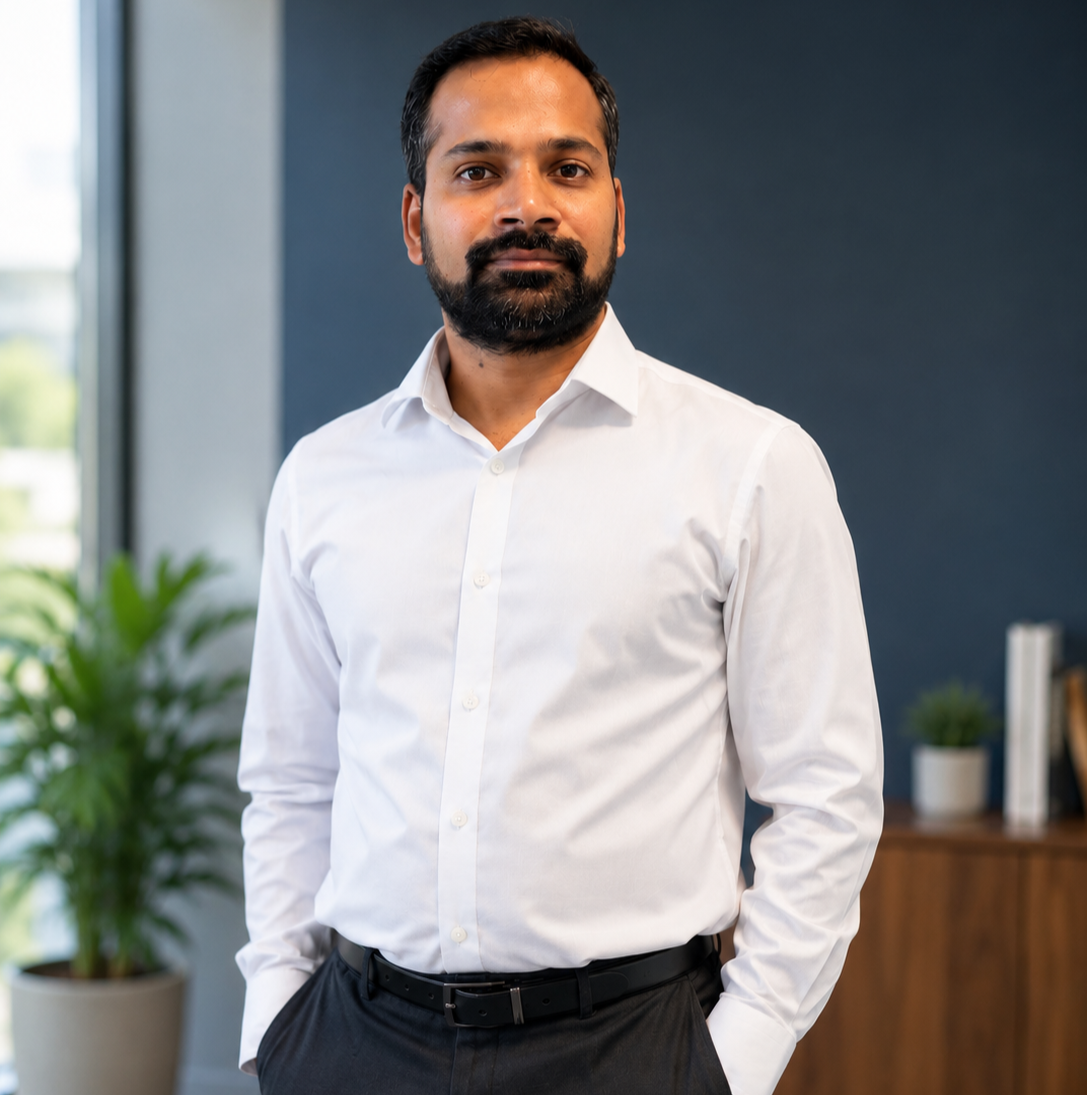
For Kiran Reddy Sudini, a cloud and database engineering leader with more than 12 years of experience, the answer requires much more than selecting a migration tool.
It requires an architecture built around reliability, automation, security, backup and recovery, observability, and operational governance.
Those principles are reflected in Sudini's professional progression from database engineering through cloud technologies and site reliability engineering to his current position as Director of Engineering & Development Operations.
Building a Career Around Data Resilience
Sudini's technical foundation was built around enterprise databases, including database administration, performance optimization, backup and recovery, high availability, migrations, upgrades, and replication.
Over several years in senior database and cloud engineering roles, his responsibilities expanded into high-availability engineering, Database-as-a-Service, autonomous database technologies, cloud infrastructure, and site reliability.
During this period, he contributed to the architectural design and development of large-scale database backup and recovery cloud service features. He also worked on complex technical incidents and developed automation intended both to resolve problems and prevent their recurrence.
His technical work has covered areas including cloud backup performance, cloud-based database backup and recovery, object and archive storage, autonomous database technologies, SQL diagnostics and plan management, database upgrades, corruption avoidance, and database integrity checking.
Together, those areas address a challenge that has become increasingly important as enterprises place more mission-critical data in cloud environments: protecting information throughout its operational lifecycle while maintaining availability, performance, and recoverability.
A Framework for Enterprise Migration
Sudini's experience also reflects a broader approach to enterprise database migration with minimal downtime, bringing together architecture, automation strategies, security controls, and operational governance for hybrid and cloud environments.
The premise is significant because enterprise migration is rarely just a data-transfer exercise. A production database may support thousands of users, business applications, financial processes, supply-chain operations, or customer transactions. Even when the data itself can be transferred successfully, organizations still have to manage application dependencies, synchronization, security, cutover procedures, rollback plans, performance, and recovery.
For mission-critical systems, the objective is therefore not simply to move data from one environment to another. It is to execute the transition while minimizing service interruption, protecting data integrity, and maintaining a clear path to recovery if unexpected issues arise.
This is where database engineering and modern DevOps increasingly converge. Automation can make infrastructure reproducible. CI/CD principles can make changes more controlled. Infrastructure as Code can reduce configuration inconsistencies. Monitoring and observability can give engineering teams greater visibility before, during, and after migration.
Backup and disaster recovery provide another essential layer: a migration strategy must account not only for how systems move forward but also for how they recover when something unexpected happens.
From Database Specialist to Multicloud Engineering Leader
Sudini's current role extends those principles beyond a single database or cloud platform. He leads teams responsible for cloud infrastructure, DevOps and release engineering, reliability engineering, electronic data interchange, databases, and networking. His responsibilities include multicloud migrations, data center operations, infrastructure modernization, disaster recovery, CI/CD, Infrastructure as Code, security, monitoring, and cloud cost optimization.
His technical experience also spans public and private cloud platforms, container orchestration and containerization, Infrastructure as Code and configuration management, scripting and programming, relational databases, monitoring and observability, data analytics, data integration, and source-control technologies.
That evolution mirrors a broader transformation in enterprise computing. Responsibilities that were once divided more clearly among database, infrastructure, development, and networking teams have become increasingly interconnected in cloud environments.
Today's resilient enterprise platforms therefore require engineers-and engineering leaders-to understand not only individual technologies but also how applications, databases, infrastructure, networks, automation, security, and operational processes work together.
Reliability as a Business Requirement
Minimizing downtime may be an engineering objective, but the reason organizations pursue it is ultimately tied to business continuity. Behind every critical system is a business process, customer interaction, or operational function that depends on its availability.
An unavailable database can mean an unavailable application. An unsuccessful migration can interrupt customer or internal operations. An inadequate recovery strategy can transform an infrastructure failure into a prolonged business disruption.
For that reason, Sudini's approach places operational governance alongside architecture and automation. Technology can automate deployment and migration. Governance determines how changes are approved, risks are assessed, recovery procedures are tested, responsibilities are assigned, and outcomes are measured.
For critical migrations, this also means establishing clear success criteria, validating systems before cutover, monitoring performance throughout the transition, maintaining rollback options, and confirming that recovery procedures work as intended.
That combination is likely to become increasingly important as organizations operate simultaneously across public clouds, private infrastructure, and legacy platforms. For Sudini, the future of enterprise cloud engineering therefore isn't simply about moving more technology into the cloud.
It is about creating systems that businesses can trust to move, scale, recover, and continue operating as reliably as possible when conditions change.
About Kiran Reddy Sudini
Kiran Reddy Sudini is an engineering and technology leader with more than 12 years of experience across database engineering, cloud infrastructure, Site Reliability Engineering, DevOps, automation, and development operations. He currently serves as a Director of Engineering & Development Operations, leading multidisciplinary technical teams responsible for mission-critical technology environments.
His professional focus includes scalable cloud infrastructure, enterprise database technologies, automation, Infrastructure as Code, disaster recovery, observability, operational resilience, and engineering leadership.
Media Contact
Email: Kiranreddysudini.9@gmail.com
Country: United States
LinkedIn: http://linkedin.com/in/kiran-sudini-msc-56723132
SOURCE: Kiran Reddy Sudini
View the original press release on ACCESS Newswire