If you have ever looked at a French roulette table, you might have noticed an unusual oval-shaped betting area beside the familiar numbered grid. It resembles a miniature racing track, which explains its name: the roulette racetrack.
But what exactly does this feature do?
The French Roulette Wheel and Table use the racetrack to organize bets according to the physical positions of numbers on the wheel rather than their positions on the standard betting grid.
This distinction is important because numbers next to each other on the wheel are not necessarily consecutive.
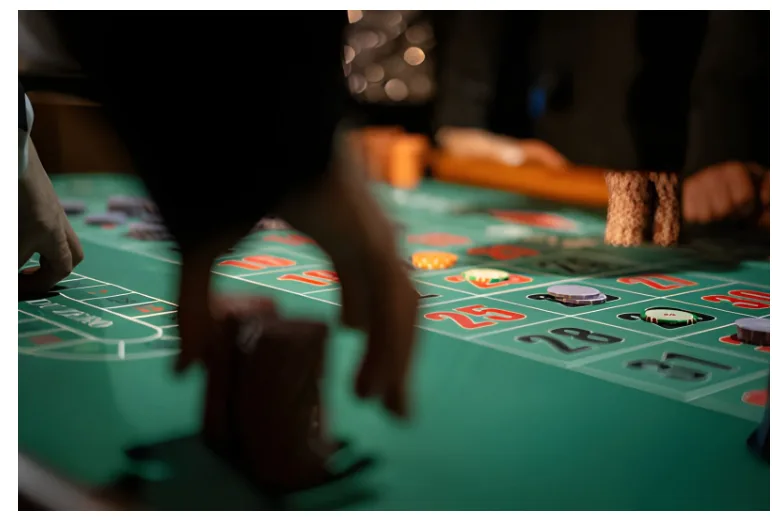
The racetrack offers a visual way to understand wheel sectors, neighboring numbers, and traditional French roulette bets.
Let’s explore how this layout works, what its different sections mean, and how it relates to roulette probabilities.
What Is the Racetrack on a French Roulette Table?
The racetrack is an oval-shaped betting layout that represents the numbers in the same circular order as the actual roulette wheel.
Unlike the standard betting grid, which displays numbers from 1 to 36 in rows and columns, the racetrack follows their physical positions around the wheel.
It helps players select groups of neighboring pockets without manually locating every number on the main table.
The racetrack is commonly associated with French and European single-zero roulette games, although not every version includes one.
Its purpose is convenience, not changing the odds or predicting outcomes.
Why Does French Roulette Need a Separate Racetrack?
The traditional betting table organizes numbers numerically. This works well for straight-up, split, street, and outside bets.
However, certain French roulette wagers are based on wheel sections rather than numerical order.
For example, the numbers 0, 32, and 15 are close together on a standard single-zero wheel, even though they appear far apart on the main betting grid.
Without a racetrack, selecting these neighboring pockets would require identifying them individually.
The racetrack simplifies the process by presenting their actual wheel positions.
This feature is particularly useful for placing traditional sector bets, sometimes called announced bets or call bets.
The Four Main Racetrack Betting Sections
The French Roulette Wheel and Table commonly use four named betting groups based on different areas of the wheel.
Each group covers a particular collection of pockets, with its own traditional chip arrangement.
Voisins du Zéro: Numbers Surrounding Zero
Voisins du Zéro translates to “neighbors of zero.”
It covers 17 consecutive pockets around the zero section of the single-zero roulette wheel.
The traditional wager uses nine chips distributed across straight-up, split, and street bets.
This group includes zero and several numbers positioned on either side of it.
Although Voisins du Zéro covers a relatively large section, it does not guarantee a winning outcome.
Tiers du Cylindre: The Opposite Wheel Section
Tiers du Cylindre means “third of the wheel.”
This wager covers 12 numbers located on the side of the wheel opposite zero.
The traditional arrangement uses six chips placed on six split bets.
Because each split covers two numbers, the complete selection includes 12 pockets.
These numbers form a connected wheel section, even though they appear scattered across the standard betting grid.
Orphelins: The Numbers Left Outside
Orphelins means “orphans.”
This group contains eight numbers not included in the Voisins du Zéro or Tiers du Cylindre sections.
The numbers are 1, 6, 9, 14, 17, 20, 31, and 34.
A common arrangement uses five chips across one straight-up wager and four split wagers.
Some numbers receive overlapping coverage, making it important to understand how the chips are distributed.
Jeu Zéro: A Smaller Group Around Zero
Jeu Zéro, also called Zero Game, covers seven pockets close to zero.
These numbers are 0, 3, 12, 15, 26, 32, and 35.
The traditional wager uses four chips: three split bets and one straight-up bet.
Jeu Zéro covers a smaller section than Voisins du Zéro, although both focus on the zero area.
How Do You Place a Bet Using the Racetrack?
When a roulette game includes a racetrack interface, placing a sector bet is generally straightforward.
The typical process involves:
- Choose a chip value: Select the denomination available within the game’s betting limits.
- Locate the racetrack: Find the oval layout or open the neighboring-bets panel.
- Select a betting section: Choose Voisins, Tiers, Orphelins, or another available option.
- Review the chips: Check how many chips the selection places on the main betting grid.
- Confirm the total wager: Ensure the combined amount is within your intended spending limit.
Some live dealer games may also support verbal call bets, depending on the table’s rules.
Remember that selecting a sector can place multiple chips automatically. The total cost may therefore exceed the value of one chip.
What Are Neighbor Bets on the Racetrack?
Neighbor bets allow players to cover numbers physically surrounding a selected pocket.
For example, a standard five-number neighbor bet covers one chosen number and two pockets on either side.
This differs from a regular numerical sequence.
Selecting number 32, for instance, may include 15, 19, 0, and 4, depending on the configured neighbor count and the standard wheel order.
Neighbor bets are useful for understanding the relationship between wheel positions and betting combinations.
However, neighboring numbers have no special predictive connection. Every pocket retains its individual theoretical probability.
Does the Racetrack Change Roulette Odds?
No. The racetrack changes how bets are selected, not how the wheel produces results.
French roulette normally uses 37 pockets, including one green zero.
Every pocket has a theoretical probability of approximately 2.70% on a fair wheel.
Standard racetrack sector bets generally retain the same 2.70% house edge as ordinary inside bets on a single-zero wheel.
Special rules such as La Partage may reduce the house edge on eligible even-money wagers to approximately 1.35%, but they do not normally apply to racetrack sector bets.
Covering more pockets changes the frequency and size of possible payouts, not the underlying mathematical advantage.
Common Misunderstandings About Racetrack Betting
The racetrack can create confusion when players assume its sections represent special winning patterns.
One misconception is that neighboring pockets become more likely to win after a particular number appears.
Another is believing that covering a larger wheel section automatically improves expected returns.
Neither assumption is mathematically justified.
The racetrack is simply an alternative betting interface.
Before participating, players should check payout rules, total wager amounts, local gambling regulations, and responsible gambling controls.
A predefined entertainment budget can help limit financial exposure, but no betting arrangement guarantees profits.
Final Thoughts
The French Roulette Wheel and Table feature a racetrack to make wheel-sector betting easier to understand and select.
Instead of following the numerical layout, the racetrack reflects the actual positions of pockets around the wheel.
Its traditional sections, including Voisins du Zéro, Tiers du Cylindre, Orphelins, and Jeu Zéro, allow players to select predefined number groups.
Understanding these sections helps explain the relationship between wheel design and betting options.
However, the racetrack does not predict winning numbers or eliminate the house edge. Roulette remains a game of chance, and informed participation requires understanding both the rules and potential financial risks.