As of March 16, 2026, the medical technology landscape is grappling with a stark reminder of the vulnerabilities inherent in the digital shift of healthcare. Stryker Corporation (NYSE: SYK), a global titan in medical devices and equipment, finds itself at the center of a developing storm following a massive cyberattack that has sent ripples through the financial markets and hospital operating rooms alike.
Before the breach, Stryker was riding a wave of unprecedented momentum, having recently surpassed a historic $25 billion annual revenue milestone and setting aggressive targets for its "SmartHospital" ecosystem. However, the emergence of the "Handala" hacker group’s offensive in early March has forced the company into a defensive crouch, disrupting global logistics and order fulfillment. This feature explores how a company built on a century of mechanical precision is now navigating the digital-first era where bits and bytes are as critical as titanium implants and robotic arms.
Historical Background
The story of Stryker is one of quintessential American innovation. Founded in 1941 by Dr. Homer Stryker, an orthopedic surgeon in Kalamazoo, Michigan, the company began as a response to unmet clinical needs. Dr. Stryker’s early inventions—the Turning Frame (allowing for the repositioning of patients with back injuries) and the oscillating cast cutter—set the stage for a culture focused on surgeon-led problem-solving.
The company went public in 1979, the same year it acquired Osteonics Corporation, marking its entry into the hip and knee replacement market. Over the next four decades, Stryker transformed from a niche manufacturer into a diversified powerhouse through a series of "tuck-in" and transformative acquisitions. Key milestones include the 1998 purchase of Howmedica for $1.9 billion and the 2013 acquisition of Mako Surgical Corp for $1.65 billion—a move that fundamentally changed the trajectory of orthopedic surgery by introducing robotics into the mainstream.
Business Model
Stryker operates a highly successful, decentralized business model divided into two primary reporting segments that cater to nearly every aspect of the hospital environment:
- MedSurg and Neurotechnology: This is the company’s largest engine, accounting for approximately $15.65 billion in 2025 revenue. It encompasses surgical instruments, endoscopy systems, emergency medical equipment (including power-cots and beds), and neurosurgical products. The integration of Vocera Communications has turned this segment into a provider of digital connectivity, linking medical devices directly to healthcare providers’ mobile platforms.
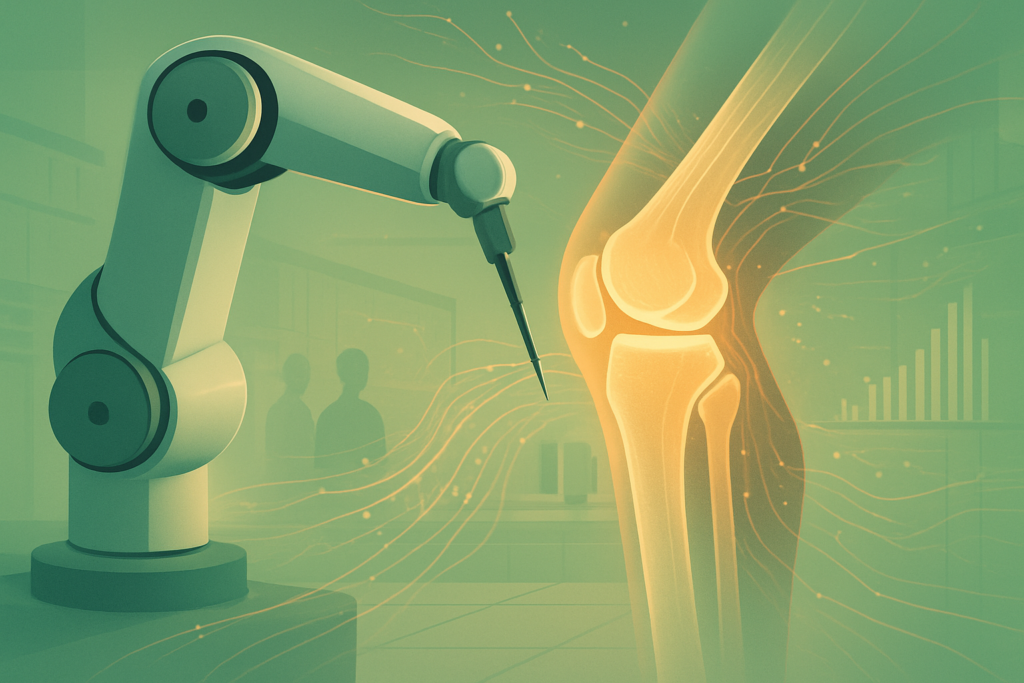
- Orthopaedics and Spine: Generating roughly $9.47 billion in 2025, this segment is the market leader in joint replacements (knees and hips) and trauma systems. Its competitive moat is built around the Mako SmartRobotics platform, which increases "pull-through" revenue—surgeons who use the Mako robot are highly likely to use Stryker-branded implants.
The company’s customer base is global, spanning major health systems, ambulatory surgery centers (ASCs), and government healthcare providers.
Stock Performance Overview
Over the long term, Stryker has been a "steady-eddy" outperformer for shareholders.
- 10-Year View: SYK has consistently beaten the S&P 500, driven by double-digit dividend growth and reliable earnings beats.
- 5-Year View: The stock benefited from the post-pandemic surge in elective procedures, rising from the low $200s in early 2021 to peak near $365 in late 2025.
- 1-Year View: Prior to the March 2026 cyberattack, shares were up 18% year-over-year. Following the disclosure of the "Handala" breach, the stock suffered a sharp 8% correction, currently trading in the $336–$345 range as investors weigh the costs of operational downtime against the company's strong underlying fundamentals.
Financial Performance
Stryker’s fiscal year 2025 was a record-breaker. The company reported total revenue of $25.12 billion, representing robust organic growth of nearly 10%.
- Margins: Adjusted operating margins stood at a healthy 27.2% at year-end 2025. Management had guided for a further 100-basis-point expansion in 2026, though this is now under scrutiny due to the cyberattack's impact on Q1 logistics.
- Cash Flow and Debt: The company remains a cash-generating machine, utilizing its free cash flow for both dividends and its aggressive "Growth Flywheel" M&A strategy. While the $4.9 billion acquisition of Inari Medical in early 2025 increased leverage slightly, the company’s investment-grade credit rating remains intact.
- Valuation: Trading at a forward P/E ratio of approximately 25x (pre-attack), SYK maintains a premium valuation compared to peers, reflecting its market-leading growth rates and dominant position in robotics.
Leadership and Management
Under the leadership of Chairman and CEO Kevin Lobo, who has been at the helm since 2012, Stryker has cultivated a reputation for disciplined execution and strategic foresight. Lobo’s tenure has been defined by a shift toward digital integration and "category leadership"—ensuring Stryker is #1 or #2 in every market it enters.
The management team is noted for its "decentralized" philosophy, which allows individual business units to stay nimble and responsive to surgeon feedback. However, the current cybersecurity crisis is testing the centralized corporate functions, specifically the Chief Information Officer (CIO) and Chief Security Officer (CSO), as they work to restore the global supply chain and reassure hospital partners of their data integrity.
Products, Services, and Innovations
Innovation at Stryker is currently defined by the "SmartHospital" vision.
- Mako SmartRobotics: With over 3,000 units installed globally as of early 2026, Mako remains the gold standard in robotic-assisted surgery, now expanding its software capabilities into spine and shoulder applications.
- Vocera & Care.ai: These digital assets allow for "contactless" patient monitoring and instant clinical communication, reducing nurse burnout and improving patient safety.
- Inari Medical Integration: This recent addition has catapulted Stryker’s vascular business, providing industry-leading tools for treating blood clots without the need for thrombolytic drugs.
Competitive Landscape
Stryker competes in a "clash of the titans" environment:
- Johnson & Johnson MedTech (NYSE: JNJ): A fierce rival in orthopaedics and surgery, though Stryker’s focus on purely medical technology gives it more agility.
- Zimmer Biomet (NYSE: ZBH): Stryker’s primary challenger in the knee and hip market. Zimmer’s Rosa robot is a direct competitor to Mako, but Stryker holds a significant lead in installed base and surgeon preference.
- Medtronic (NYSE: MDT): Competition is fiercest in the spine and neurovascular sectors.
Stryker's primary advantage is its "cross-selling" capability—selling everything from the power drill and the surgical bed to the robotic arm and the patient’s knee implant.
Industry and Market Trends
The medtech sector is currently defined by three macro drivers:
- The ASC Shift: Procedures are moving from large hospitals to Ambulatory Surgery Centers. Stryker’s portfolio is perfectly weighted for this transition, offering turnkey solutions for ASC construction and equipping.
- The Aging Population: The "Silver Tsunami" continues to drive demand for joint replacements and stroke care.
- Digital/AI Integration: The shift from "hardware only" to "software-enabled hardware" is accelerating, which, while lucrative, has opened the door to the cybersecurity risks currently affecting the company.
Risks and Challenges
The March 2026 Handala Cyberattack is the most immediate and visible risk.
- Operational Risk: A "wiper" attack on Microsoft-based environments disrupted order processing for nearly two weeks. While patient-facing devices like Mako robots remained isolated, the inability to ship implants could lead to a permanent loss of some Q1 procedures to competitors.
- Reputational Risk: As Stryker pushes more "connected" hospital devices, any perception of vulnerability could slow the adoption of its digital ecosystem.
- Macro Risks: Sustained high interest rates could impact hospital capital budgets, potentially slowing the sales of high-cost items like the Mako platform.
Opportunities and Catalysts
Despite the current headwind, several catalysts remain:
- Recovery Bounce-back: Historically, when medtech companies suffer temporary disruptions, they see a "catch-up" period in the following quarter as postponed surgeries are rescheduled.
- The Inari Synergy: Full integration of Inari Medical is expected to contribute significantly to margin expansion in the latter half of 2026.
- SmartHospital Platform Launch: The scheduled mid-2026 rollout of an AI-driven predictive clinical platform could redefine Stryker’s role from a device manufacturer to a software partner.
Investor Sentiment and Analyst Coverage
Wall Street is currently "buying the dip," albeit with caution. Major firms like Jefferies and William Blair have maintained their "Outperform" ratings, citing that Stryker’s core value proposition—the surgery itself—remains intact.
- Institutional Ownership: High (over 75%), reflecting deep confidence from long-term pension funds and asset managers.
- Retail Sentiment: While social media chatter has focused on the cyberattack’s "wiped data" claims, professional analysts are more focused on the speed of logistics recovery, viewing the Handala incident as a transient event rather than a structural failure.
Regulatory, Policy, and Geopolitical Factors
Stryker must navigate a tightening regulatory net:
- FDA Cybersecurity Requirements: Since 2025, the FDA has mandated a Cybersecurity Bill of Materials (SBOM) for all new medical devices. Stryker’s ability to prove the resilience of its next-gen products is now under intense regulatory scrutiny.
- Geopolitics: The "Handala" group’s alleged links to Iran highlight the growing threat of state-sponsored actors targeting critical infrastructure, including healthcare supply chains. This may lead to increased federal oversight and mandatory "cyber-resilience" spending for medical device manufacturers.
Conclusion
Stryker Corporation stands at a crossroads on March 16, 2026. On one hand, it is a financial juggernaut with a dominant market share in robotics and an aging population providing a tailwind of demand for decades to come. On the other, the recent cyberattack has exposed the "Achilles' heel" of the modern, connected medtech giant: the vulnerability of its digital supply chain.
For investors, the current volatility may represent a compelling entry point into a "best-in-class" operator. However, the true test for Kevin Lobo and his team will be their ability to not just restore operations, but to convince the global healthcare community that Stryker’s digital future is as safe as its mechanical past. In the near term, investors should watch the Q1 2026 earnings call for precise quantification of the cyberattack's impact on shipment volumes.
This content is intended for informational purposes only and is not financial advice.