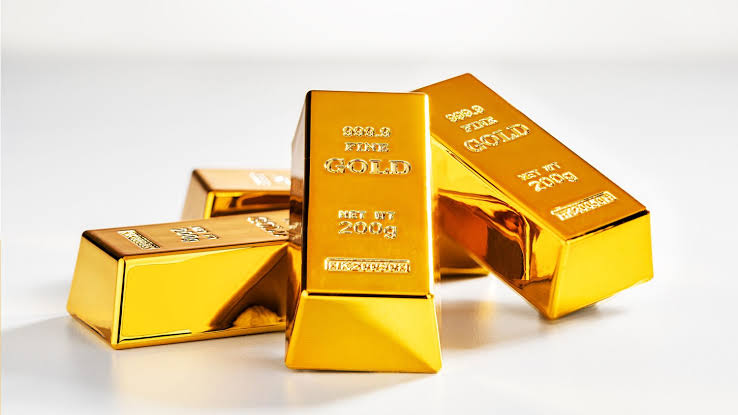
If you're asking whether now is a good time to buy gold, you're probably looking to protect your savings or diversify beyond stocks and real estate. Gold has a long track record as a store of value during uncertain times, but that doesn't make every moment a good entry point, and not every way of owning gold is the same. This guide looks at where the market stands today, the factors that move the price, and how to decide whether buying now fits your goals.
Where the gold market stands in late 2026
Gold has had a dramatic year. After a rally of more than 40% in just a few months, it hit an intraday record of about US$5,595 an ounce on January 29, 2026. Since then it has given back a large share of those gains, trading roughly between US$3,900 and US$4,150 in early November.
Several forces are pulling the price in different directions:
● Interest-rate expectations have turned against gold. In early November, futures markets were pricing in roughly a 75–80% chance that the U.S. Federal Reserve would raise rates in December. Higher rates make interest-paying assets more competitive with gold.
● Central banks are still buying. According to the World Gold Council, central bank purchases rose 42% year over year to 321 tonnes in the third quarter of 2026, even as total gold demand slipped 1%.
● Market stress cuts both ways. During the autumn equity sell-off, some investors sold gold to cover losses elsewhere. Gold is a safe haven over time, but it can still fall in the early stages of a market shock.
For a buyer, this means gold is well below its January peak but still high by historical standards, and volatility is elevated.
Why gold still earns a place in many portfolios
● No counterparty risk. Physical gold isn't anyone's debt or promise to pay, and it can't be created at will the way currency can.
● Long-term purchasing power. Over decades, gold has tended to hold its value as currencies lose purchasing power. Over shorter periods, though, it can move independently of inflation, so it's best treated as a long-term hedge rather than a guarantee.
● Diversification. Gold often moves differently from stocks and bonds, which can help reduce the overall swings in a portfolio.
● Safe-haven demand. In periods of geopolitical or financial stress, investors and central banks have historically added to their gold holdings.
There's no perfect time to buy, but these factors help you judge
1. Real interest rates and the U.S. dollar
Gold pays no interest or dividends, so its main competition is what your money could earn elsewhere. When real (inflation-adjusted) interest rates rise, holding gold means giving up more income, and prices tend to come under pressure. When real rates fall, that opportunity cost shrinks and gold usually becomes more attractive.
The U.S. dollar matters too. Gold is priced in U.S. dollars, so a stronger dollar tends to weigh on it. For Canadian buyers, the exchange rate adds another layer: a weaker loonie can push the Canadian-dollar price of gold higher even when the U.S.-dollar price is flat.
Worth watching:
● Central bank rate decisions and forward guidance
● Inflation readings compared with expectations
● The U.S. dollar and the CAD/USD exchange rate
2. Today's price in context
A single price tells you little on its own. Comparing today's gold and silver spot prices with where they traded over the past few months and years shows whether you'd be buying near a peak, after a pullback, or somewhere in between. If you're considering silver as well, the gold-to-silver ratio can help you judge which metal looks relatively cheaper.
3. Your time horizon and goals
Gold is a poor fit for quick profits. Physical bullion has a spread between the buying and selling price, so the price has to rise just for you to break even, and short-term swings can be sharp, as 2026 has shown. Gold works best as a long-term holding kept for years, usually as a modest slice of a diversified portfolio rather than the core of it.
4. Buying in stages
If you're unsure about timing, you don't have to commit all at once. Buying a fixed amount at regular intervals (dollar-cost averaging) spreads your purchases across highs and lows and takes the pressure off trying to pick the bottom. This approach is especially useful in a volatile market like this one.
How to buy: physical bullion vs. paper gold
Physical bullion (coins and bars)
Owning physical gold gives you direct ownership with no reliance on a fund or issuer. Before you buy, consider:
● Premiums. Bullion sells at a premium over the spot price. Bars generally carry lower premiums per ounce than coins, and larger sizes usually cost less per ounce than smaller ones. Compare the total cost, including shipping and insurance.
● Purity and authenticity. Buy from an established dealer and stick to products from recognized mints and refiners, such as the Royal Canadian Mint's .9999 fine Gold Maple Leaf. In Canada, investment-grade gold bullion (at least 99.5% pure) is generally exempt from GST/HST.
● Storage. Keeping gold at home means paying for a safe and adequate insurance. Professional vault storage costs an annual fee but provides security, insurance, and often easier resale.
● Selling later. Check the dealer's buyback policy and how wide its buy/sell spread is.
Buying physical bullion online from a reputable dealer combines direct ownership with convenience: you can compare live prices, choose sizes that fit your budget, and have your metal shipped insured or held in a vault.
Gold ETFs and other paper exposure
Gold exchange-traded funds (ETFs) are easy to buy and sell through a brokerage account and have a low minimum investment. However, you own shares in a fund rather than the metal itself, and you pay ongoing management fees. Gold mining stocks offer another route, often rising and falling more sharply than gold itself, but they also carry company-specific risks such as costs, management, and production issues.
So, is now a good time to buy gold?
It depends on why you're buying. If you're hoping for a quick gain, the current environment is difficult: rate-hike expectations are weighing on prices and volatility is high, so further dips are possible. If you're buying for long-term diversification and wealth protection, the pullback from January's record offers a lower entry point than earlier in the year, while key long-term supports such as central bank buying remain in place.
A practical approach is to decide how much of your portfolio you want in gold, buy in stages rather than all at once, favour low-premium products from reputable sources, and plan your storage before you buy.
This article is for general information only and is not financial advice. Consider speaking with a qualified financial advisor about your own situation.