Sheet metal prototyping
A crucial phase in the part development process, sheet metal prototyping is useful in testing, refining, and perfecting parts. It is defined as the small-volume replicas of sheet metal parts.
Designers use the strategy to validate sheet metal designs and identify flaws before embarking on full-scale manufacturing. Stamping, blanking, piercing, and punching are some fabrication techniques commonly used.
Careful choice from fit prototypes, proof-of-concept prototypes, aesthetic prototypes, pre-production prototypes, and functional prototypes is crucial to project success. There are also material varieties, from aluminum to stainless steel.
This article outlines the meaning, applications, and other fundamental aspects of prototype sheet metal parts. Read on for more details.
What is Metal Prototyping?
Metal prototyping is the process of producing a physical sheet metal version of a CAD model for preliminary purposes before investing in or committing to full-scale production. This version is used to analyze various aspects of the product, such as functionality and fit.
What is the Most Common Prototype?
Compared to fit prototypes, proof-of-concept prototypes, aesthetic prototypes, and pre-production prototypes, functional prototypes are the most common. These types of prototypes are used to assess tolerances and mechanical properties in real-world environments.

A functional prototype
Common Sheet Metal Prototyping Materials
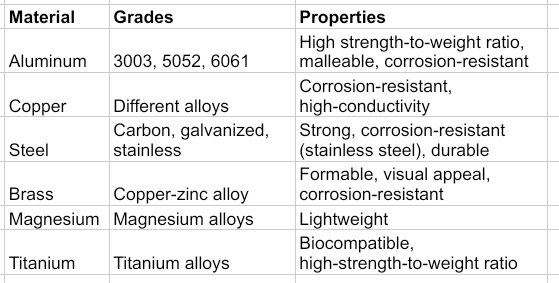
Sheet metal prototype fabrication uses a wide range of materials, but the most common ones are aluminum, copper, steel, brass, magnesium, and titanium.
Common Processes for Metal Prototype Manufacturing
Cutting, forming, and joining processes define the core of sheet metal prototyping. These processes typically follow each other sequentially, starting with cutting using laser cutting, waterjet cutting, and other cutting technologies.
CNC punching and press brake forming methods are then engaged to further develop the sheet metal prototype. The level of advanced methods used depends on the complexity of the prototype.
Welding, fasteners, and other joining methods are then used to complete the part. Manufacturers choose a combination of processes that deliver the required tolerances, surface quality, and lead time.
The Sheet Metal Prototyping Steps
The metal prototype manufacturing steps are systematic, starting at the design stage, all the way to testing and refinement. The specific steps are as outlined below.
Step 1: Design and Modeling
CAD (Computer-Aided Design) software solutions are used to create precise digital versions of the custom metal fabrication prototype. Modern software can create digital models and even perform motion analysis.
Step 2: Prototyping Method and Material Selection
Next up is the determination of the prototyping method and material(s) to use. Factors that engineers focus on at this step include surface finish requirements, manufacturing scalability, mechanical property requirements, and tolerances.
Different metals have different properties, so considering the ideal one for a project is equally critical. Important properties include durability, formability, strength, weight, and versatility.
Step 3: Cutting
Precise sheet metal dimensions and shapes are attained through laser cutting, waterjet cutting, plasma cutting, and other technologies. Simple sheet metal blanks can be produced through a guillotine press or chiseling.
Step 4: Forming and Bending
The fabricator uses prototyping dies, a press brake, or a roller to shape the blanks further. It is a crucial stage of the prototyping process because it ensures the part gets the exact designed features.
Step 5: Assembly and Finishing
When it comes to assembling the different prototype components, techniques such as riveting and welding are applied. Further surface finishing may also be applied to enhance the aesthetics and functionality.
Step 6: Testing
A custom metal fabrication prototype will finally undergo testing to check different aspects, including mechanical and functional. Success at this stage allows for full-scale manufacturing.
Each of these prototyping steps contributes to accurately assembled prototypes that serve the intended function.
Benefits and Limitations of Metal Prototype Manufacturing
Here are some notable benefits of using prototype sheet metal parts:
- Cost Efficient - Manufacturing costs are reduced due to early detection of design errors
- Short Lead Time - Manufacturers develop products faster thanks to sheet metal rapid prototyping
- Material versatility - Applies to a wide range of metals, including copper, aluminum, and stainless steel prototyping
The limitations of metal prototype manufacturing include;
- Thickness Limitations - The Thickness of parts is usually between 0.5mm and 6mm
- Part Complexity Limitations - Sheet metal prototypes are not ideal for parts with complex features and of high precision, unless they are combined with other prototyping methods
Applications of Prototype Sheet Metal Parts
Sheet metal prototyping is a popular manufacturing strategy in different industries, including the following;
Aerospace industry - Sheet metal rapid prototyping of different parts, including engine parts, frames, and panels
Automotive industry - Prototype sheet metal parts such as brackets, panels, and chassis
Medical industry - Used in the development and manufacture of clamps, diagnostic tools, forceps, and other equipment
Consumer electronics - Metal prototype manufacturing is commonly used for laptops, smartphones, and other consumer electronics.
Conclusion
Manufacturing metal parts is demanding, but using sheet metal prototype fabrication makes the process simpler, more cost-effective, and faster. Businesses can leverage this strategy to efficiently manufacture durable, functional, and aesthetically appealing products.
At ProleanTech, advanced processes are central to sheet metal services for prototypes. Get these reliable services regardless of your industry.