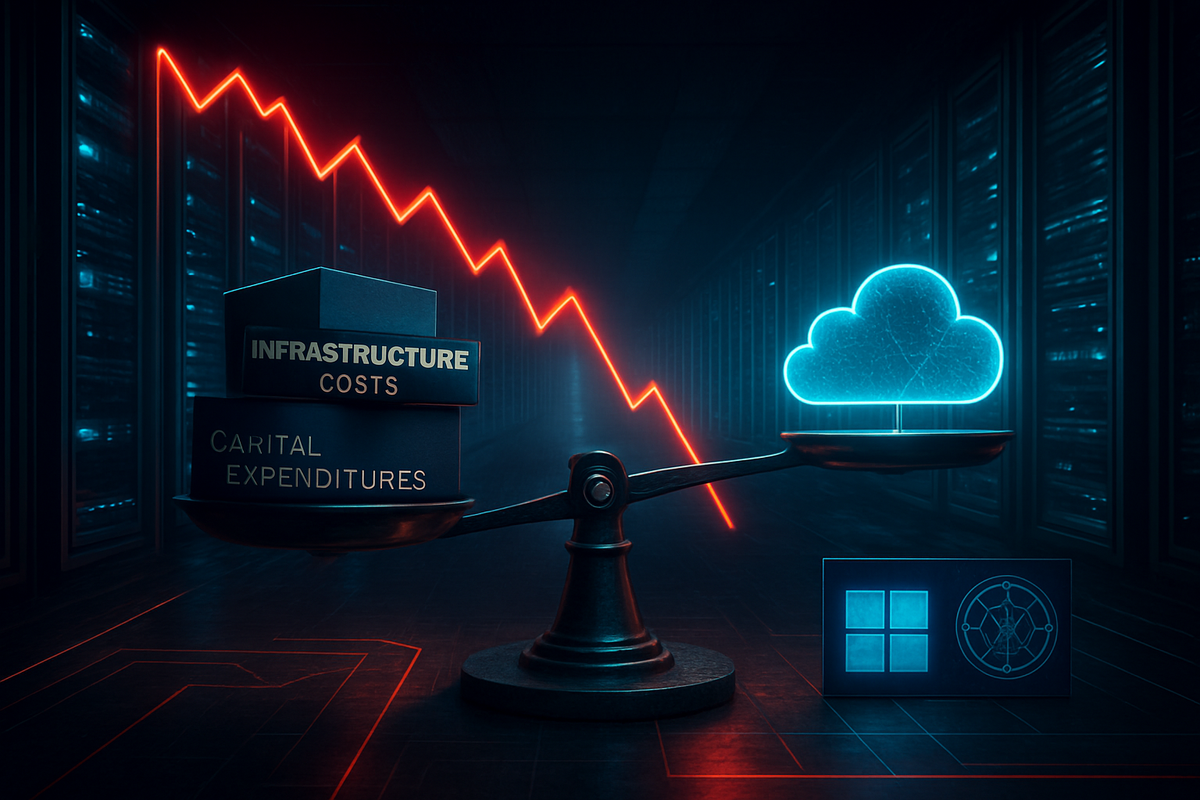
The era of "growth at any cost" in the artificial intelligence sector met a harsh reckoning on January 29, 2026. Following its Q2 FY2026 earnings report, Microsoft Corp. (NASDAQ: MSFT) saw its stock price plunge 11% in a single trading session, wiping out a staggering $357 billion in market capitalization. This sell-off, the company’s largest intraday drop since the onset of the pandemic in 2020, signals a fundamental shift in investor sentiment: Wall Street is no longer satisfied with AI potential; it is now demanding AI profitability.
While the headline figures initially appeared strong, the underlying mechanics of the report spooked even the most bullish institutional investors. Microsoft’s Azure cloud division posted a robust 39% growth rate, yet the market focused on the widening "efficiency gap" as infrastructure costs began to outpace top-line gains. The day’s volatility sent shockwaves through the technology sector, prompting a re-evaluation of the massive capital commitments required to lead the generative AI revolution.
The Quarter of Hyper-Investment: A Timeline of the Tumble
The turmoil began late on January 28, 2026, when Microsoft released its results for the quarter ending December 31, 2025. On the surface, the numbers were record-breaking: total revenue hit $81.3 billion, a 17% increase year-over-year. However, the internal calculus of the report revealed a troubling trend. The cost of revenues surged by 19% to reach $4.2 billion, effectively growing faster than the revenue itself. This margin compression was most visible in the Microsoft Cloud segment, where gross margins slipped to 67%, down from 70% in the previous year.
The January 29th trading session opened with heavy selling as analysts digested the sheer scale of Microsoft’s spending. The company reported a record-breaking $37.5 billion in quarterly capital expenditures—a 66% year-over-year increase. During the earnings call, CEO Satya Nadella and CFO Amy Hood defended the spend, noting that two-thirds of the capital was dedicated to "short-lived assets" like GPUs and CPUs to meet surging AI demand. However, the market’s reaction was swift. By midday, the stock was down double digits as investors questioned whether the $625 billion contract backlog—45% of which is tied directly to OpenAI—represented a sustainable future or a dangerous concentration of risk.
Winners and Losers in the Wake of the MSFT Sell-Off
The primary loser in this event is undoubtedly Microsoft (NASDAQ: MSFT), which now faces intense pressure to prove that its $37.5 billion quarterly burn will translate into accelerated earnings per share by late 2026. However, the "contagion" spread to other "Magnificent Seven" peers. Both Alphabet Inc. (NASDAQ: GOOGL) and Amazon.com Inc. (NASDAQ: AMZN) saw their shares dip 4-5% in sympathy, as investors feared their upcoming reports would mirror Microsoft’s high-spend, low-margin trajectory.
Conversely, the clear winner remains NVIDIA Corp. (NASDAQ: NVDA). Microsoft’s massive capex is essentially a direct transfer of wealth to the chipmaker; as long as Microsoft continues to spend $37.5 billion a quarter on infrastructure, NVIDIA’s data center revenue remains insulated from the broader market volatility. Furthermore, specialized energy providers like NextEra Energy (NYSE: NEE) are increasingly viewed as strategic winners, as Microsoft and OpenAI’s long-term plan to secure 30 gigawatts of power will require unprecedented investments in the electrical grid and nuclear modular reactors.
The $1.4 Trillion Shadow: Significance of the AI Infrastructure Race
This event highlights a pivotal moment in the history of the technology industry, comparable to the massive fiber-optic build-out of the late 1990s. The revelation of OpenAI’s $1.4 trillion spending commitment over the next decade—spearheaded by Sam Altman’s goal to build massive computing hubs—has changed the scale of the game. Microsoft’s $250 billion commitment to support this infrastructure through Azure services confirms that the company is no longer just a software provider; it is the "landlord of the AI era."
However, this "landlord" strategy carries immense regulatory and economic risks. The 11% drop reflects a growing fear of a "single-point-of-failure." With nearly half of Microsoft’s backlog tied to a single startup (OpenAI), any regulatory crackdown on AI copyright or a slowdown in OpenAI's consumer adoption could have catastrophic ripple effects on Microsoft’s balance sheet. Furthermore, the 30-gigawatt power goal has caught the eye of federal regulators, raising concerns about the environmental impact and the strain on the national energy infrastructure, potentially leading to new policy hurdles for "AI mega-clusters."
Looking Ahead: The Pivot Toward Efficiency
In the short term, Microsoft is expected to shift its narrative toward "operational excellence" and "AI efficiency." Investors should anticipate a potential slowdown in hiring and a more surgical approach to capital allocation in the coming quarters. The market will be looking for Azure growth to not only remain high but to re-accelerate toward the 40% mark, proving that the $37.5 billion investment is translating into market share gains rather than just maintaining the status quo.
Long-term, the success of this strategy hinges on the "monetization of the edge." If Microsoft can successfully integrate its expensive AI models into everyday enterprise workflows through its "Copilot" suite, the current margin compression will be viewed as a temporary growing pain. However, if the high costs of running these models continue to outpace user subscription growth, Microsoft may be forced to announce a strategic pivot, potentially spinning off some of its heavy infrastructure or renegotiating its capital-intensive partnership with OpenAI.
Final Thoughts for the Savvy Investor
The 11% tumble of Microsoft on January 29, 2026, serves as a stark reminder that even the world’s most powerful companies are not immune to the laws of fiscal gravity. While a 39% growth in Azure is historically impressive, the $357 billion loss in market value proves that the "AI premium" is now being weighed against the cold reality of capital expenditure and margin pressure.
Moving forward, investors should keep a close eye on two specific metrics: Cloud Gross Margin and Remaining Performance Obligation (RPO) diversity. If Microsoft can stabilize its margins and broaden its client base beyond the OpenAI ecosystem, the current dip may indeed be remembered as a generational buying opportunity. For now, however, the message from the market is clear: the bill for the AI revolution has arrived, and it must be paid in profit, not just potential.
This content is intended for informational purposes only and is not financial advice.