In a definitive sign that the artificial intelligence (AI) boom has moved from speculative fever to institutional industrialization, CoreWeave (NASDAQ: CRWV) announced on March 31, 2026, that it has closed a massive $8.5 billion financing facility. This deal, structured as a Delayed Draw Term Loan (DDTL), is earmarked for an aggressive expansion of the company’s AI infrastructure as it races to meet the insatiable global demand for specialized compute power. The financing represents one of the largest private credit deals in the history of the technology sector, signaling that the "AI arms race" has entered a new phase characterized by massive capital deployments and investment-grade financial structures.
The immediate implications of this deal are profound. By securing such a significant war chest, CoreWeave has effectively decoupled its growth from the volatility of equity markets, instead leveraging its high-value hardware and multi-billion-dollar customer contracts to access lower-cost debt. For the broader market, this serves as a validation of the "GPU-as-collateral" model, confirming that specialized AI chips have become a liquid and highly desirable asset class in the eyes of major institutional lenders.
The Mechanics of a Megadeal: Meta, NVIDIA, and the Shift to Investment Grade
The $8.5 billion facility, officially designated as the DDTL 4.0 Facility, was led by a consortium of financial heavyweights including MUFG (NYSE: MUFG) and Morgan Stanley (NYSE: MS), with Blackstone (NYSE: BX) Credit & Insurance serving as the anchor investor. Unlike previous rounds that carried the high-interest hallmarks of venture debt, this facility achieved investment-grade ratings of A3 from Moody’s and A-low from DBRS. This shift to investment-grade status is a watershed moment for the sector, drastically lowering CoreWeave’s cost of capital to a fixed rate of approximately 5.9%, a move that allows for much more sustainable long-term infrastructure planning.
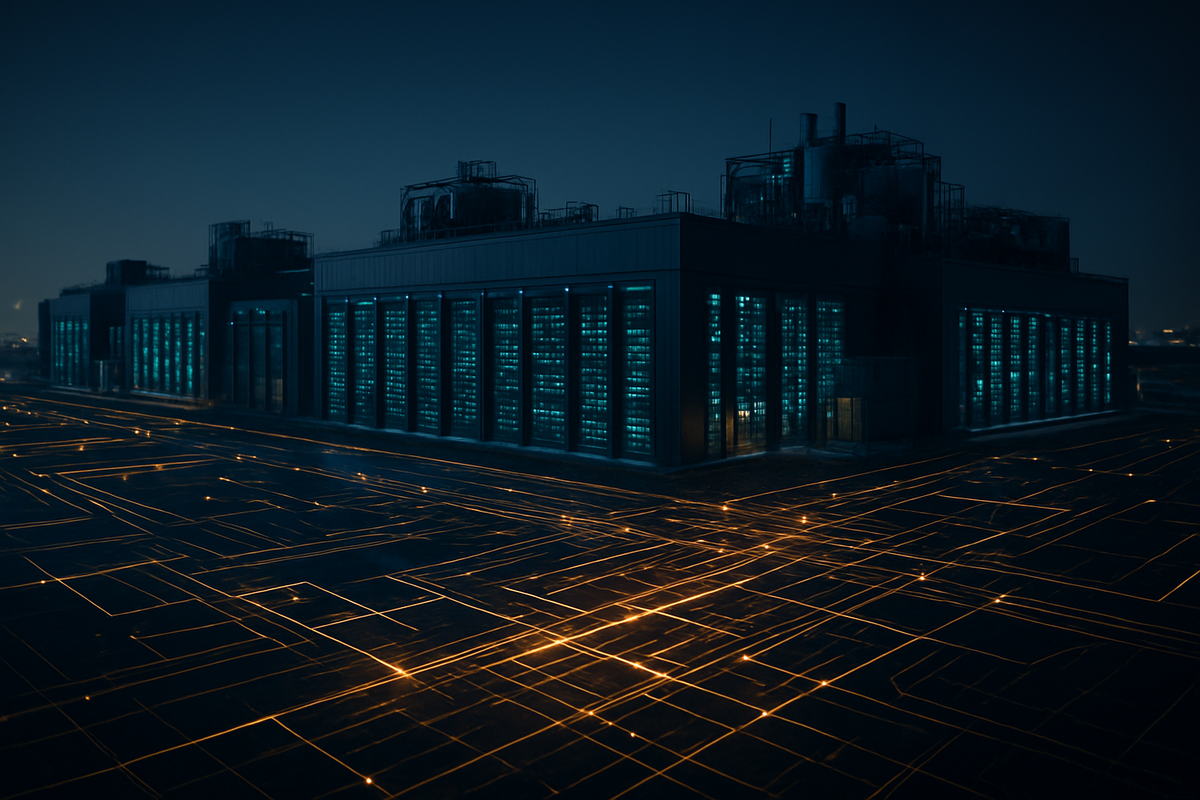
Central to this financing is a massive revenue backlog from Meta Platforms (NASDAQ: META). Reports indicate that the loan is secured by CoreWeave’s GPU clusters and a staggering $19.2 billion contract backlog from Meta, which includes a new $5 billion+ agreement signed in early 2026. This vertical alignment—where a hyperscale social media giant effectively underwrites the debt of its compute provider—highlights the desperate need for reliable AI hardware capacity. The funds will be deployed immediately to build out what CoreWeave calls "AI Factories," high-density data centers specifically designed to house tens of thousands of interconnected GPUs.
This deal is the culmination of a three-year trajectory that saw CoreWeave grow from a niche Ethereum miner into a central pillar of the global AI economy. Following its 2025 IPO, the company has increasingly become a strategic extension of NVIDIA (NASDAQ: NVDA), which holds a significant equity stake in the firm. This "preferred status" relationship ensures that CoreWeave receives priority allocation of the latest silicon, such as the 2026 "Rubin" platform, providing a competitive moat that even the largest legacy cloud providers struggle to breach.
Winners and Losers: The Expanding Ecosystem of AI Infrastructure
The primary winner in this transaction is undoubtedly NVIDIA (NASDAQ: NVDA). As CoreWeave’s primary supplier and a major shareholder, NVIDIA benefits twice: once from the direct sale of billions of dollars in hardware, and again from the appreciation of its equity stake. Furthermore, this deal reinforces NVIDIA’s strategy of fostering a "sovereign AI" ecosystem that operates independently of—though often in competition with—the traditional cloud giants like Amazon and Google.
Beyond the chipmakers, the physical infrastructure sector is poised for a windfall. Companies like Vertiv Holdings (NYSE: VRT), a leader in liquid cooling systems, and Eaton (NYSE: ETN), which provides power management and switchgear, are integral to CoreWeave’s buildout. As AI clusters reach unprecedented power densities, the demand for Vertiv’s specialized XDU units and liquid-to-chip cooling solutions has moved from a luxury to a necessity. Similarly, Dell Technologies (NYSE: DELL) stands to benefit as a key partner in rack-scale deployments, helping CoreWeave integrate thousands of GPUs into cohesive, ready-to-use compute blocks.
Conversely, the "losers" or those most pressured by this event are the traditional Tier 2 data center providers and legacy cloud service providers (CSPs) that have been slower to pivot to AI-first architectures. CoreWeave’s ability to secure $8.5 billion at investment-grade rates erodes the cost-of-capital advantage that tech titans once held exclusively. Furthermore, as CoreWeave locks up long-term power purchase agreements (PPAs) and land in key markets, competitors may find themselves facing "resource starvation," where the lack of available electricity and specialized real estate becomes a more significant bottleneck than the availability of the chips themselves.
A New Asset Class: GPUs as the New Oil
This financing event fits into a broader industry trend where compute power is being treated less like a software service and more like a hard commodity or a utility. In the same way that midstream energy companies build pipelines to transport oil, CoreWeave is building the "pipelines" for intelligence. The use of GPU clusters as collateral for investment-grade debt suggests that the financial world now views high-end compute hardware as a durable, long-term asset rather than a rapidly depreciating tech gadget.
The ripple effects are likely to be felt in the regulatory and policy spheres as well. As CoreWeave aims for a 5-gigawatt capacity by 2030, its energy consumption will rival that of small nations. This will inevitably lead to increased scrutiny from power regulators and environmental groups. We are already seeing CoreWeave and its partners, such as Bloom Energy (NYSE: BE) and Vistra (NYSE: VST), exploring on-site power generation and small modular reactors (SMRs) to bypass traditional grid constraints. This move toward energy independence by AI providers could fundamentally alter the relationship between the tech sector and the national power grid.
Historical precedents for this level of capital intensity are rare, drawing comparisons to the massive buildouts of the transcontinental railroads or the early days of the telecommunications fiber-optic boom in the late 1990s. However, unlike the "fiber glut" of 2000, the demand for AI compute currently appears to be outstripping supply by a significant margin, supported by the concrete revenue commitments of trillion-dollar companies like Meta and Microsoft.
The Path to 5 Gigawatts: What Comes Next?
In the short term, the market can expect a flurry of construction activity. CoreWeave will likely use this $8.5 billion to break ground on several multi-hundred-megawatt campuses across North America and Europe. For investors, the focus will shift from "can they get the chips?" to "can they get the power?" The ability to secure interconnection agreements with utilities like NextEra Energy (NYSE: NEE) will be a critical KPI (Key Performance Indicator) for CoreWeave in the coming quarters.
Long-term, the strategic pivot for CoreWeave involves evolving from a pure infrastructure provider into a sophisticated software-defined compute platform. Their proprietary orchestration software, which manages the massive complexity of training large language models across tens of thousands of GPUs, is becoming a valuable product in its own right. There is potential for CoreWeave to begin licensing this software to "Sovereign AI" initiatives being launched by national governments, further diversifying their revenue streams beyond the Meta-style hyperscale contracts.
However, challenges remain. The primary risk is a potential "compute overhang" if AI demand eventually plateaus. While the current backlog is robust, any significant shift in AI model efficiency—where smaller models require less hardware—could leave infrastructure providers with expensive, underutilized facilities. Investors must also watch for shifts in NVIDIA’s allocation strategy; should NVIDIA decide to compete more directly in the cloud space, the symbiotic relationship with CoreWeave could turn into a competitive one.
Final Assessment: The Maturation of the AI Market
The March 2026 financing deal for CoreWeave is more than just a large loan; it is a signal of market maturation. By successfully navigating the transition from high-risk venture funding to investment-grade debt, CoreWeave has provided a blueprint for how the next generation of infrastructure companies will be built. The involvement of traditional financial powerhouses like MUFG and Blackstone confirms that AI infrastructure is now viewed as a "safe" bet, backed by the balance sheets of the world’s largest technology firms.
Moving forward, the market will likely see a consolidation of "AI-first" cloud providers. Those who cannot match CoreWeave’s scale or cost of capital will find it increasingly difficult to compete for the business of top-tier AI developers. For investors, the takeaway is clear: the AI boom is no longer just about the software or the chips; it is increasingly about the "dirt and power"—the physical infrastructure that makes the digital future possible.
In the coming months, watch for similar debt-driven expansion announcements from competitors, and keep a close eye on utility stocks and cooling technology providers. The industrialization of AI is here, and it is being built on a foundation of massive debt, high-end silicon, and an insatiable hunger for electricity.
This content is intended for informational purposes only and is not financial advice.