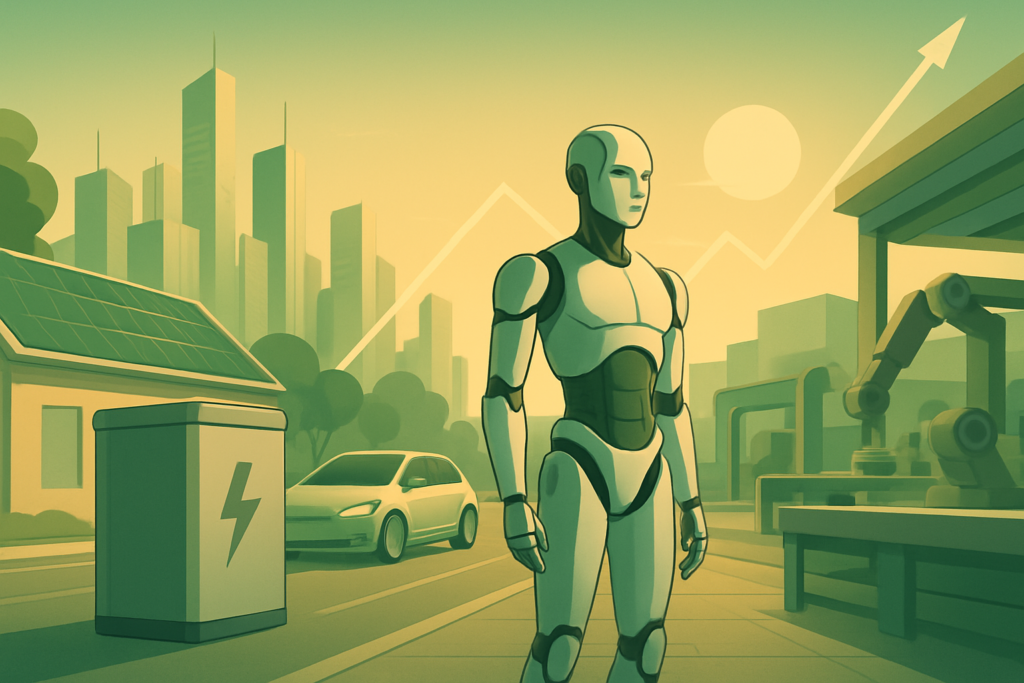
As of December 26, 2025, Tesla, Inc. (NASDAQ: TSLA) stands at one of the most significant crossroads in its twenty-two-year history. Once viewed primarily as a disruptive force in the automotive industry, Tesla has spent the last year aggressively rebranding itself as an artificial intelligence and robotics powerhouse. With a market capitalization hovering around $1.6 trillion, the company remains the world’s most valuable automaker, though its valuation is increasingly untethered from traditional automotive metrics. Investors are currently weighing a "bridge year" of slowing vehicle deliveries against the massive, speculative potential of autonomous driving and humanoid robots.
Historical Background
Founded in 2003 by Martin Eberhard and Marc Tarpenning, with Elon Musk joining as a lead investor shortly after, Tesla’s mission was to prove that electric vehicles (EVs) could be better, quicker, and more fun to drive than gasoline cars. The 2008 release of the Roadster broke the "golf cart" stereotype of EVs, but it was the Model S in 2012 that established Tesla as a luxury heavyweight.
The company nearly collapsed during the "production hell" of the Model 3 ramp-up in 2017–2018, a period Musk described as excruciating. However, the successful scaling of the Model 3 and later the Model Y transformed Tesla into a mass-market leader. By the early 2020s, Tesla had opened Gigafactories in Shanghai, Berlin, and Texas, cementing its global footprint. Today, the narrative has shifted from how many cars Tesla can build to what those cars can do without a human driver.
Business Model
Tesla operates a vertically integrated business model that spans three primary segments:
- Automotive: The core driver of revenue, involving the sale and leasing of the Model S, X, 3, Y, and Cybertruck. This segment also includes "Regulatory Credits," where Tesla sells carbon offsets to other automakers.
- Energy Generation and Storage: This includes the Powerwall (home storage), Megapack (utility-scale storage), and solar products. By late 2025, this segment has become a major growth engine, contributing nearly 25% of total revenue.
- Services and AI: This includes the Supercharging network—now an industry standard—along with insurance, maintenance, and the high-margin Full Self-Driving (FSD) software subscriptions. Looking forward, the "Tesla Network" (Robotaxis) and Optimus (Humanoid Robots) are designed to eventually eclipse automotive sales in the company’s long-term revenue mix.
Stock Performance Overview
Tesla’s stock performance has been a roller coaster defined by high beta and intense retail interest.
- 10-Year View: An investment in TSLA a decade ago would have yielded astronomical returns, far outperforming the S&P 500 as the company moved from a niche player to a trillion-dollar entity.
- 5-Year View: The stock saw a massive surge in 2020-2021, followed by a sharp correction in 2022. It has since traded in a wide range, recovering significantly throughout late 2024 and 2025.
- 1-Year View (2025): TSLA rallied approximately 20.2% in 2025. After starting the year with concerns over EV demand, the stock reached a record intraday high of $498.83 in late December, fueled by optimism surrounding the first "unsupervised" FSD trials in Texas.
Financial Performance
The fiscal year 2025 has been a story of margin resilience amid price wars.
- Revenue: Estimated at $98 billion for 2025, representing a stabilization after a flat 2024.
- Margins: Automotive gross margins have compressed from the 24%+ levels of 2023 to approximately 17.0%–18.0% in late 2025. This contraction reflects the aggressive pricing strategy used to maintain market share against Chinese competitors like BYD (OTC: BYDDF).
- Profitability: Operating margins have settled in the 5%–7% range, pressured by heavy R&D spending on the Dojo supercomputer and the Optimus robot project.
- Cash Flow: Despite high CapEx, Tesla maintains a robust cash balance, allowing it to self-fund its massive AI infrastructure and upcoming "Redwood" platform factories.
Leadership and Management
Elon Musk remains the central, and often polarizing, figure at Tesla. As of late 2025, his leadership is characterized by a "hardcore" focus on AI. While his involvement in other ventures (X, SpaceX, xAI) has drawn criticism from some institutional investors regarding "key man risk," the board, led by Chair Robyn Denholm, has largely remained supportive. CFO Vaibhav Taneja has been credited with maintaining financial discipline during the margin-squeeze of 2024-2025. However, concerns regarding governance and succession planning persist, particularly as Musk leans further into political and cultural spheres.
Products, Services, and Innovations
- Cybertruck: Still in the ramp-up phase as of December 2025, with mass production targets shifted to 2026. Deliveries for 2025 are estimated at roughly 20,000 units.
- The "Redwood" Project: Tesla’s highly anticipated $25,000 next-generation vehicle is currently in pilot production at Giga Texas. It is seen as the key to unlocking the next wave of mass adoption.
- Full Self-Driving (FSD): Tesla began its first unsupervised FSD trials in Austin, Texas, this month. The software (v13/v14) now relies heavily on end-to-end neural networks.
- Optimus (Tesla Bot): The Gen 3 prototype was recently showcased, demonstrating advanced dexterity. Tesla aims for limited internal use of the robot in its factories by late 2026.
Competitive Landscape
The competitive landscape has bifurcated:
- Legacy OEMs: Companies like Ford (NYSE: F) and General Motors (NYSE: GM) have pulled back on aggressive EV targets, pivoting toward hybrids, which has ironically left Tesla with a larger share of the pure EV market in the US.
- Chinese Powerhouses: BYD remains Tesla’s most formidable rival globally. With a more diversified price range and a vertical battery supply chain, BYD frequently rivals Tesla in quarterly unit volume.
- Luxury/Tech Rivals: Rivian (NASDAQ: RIVN) and Lucid (NASDAQ: LCID) continue to compete in the high-end segment, though they struggle with the scale and profitability that Tesla has already mastered.
Industry and Market Trends
The "EV slowdown" narrative of 2024 has evolved into a "bridge year" in 2025. While global EV adoption continues, it has shifted toward a slower, more deliberate growth phase. High interest rates in early 2025 hampered consumer financing, though recent rate cuts have begun to stimulate demand. A major trend is the integration of "Physical AI"—the application of LLM-like intelligence into robotic bodies and vehicles—which is where Tesla is betting its entire future.
Risks and Challenges
- Model Aging: The Model 3 and Model Y, while still best-sellers, are aging. Without a refreshed lineup or the $25k car in high-volume production, Tesla faces "fatigue" in mature markets.
- Regulatory Scrutiny: NHTSA continues to investigate FSD safety, particularly regarding its performance in complex urban environments and near railroad crossings.
- Geopolitical Tension: Tesla’s heavy reliance on Giga Shanghai makes it vulnerable to shifts in US-China trade policy and potential tariffs on EV components.
Opportunities and Catalysts
- FSD Licensing: Musk has hinted at ongoing discussions to license FSD to other major automakers. A deal here would provide high-margin, recurring software revenue without the overhead of manufacturing.
- Energy Arbitrage: As power grids become more volatile, Tesla’s Megapack and "Virtual Power Plant" software present a massive utility-scale opportunity.
- Robotaxi Reveal: A formal launch of a dedicated Robotaxi vehicle (without a steering wheel) is expected to be a major stock catalyst in mid-2026.
Investor Sentiment and Analyst Coverage
Sentiment is sharply divided. Bulls, like Dan Ives of Wedbush, view Tesla as "the most undervalued AI play in the market," focusing on the potential $3 trillion valuation by 2027. Conversely, bears point to the declining deliveries and margin compression, arguing that Tesla is being valued as a software company while still having the capital intensity of a car company. Retail sentiment remains overwhelmingly positive, with Tesla continuing to be the most "held" stock among individual investors.
Regulatory, Policy, and Geopolitical Factors
In 2025, Tesla has navigated a complex regulatory environment. In the United States, the debate over the "Big Beautiful Bill" and the potential phasing out of the $7,500 EV tax credit created significant market volatility. In Europe, Tesla is currently working with the Dutch regulator (RDW) to gain approval for Supervised FSD across the EU by early 2026. Furthermore, Tesla’s ability to navigate the 100% tariffs on Chinese-made EVs in the US and similar measures in the EU has highlighted the strategic importance of its localized manufacturing in Texas and Berlin.
Conclusion
Tesla enters 2026 as a company in the midst of a profound metamorphosis. It has successfully weathered the initial storm of global competition and shifting consumer preferences, but it is now tasked with proving that its vision of an autonomous, robotic future is more than just a billionaire’s dream. For investors, Tesla remains a high-stakes bet on the convergence of energy, transportation, and artificial intelligence. While the automotive margins may be under pressure, the company’s lead in real-world data and AI compute (Dojo) provides a moat that few, if any, traditional automakers can cross. The coming 12 to 18 months—specifically the ramp-up of the "Redwood" platform and the first commercial Robotaxi deployments—will likely determine if Tesla can reclaim its mantle as the undisputed king of the "Magnificent Seven."
This content is intended for informational purposes only and is not financial advice. Data as of December 26, 2025.