Title insurance provider First American Financial (NYSE: FAF) met Wall Street’s revenue expectations in Q3 2026, with sales up 5.3% year on year to $2.08 billion. Its non-GAAP profit of $1.78 per share was 3.4% below analysts’ consensus estimates.
Is now the time to buy First American Financial? Find out by accessing our full research report, it’s free.
First American Financial (FAF) Q3 2026 highlights:
- Revenue: $2.08 billion vs analyst estimates of $2.09 billion (5.3% year-on-year growth, in line)
- Pre-tax Profit: $227.6 million (10.9% margin)
- Adjusted EPS: $1.78 vs analyst expectations of $1.84 (3.4% miss)
- Market Capitalization: $6.77 billion
"Continued growth in our commercial business and higher investment income drove our earnings this quarter," said Mark Seaton, chief executive officer at First American Financial Corporation. "The recent increase in mortgage rates reinforces our expectation for a lower-for-longer residential origination market. We will use this environment to deepen our customer relationships and execute the rollout of our new AI-native title and settlement platforms, which will enhance the customer experience, improve operating efficiency and position First American for stronger earnings growth as the market recovers."
Company overview
Tracing its roots back to 1889 when California was experiencing its first major real estate boom, First American Financial (NYSE: FAF) provides title insurance, settlement services, and risk solutions for residential and commercial real estate transactions across the United States and internationally.
Revenue growth
Insurers earn revenue three ways. The core insurance business itself, often called underwriting and represented in the income statement as premiums earned, is one way. Investment income from investing the “float” (premiums collected upfront not yet paid out as claims) in assets such as fixed-income assets and equities is the second way. Fees from various sources such as policy administration, annuities, or other value-added services are the third. First American Financial’s demand was weak over the last five years as its revenue fell at a 2.1% annual rate. This was below our standards and suggests it’s a lower quality business.
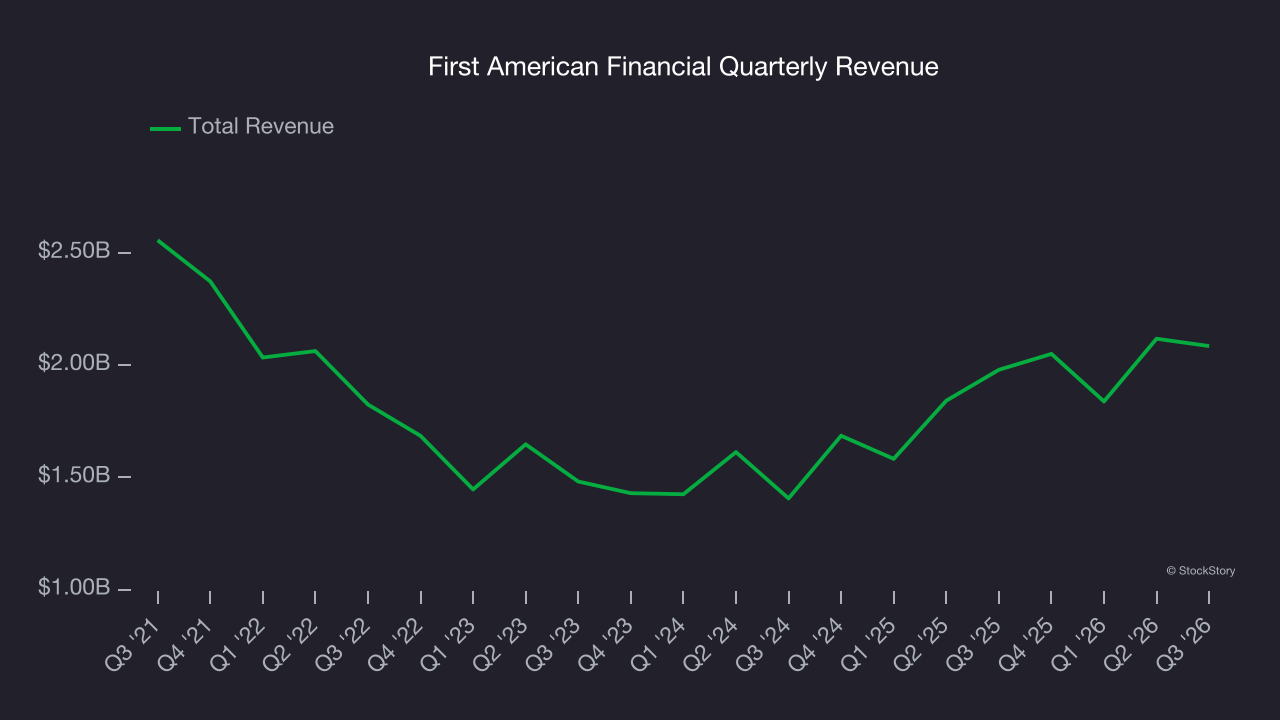
Long-term growth is the most important, but within financials, a half-decade historical view may miss recent interest rate changes and market returns. First American Financial’s annualized revenue growth of 17.4% over the last two years is above its five-year trend, suggesting its demand recently accelerated. 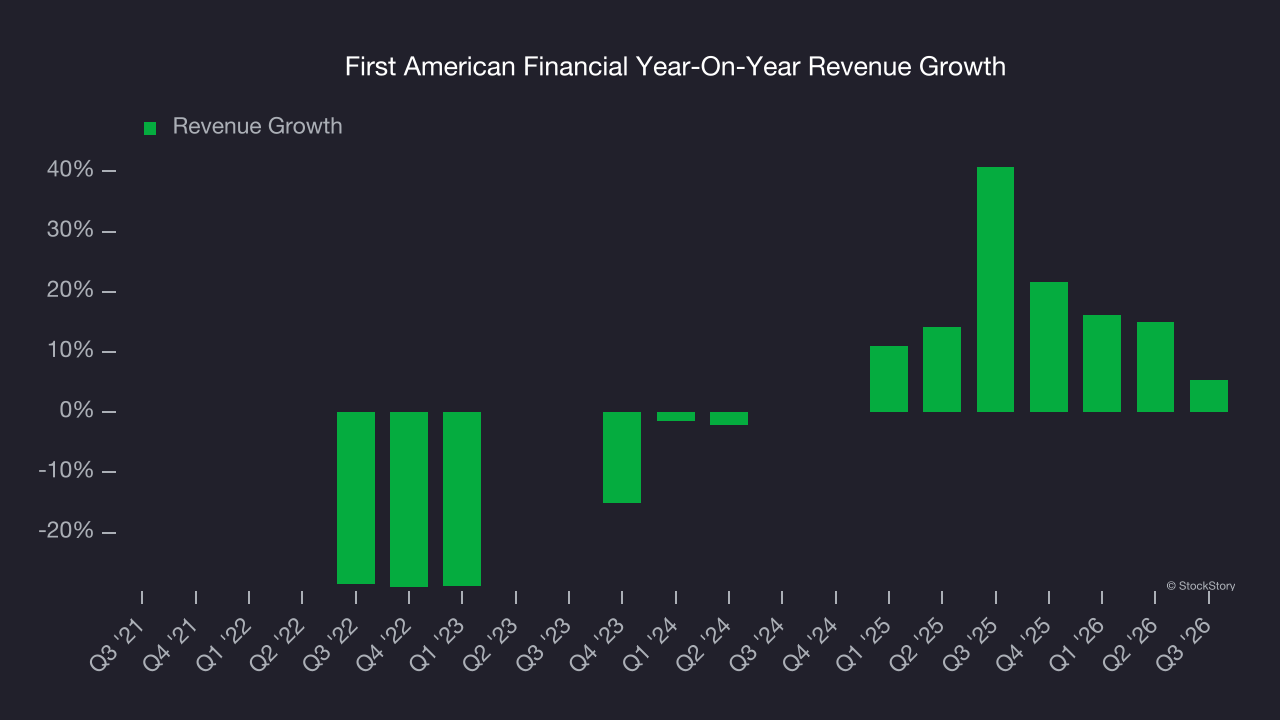 Note: Quarters not shown were determined to be outliers because they were impacted by outsized investment gains/losses that are not indicative of the recurring fundamentals of the business.
This quarter, First American Financial grew its revenue by 5.3% year on year, and its $2.08 billion of revenue was in line with Wall Street’s estimates.
Net premiums earned made up 80.8% of the company’s total revenue during the last five years, meaning First American Financial barely relies on non-insurance activities to drive its overall growth.
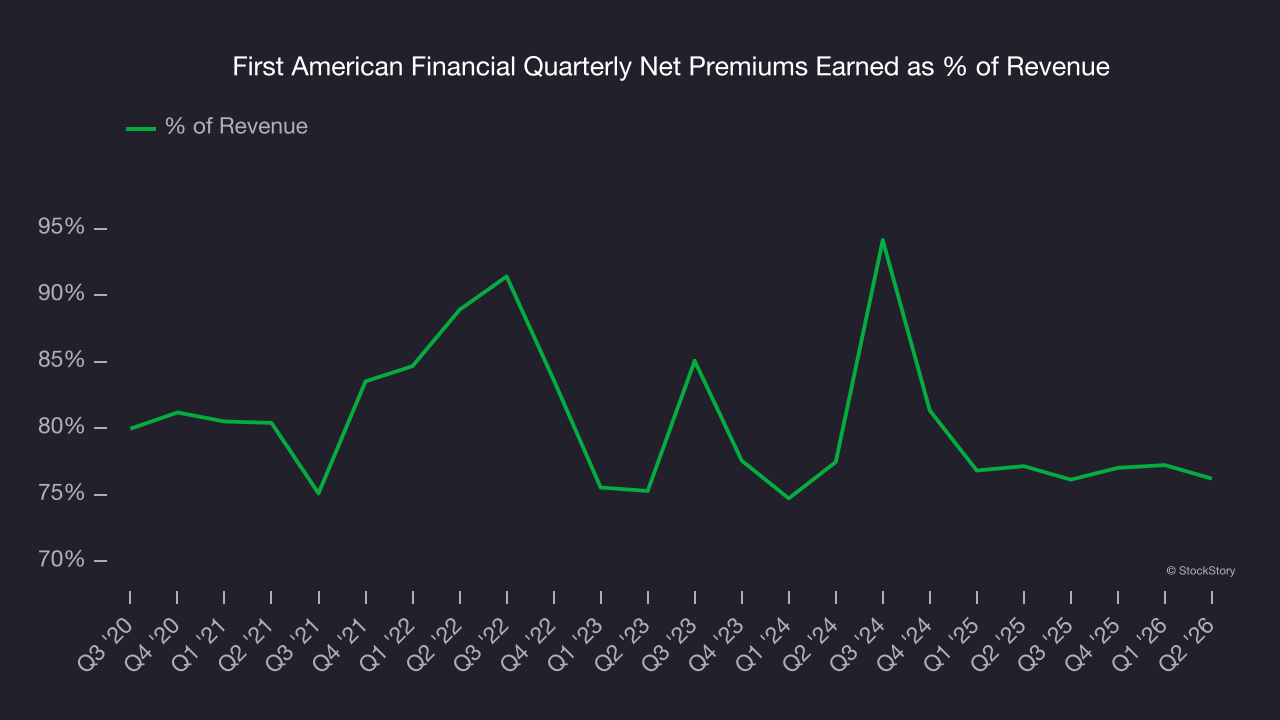
Our experience and research show the market cares primarily about an insurer’s net premiums earned growth as investment and fee income are considered more susceptible to market volatility and economic cycles.
ONE MORE THING: The $21 AI Application Stock Wall Street Forgot. While Wall Street obsesses over who’s building AI, one company is already using it to print money. And nobody’s paying attention.
AI chip stocks trade at ridiculous valuations. This company processes a trillion consumer signals monthly using AI and trades at a third of the price. The gap won’t last. The institutions will figure it out. You need to see this first. Read the FREE Report Before They Notice.
Net premiums earned
When insurers sell policies, they protect themselves from extremely large losses or an outsized accumulation of losses with reinsurance (insurance for insurance companies). Net premiums earned are therefore net of what’s ceded to reinsurers as a risk mitigation and transfer strategy.
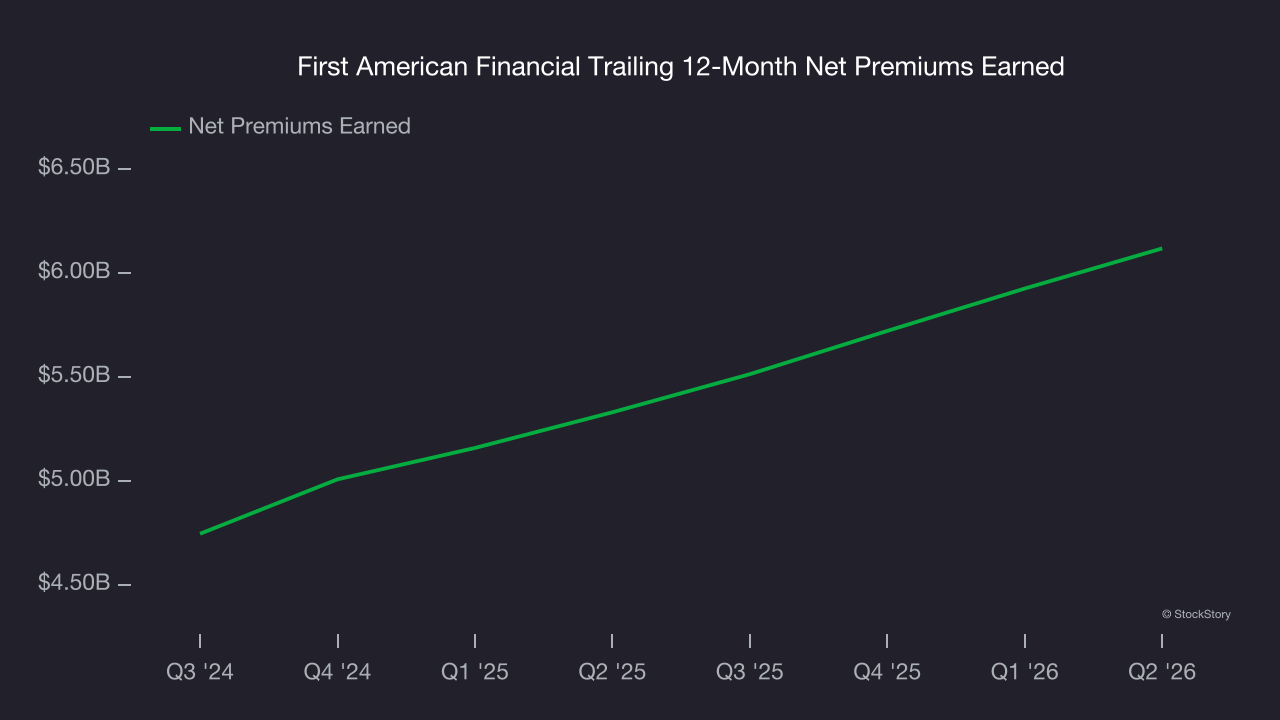
First American Financial’s net premiums earned has declined by 2.4% annually over the last five years, much worse than the broader insurance industry and in line with its total revenue.
When analyzing First American Financial’s net premiums earned over the last two years, we can see that growth accelerated to 16.1% annually. Since two-year net premiums earned grew slower than total revenue over this period, it’s implied that other line items such as investment income grew at a faster rate. These additional streams do play a key role in the bottom line, but their impact can vary. While some firms have excelled in consistently investing their float, sudden shifts in the fixed income and equity markets can heavily sway short-term performance.
Key takeaways from First American Financial’s Q3 results
We struggled to find many positives in these results. Its EPS missed and its revenue was in line with Wall Street’s estimates. Overall, this was a weaker quarter. The stock remained flat at $66.51 immediately after reporting.
Is First American Financial an attractive investment opportunity right now? If you’re making that decision, you should consider the bigger picture of valuation, business qualities, as well as the latest earnings. We cover that in our actionable full research report which you can read here (it’s free).