Global specialty insurer AXIS Capital Holdings Limited (NYSE: AXS) reported Q3 2026 results beating Wall Street’s revenue expectations, with revenue up 8.9% year on year to $1.79 billion. Its non-GAAP profit of $3.12 per share was 9.5% above analysts’ consensus estimates.
For more on AXIS Capital, read our full research report for free.
AXIS Capital (AXS) Q3 2026 highlights:
- Net premiums earned $1.62 billion vs analysts’ consensus estimates of $1.54 billion (11.5% year-on-year growth, 4.8% beat)
- Revenue $1.79 billion vs S&P analysts’ consensus estimates of $1.75 billion (8.9% year-on-year growth, 2.1% beat)
- Combined ratio 94% vs analysts’ consensus estimates of 93.1% (86 basis point miss)
- Adjusted EPS $3.12 vs S&P analysts’ consensus estimates of $2.85 (9.5% beat)
- Book value per share $79.06 (4.7% year-on-year growth)
- Market capitalization $7.46 billion
"As we look ahead to the remainder of this year and to 2027, AXIS is well-positioned. The strength of our balance sheet provides us with the flexibility to make smart investments in our business spanning products, platforms, and talent. We are excited about where AXIS stands today, supported by a clear strategy, balanced and resilient portfolio, enhanced operating model, and deep and capable team."
Revenue growth
Big picture, insurers generate revenue from three key sources. The first is the core business of underwriting policies. The second source is income from investing the “float” (premiums collected upfront not yet paid out as claims) in assets such as fixed-income assets and equities. The third is fees from various sources such as policy administration, annuities or other value-added services. Over the last five years, AXIS Capital grew its revenue at a mediocre 6.6% compounded annual growth rate, falling short of the insurance sector standard.
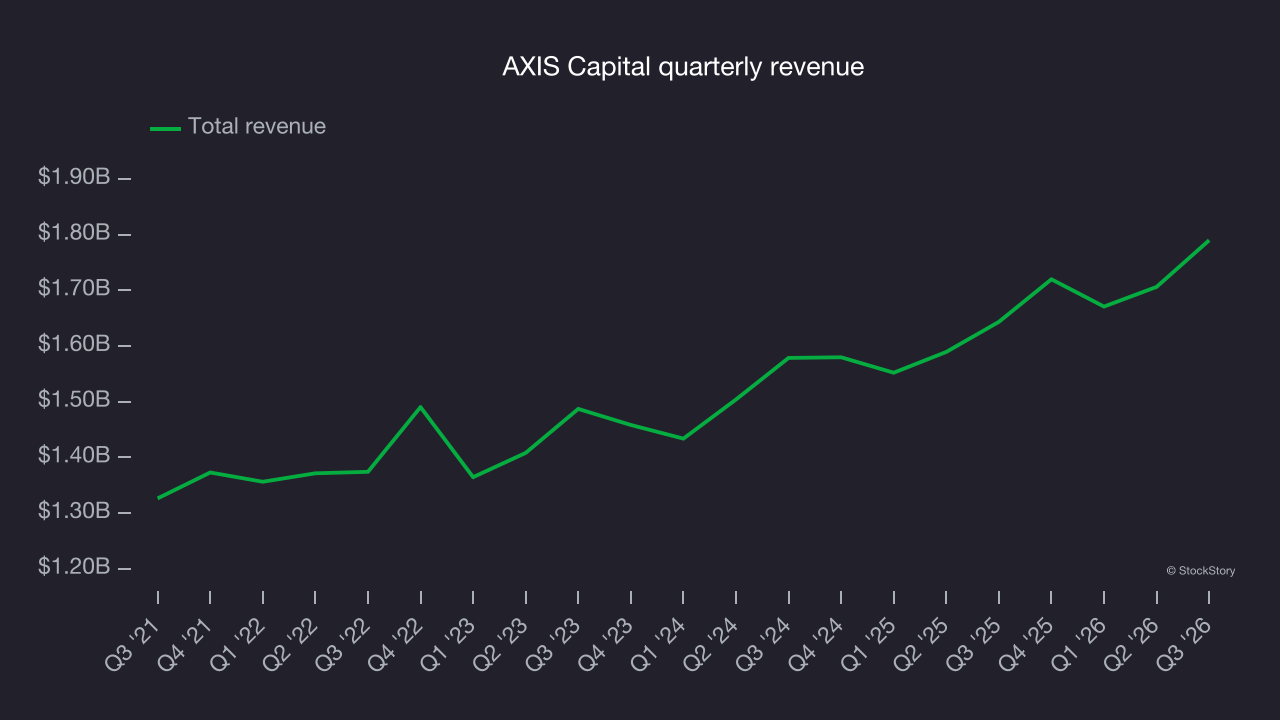
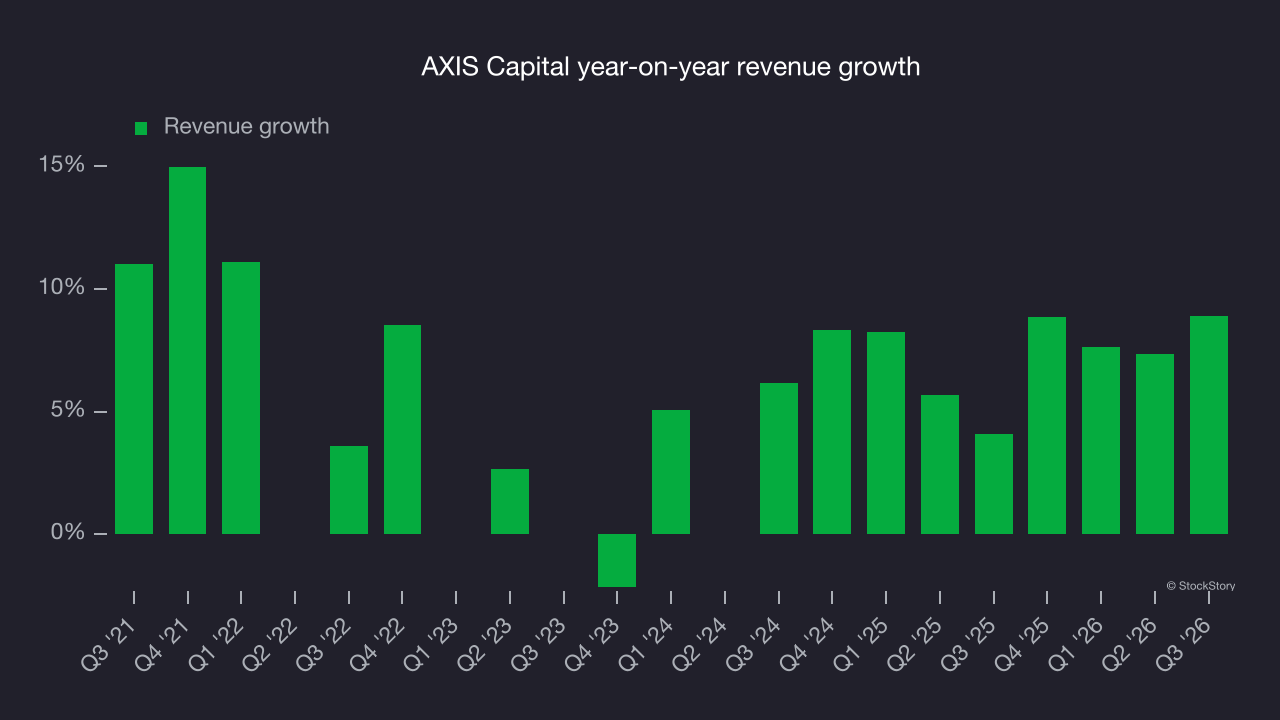
This quarter, AXIS Capital reported year-on-year revenue growth of 8.9%, and its $1.79 billion of revenue exceeded Wall Street’s consensus estimates by 2.1%.
Net premiums earned made up 89.1% of the company’s total revenue during the last five years, meaning AXIS Capital barely relies on non-insurance activities to drive its overall growth.
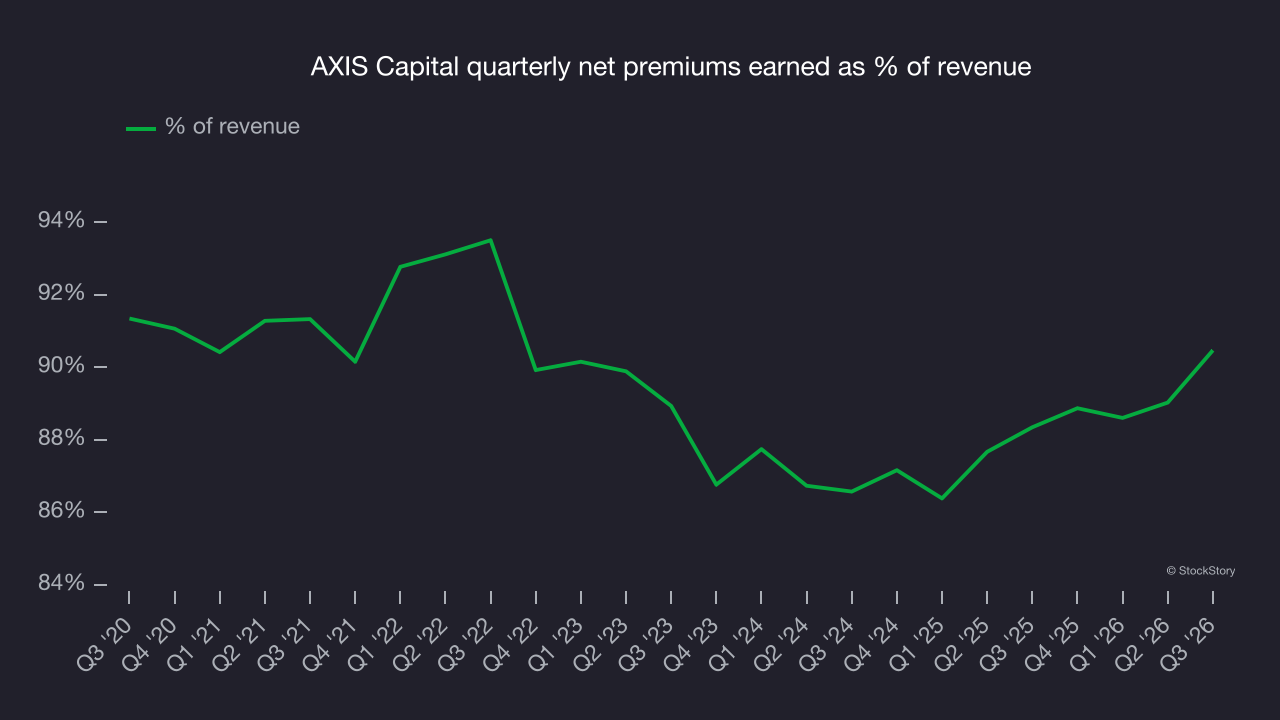
While insurers generate revenue from multiple sources, investors view net premiums earned as the cornerstone – their direct link to core operations stands in sharp contrast to the unpredictability of investment returns and fees.
Book value per share (BVPS)
Insurance companies are balance sheet businesses, collecting premiums upfront and paying out claims over time. The float – premiums collected but not yet paid out – is invested, creating an asset base supported by a liability structure. Book value captures this dynamic by measuring:
- Assets (investment portfolio, cash, reinsurance recoverables) - liabilities (claim reserves, debt, future policy benefits)
BVPS is essentially the residual value for shareholders.
BVPS is therefore an important metric to track for insurers and sheds light on business quality. While other, more commonly known per-share metrics like EPS can sometimes be lumpy due to reserve releases or one-time items and can be managed or skewed while still following accounting rules, BVPS reflects long-term capital growth and is harder to manipulate.
AXIS Capital’s BVPS grew at a mediocre 7% annual rate over the last five years. However, BVPS growth has accelerated recently, growing by 9.3% annually over the last two years from $66.15 to $79.06 per share.
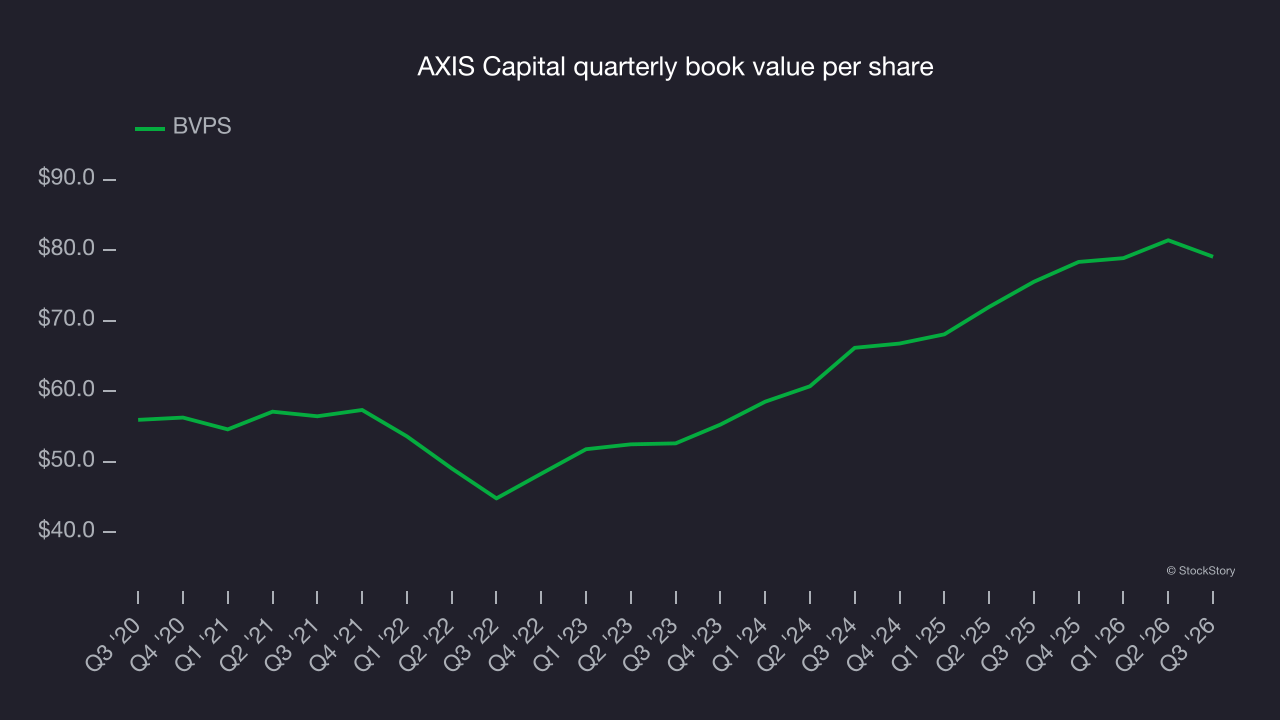
Over the next 12 months, analysts’ consensus estimates call for AXIS Capital’s BVPS to grow by 21.5% to $84.88, a strong growth rate.
Key takeaways from AXIS Capital’s Q3 results
AXIS Capital’s solid quarter included a sizable beat on net premiums earned and revenue above Wall Street’s consensus estimates. Shares remained flat at $101.58 immediately after the release.
When deciding whether to buy the stock, it’s important to consider its valuation, business qualities and latest quarterly results. For more on these factors, read the full research report here (it’s free).