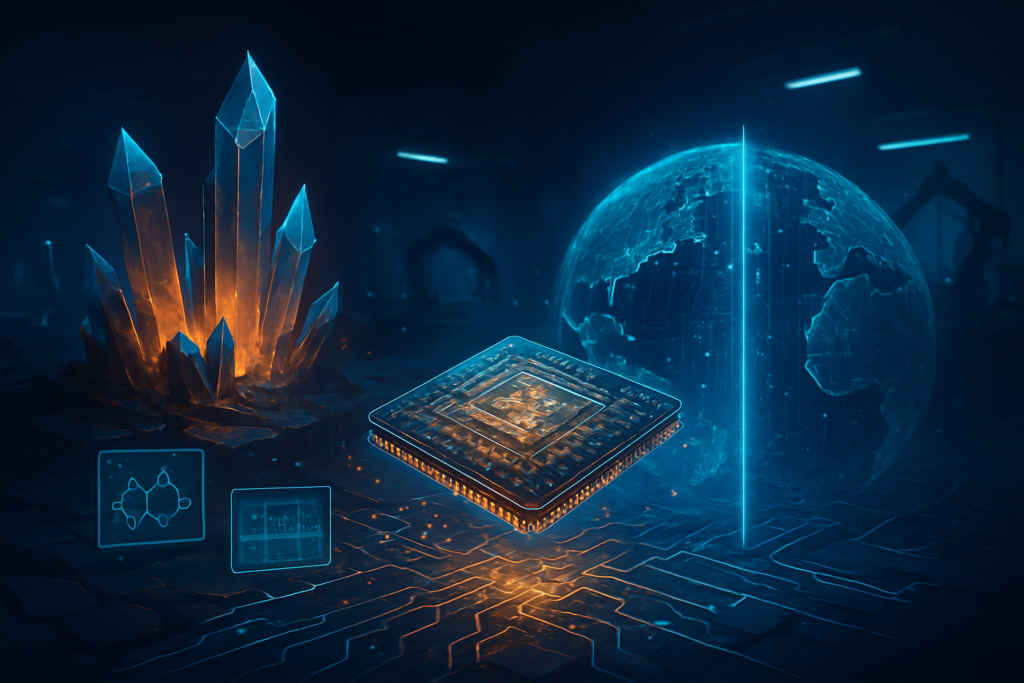
The global technology landscape reached a fever pitch in late 2024 when Beijing officially weaponized its dominance over the Earth’s crust, announcing a comprehensive ban on the export of gallium, germanium, and antimony to the United States. As of December 22, 2025, the ripples of this "material cold war" have fundamentally reshaped the semiconductor and defense industries. While a temporary reprieve was reached last month through the "Busan Accord," the ban remains a permanent fixture for military applications, effectively severing the U.S. defense industrial base from its primary source of critical minerals.
This strategic move was coupled with a domestic directive for Chinese firms to "ditch" U.S.-made silicon, signaling the end of an era for American tech hegemony in the East. The mandate has forced a rapid indigenization of AI hardware, pushing Chinese tech giants to pivot toward domestic alternatives like Huawei’s Ascend series. For the United States, the crisis has served as a brutal wake-up call regarding the fragility of the AI supply chain, sparking a multi-billion-dollar race to build domestic refining capacity before safety stocks run dry.
The Technical Triple Threat: Gallium, Germanium, and Antimony
The materials at the heart of this conflict—gallium, germanium, and antimony—are not merely industrial commodities; they are the lifeblood of high-performance computing and modern warfare. Gallium and germanium are essential for the production of high-speed compound semiconductors and fiber-optic systems. Gallium nitride (GaN) is particularly critical for the next generation of AI-optimized power electronics and high-frequency radar systems used by the U.S. military. Antimony, meanwhile, is indispensable for everything from infrared sensors to lead-acid batteries and flame retardants in munitions.
Before the ban, China controlled approximately 80% of the world’s gallium production and 60% of its germanium. The December 2024 restrictions "zeroed out" direct exports to the U.S., leading to a 200% surge in prices and a $3.4 billion impact on the U.S. economy. Unlike previous "light-touch" restrictions, this ban included strict end-user verification, requiring production-line photos and documentation to ensure no material reached U.S. soil through third-party intermediaries. Industry experts noted that while the U.S. has significant mineral reserves, it lacks the specialized smelting and refining infrastructure that China has spent decades perfecting, creating a "processing gap" that cannot be closed overnight.
The "Ditch US Chips" Mandate and the Corporate Fallout
Simultaneous with the mineral blockade, Beijing escalated its "Xinchuang" (IT application innovation) program, transitioning from a policy of encouraging domestic chips to an absolute mandate. In late 2025, Chinese regulators issued a directive requiring all state-funded data center projects to remove foreign hardware from any facility less than 30% complete. This move has had a devastating impact on Intel (NASDAQ: INTC) and AMD (NASDAQ: AMD), which previously relied on the Chinese market for nearly a quarter of their global revenue. Intel, in particular, suffered a "black swan" event as its microprocessors were effectively banned from all Chinese government systems in October 2025.
NVIDIA (NASDAQ: NVDA) has faced a more complex challenge. Despite a mid-2025 "revenue-sharing" arrangement that allowed the sale of high-end H200 chips to China—provided 25% of the revenue was paid as a fee to the U.S. Treasury—Beijing "quietly urged" firms like Alibaba (NYSE: BABA) and Tencent (HKG: 0700) to avoid them. The Chinese government cited security concerns over potential "remote shutdown" features in U.S. silicon. In response, Chinese firms have accelerated the adoption of the Huawei Ascend 910C, which, despite trailing NVIDIA’s flagship performance by 40%, has proven capable of handling large language model (LLM) inference tasks with high efficiency.
Weaponizing the Supply Chain: A Bipolar AI Ecosystem
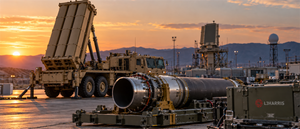
The broader significance of these developments lies in the emergence of a "bipolar" technology ecosystem. The world is no longer operating under a unified global supply chain but is instead splitting into two parallel stacks: one led by the U.S. and its allies, and the other by China. This mineral warfare is a direct parallel to the 1970s oil crisis, where a strategic resource was used to force geopolitical concessions. By restricting antimony, China has directly targeted the U.S. defense sector, causing significant production delays for contractors like Leonardo DRS (NASDAQ: DRS) and Lockheed Martin (NYSE: LMT), who reported being down to "safety stock" levels for germanium-based infrared sensors earlier this year.
This decoupling also represents a major shift in the AI landscape. While the U.S. maintains a lead in raw training power and software integration (CUDA), China is proving that algorithmic efficiency and massive domestic adoption can bridge the hardware gap. The "DeepSeek moment" of 2025—where Chinese researchers demonstrated LLM performance on domestic chips that rivaled Western models—shattered the myth that China could not innovate under sanctions. However, the cost of this independence is high; both nations are now forced to spend hundreds of billions of dollars to duplicate infrastructure that was once shared, leading to what economists call "inflationary decoupling."
The Road Ahead: 2027 and the Race for Self-Sufficiency
Looking forward, the tech industry is bracing for 2027, the year the U.S. Department of Defense has mandated a total cessation of all Chinese rare-earth magnet sourcing. This "cliff edge" is driving a frantic search for alternative supply chains in Australia, Canada, and Brazil. In the near term, the Busan Accord provides a 13-month window of relative stability for commercial users, but the military ban remains a permanent hurdle. Experts predict that the next phase of this conflict will move into the "secondary market," where China may attempt to restrict the export of the machinery used to process these minerals, not just the minerals themselves.
On the AI front, the focus is shifting toward "Embodied AI" and edge computing, where the mineral requirements are even more intense. As China moves to integrate its domestic chips into its vast industrial robotics sector, the U.S. will need to accelerate its own domestic smelting projects, currently supported by a $1.1 billion Defense Production Act fund. The challenge remains whether the U.S. can build a sustainable, environmentally compliant refining industry at a speed that matches China’s rapid indigenization of its chip sector.
A Final Assessment of the Great Decoupling
The events of 2024 and 2025 will be remembered as the definitive end of "Chimerica"—the symbiotic economic relationship between the world’s two largest powers. China’s decision to weaponize its mineral dominance has proven to be an effective, albeit risky, leverage point in the ongoing trade war. By targeting the raw materials essential for the AI revolution, Beijing has successfully forced the U.S. to the negotiating table, as evidenced by the Busan Accord, while simultaneously insulating its own tech sector from future U.S. sanctions.
For the global AI community, the takeaway is clear: hardware is the new geography. The ability to secure a supply chain from the mine to the data center is now as important as the ability to write a revolutionary algorithm. In the coming months, watch for the results of the first U.S.-based germanium recycling facilities and the performance benchmarks of Huawei’s next-generation Ascend 910D. The "Chip War" has evolved into a "Mineral War," and the stakes have never been higher for the future of artificial intelligence.
This content is intended for informational purposes only and represents analysis of current AI developments.
TokenRing AI delivers enterprise-grade solutions for multi-agent AI workflow orchestration, AI-powered development tools, and seamless remote collaboration platforms.
For more information, visit https://www.tokenring.ai/.