As the tech world approaches the end of 2025, the race to claim the "prime real estate" of the human face has reached a fever pitch. Reports from internal sources at Alphabet Inc. (NASDAQ: GOOGL) and recent industry demonstrations suggest that Google is preparing a massive, coordinated return to the smart glasses market. Unlike the ill-fated Google Glass of a decade ago, this new generation of wearables is built from the ground up to serve as the physical vessel for Gemini, Google’s most advanced multimodal AI. By integrating the real-time visual processing of "Project Astra," Google aims to provide users with a "universal AI agent" that can see, hear, and understand the world alongside them in real-time.
The significance of this move cannot be overstated. For years, the industry has theorized that the smartphone’s dominance would eventually be challenged by ambient computing—technology that exists in the background of our lives rather than demanding our constant downward gaze. With Gemini-integrated glasses, Google is betting that the combination of high-fashion frames and low-latency AI reasoning will finally move smart glasses from a niche enterprise tool to an essential consumer accessory. This development marks a pivotal shift for Google, moving away from being a search engine you "go to" and toward an intelligence that "walks with" you.
The Brain Behind the Lens: Project Astra and Multimodal Mastery
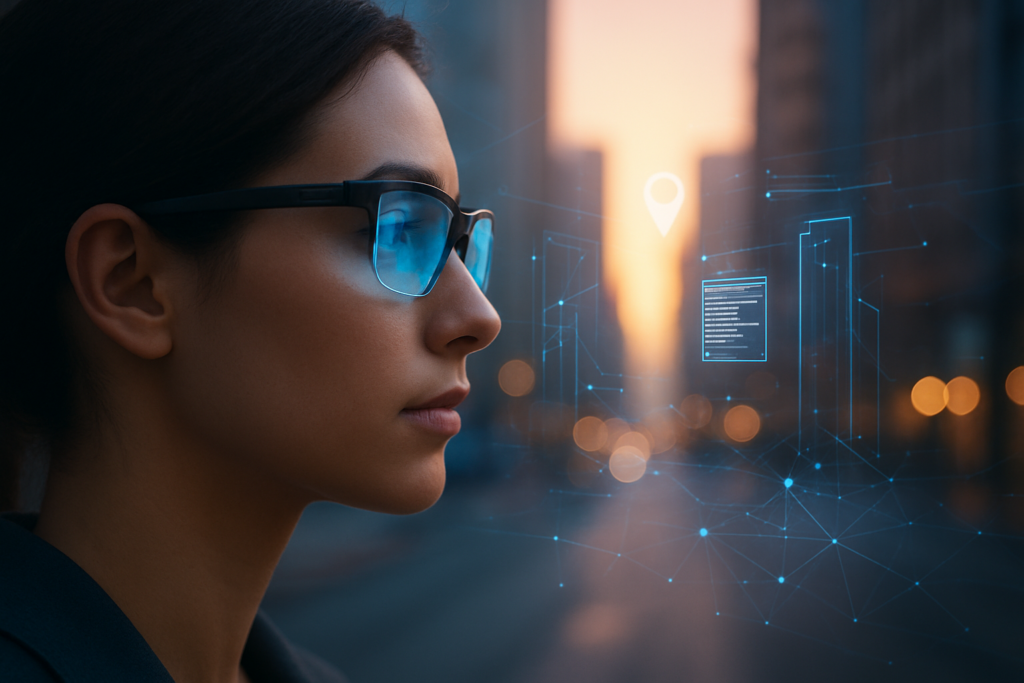
At the heart of the upcoming Google glasses is Project Astra, a breakthrough from Google DeepMind designed to handle multimodal inputs with near-zero latency. Technically, these glasses differ from previous iterations by moving beyond simple notifications or basic photo-taking. Leveraging the Gemini 2.5 and Ultra models, the glasses can perform "contextual reasoning" on a continuous video feed. In recent developer previews, a user wearing the glasses was able to look at a complex mechanical engine and ask, "What part is vibrating?" The AI, identifying the movement through the camera and correlating it with acoustic data, highlighted the specific bolt in the user’s field of view using an augmented reality (AR) overlay.
The hardware itself is reportedly split into two distinct categories to maximize market reach. The first is an "Audio-Only" model, focusing on sleek, lightweight frames that look indistinguishable from standard eyewear. These rely on bone-conduction audio and directional microphones to provide a conversational interface. The second, more ambitious model features a high-resolution Micro-LED display engine developed by Raxium—a startup Google acquired in 2022. These "Display AI" glasses utilize advanced waveguides to project private, high-contrast text and graphics directly into the user’s line of sight, enabling real-time translation subtitles and turn-by-turn navigation that anchors 3D arrows to the physical street.
Initial reactions from the AI research community have been largely positive, particularly regarding Google’s "long context window" technology. This allows the glasses to "remember" visual inputs for up to 10 minutes, solving the "where are my keys?" problem by allowing the AI to recall exactly where it last saw an object. However, experts note that the success of this technology hinges on battery efficiency. To combat heat and power drain, Google is utilizing the Snapdragon XR2+ Gen 2 chip from Qualcomm Inc. (NASDAQ: QCOM), offloading heavy computational tasks to the user’s smartphone via the new "Android XR" operating system.
The Battle for the Face: Competitive Stakes and Strategic Shifts
The intensifying rumors of Google's smart glasses have sent ripples through the boardrooms of Silicon Valley. Google’s strategy is a direct response to the success of the Ray-Ban Meta glasses produced by Meta Platforms, Inc. (NASDAQ: META). While Meta initially held a lead in the "fashion-first" category, Google has pivoted after being blocked from a partnership with EssilorLuxottica (EPA: EL) by a $3 billion investment from Meta. In response, Google has formed a strategic alliance with Warby Parker Inc. (NYSE: WRBY) and the high-end fashion label Gentle Monster. This "open platform" approach, branded as Android XR, is intended to make Google the primary software provider for all eyewear manufacturers, mirroring the strategy that made Android the dominant mobile OS.
This development poses a significant threat to Apple Inc. (NASDAQ: AAPL), whose Vision Pro headset remains a high-end, tethered experience focused on "spatial computing" rather than "daily-wear AI." While Apple is rumored to be working on its own lightweight glasses, Google’s integration of Gemini gives it a head start in functional utility. Furthermore, the partnership with Samsung Electronics (KRX: 005930) to develop a "Galaxy XR" ecosystem ensures that Google has the manufacturing muscle to scale quickly. For startups in the AI hardware space, such as those developing standalone pins or pendants, the arrival of a functional, stylish glass from Google could prove disruptive, as the eyes and ears of a pair of glasses offer a far more natural data stream for an AI than a chest-mounted camera.
Privacy, Subtitles, and the "Glasshole" Legacy
The wider significance of Google’s return to eyewear lies in how it addresses the societal scars left by the original Google Glass. To avoid the "Glasshole" stigma of the mid-2010s, the 2025/2026 models are rumored to include significant privacy-first hardware features. These include a physical shutter for the camera and a highly visible LED ring that glows brightly when the device is recording or processing visual data. Google is also reportedly implementing an "Incognito Mode" that uses geofencing to automatically disable cameras in sensitive locations like hospitals or bathrooms.
Beyond privacy, the cultural impact of real-time visual context is profound. The ability to have live subtitles during a conversation with a foreign-language speaker or to receive "social cues" via AI analysis could fundamentally change human interaction. However, this also raises concerns about "reality filtering," where users may begin to rely too heavily on an AI’s interpretation of their surroundings. Critics argue that an always-on AI assistant could further erode human memory and attention spans, creating a world where we only "see" what the algorithm deems relevant to our current task.
The Road to 2026: What Lies Ahead
In the near term, we expect Google to officially unveil the first consumer-ready Gemini glasses at Google I/O in early 2026, with a limited "Explorer Edition" potentially shipping to developers by the end of this year. The focus will likely be on "utility-first" use cases: helping users with DIY repairs, providing hands-free cooking instructions, and revolutionizing accessibility for the visually impaired. Long-term, the goal is to move the glasses from a smartphone accessory to a standalone device, though this will require breakthroughs in solid-state battery technology and 6G connectivity.
The primary challenge remains the social friction of head-worn cameras. While the success of Meta’s Ray-Bans has softened public resistance, a device that "thinks" and "reasons" about what it sees is a different beast entirely. Experts predict that the next year will be defined by a "features war," where Google, Meta, and potentially OpenAI—through their rumored partnership with Jony Ive and Luxshare Precision Industry Co., Ltd. (SZSE: 002475)—will compete to prove whose AI is the most helpful in the real world.
Final Thoughts: A New Chapter in Ambient Computing
The rumors of Gemini-integrated Google Glasses represent more than just a hardware refresh; they signal the beginning of the "post-smartphone" era. By combining the multimodal power of Gemini with the design expertise of partners like Warby Parker, Google is attempting to fix the mistakes of the past and deliver on the original promise of wearable technology. The key takeaway is that the AI is no longer a chatbot in a window; it is becoming a persistent layer over our physical reality.
As we move into 2026, the tech industry will be watching closely to see if Google can successfully navigate the delicate balance between utility and intrusion. If they succeed, the glasses could become as ubiquitous as the smartphone, turning every glance into a data-rich experience. For now, the world waits for the official word from Mountain View, but the signals are clear: the future of AI is not just in our pockets—it’s right before our eyes.
This content is intended for informational purposes only and represents analysis of current AI developments.
TokenRing AI delivers enterprise-grade solutions for multi-agent AI workflow orchestration, AI-powered development tools, and seamless remote collaboration platforms.
For more information, visit https://www.tokenring.ai/.