As the calendar turns to early 2026, the artificial intelligence industry is witnessing its most significant infrastructure shift since the start of the generative AI boom. For years, the "NVIDIA tax"—the high cost and limited supply of high-end GPUs—has been the primary bottleneck for tech giants. Today, that era of total dependence is coming to a close. Google, a subsidiary of Alphabet Inc. (NASDAQ: GOOGL), and Meta Platforms, Inc. (NASDAQ: META), have officially moved their latest generations of custom silicon, the TPU v6 (Trillium) and MTIA v3, into mass production, signaling a major transition toward vertical integration in the cloud.
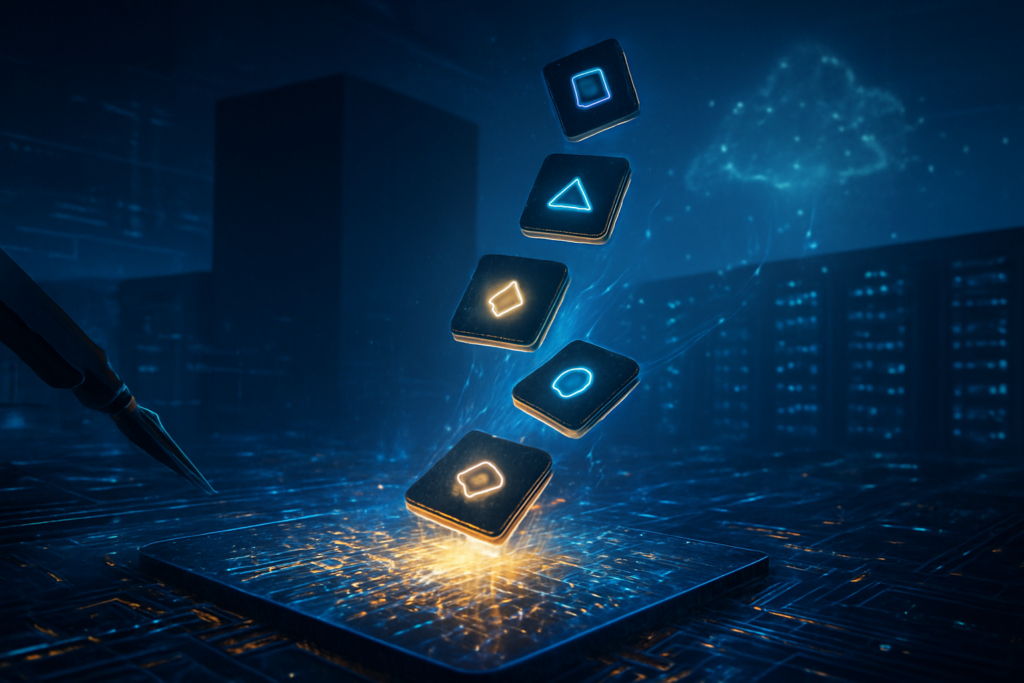
This movement represents more than just a search for cost savings; it is a fundamental architectural pivot. By designing chips specifically for their own internal workloads—such as recommendation algorithms, large language model (LLM) inference, and massive-scale training—hyperscalers are achieving performance-per-watt efficiencies that general-purpose GPUs struggle to match. As these custom accelerators flood data centers throughout 2026, the competitive landscape for AI infrastructure is being rewritten, challenging the long-standing dominance of NVIDIA (NASDAQ: NVDA) in the enterprise cloud.
Technical Prowess: The Rise of Specialized ASICs
The Google TPU v6, codenamed Trillium, has entered 2026 as the volume leader in Google’s fleet, with production scaling to over 1.6 million units this year. Trillium represents a massive leap forward, boasting a 4.7x increase in peak compute performance per chip compared to its predecessor, the TPU v5e. Technically, the TPU v6 is optimized for the "SparseCore" architecture, which is critical for the massive embedding tables used in modern recommendation systems and the "Mixture of Experts" (MoE) models that power the latest iterations of Gemini. By doubling the High Bandwidth Memory (HBM) capacity and bandwidth, Google has created a chip that excels at the high-throughput demands of 2026’s multimodal AI agents.
Simultaneously, Meta’s MTIA v3 (Meta Training and Inference Accelerator) has moved from testing into full-scale deployment. Unlike earlier versions which were primarily focused on inference, the MTIA v3 is a full-stack training and inference solution. Built on a refined 3nm process, the MTIA v3 utilizes a custom RISC-V-based matrix compute grid. This architecture is specifically tuned to run Meta’s PyTorch-based workloads with surgical precision. Early benchmarks suggest that the MTIA v3 provides a 3x performance boost over its predecessor, allowing Meta to train its Llama-series models with significantly lower latency and power consumption than standard GPU clusters.
This shift differs from previous approaches because it moves away from the "one-size-fits-all" philosophy of the GPU. While NVIDIA’s Blackwell architecture remains the gold standard for raw, versatile power, the TPU v6 and MTIA v3 are Application-Specific Integrated Circuits (ASICs). They strip away the hardware overhead required for general-purpose graphics or scientific simulation, focusing entirely on the tensor operations and memory management required for neural networks. Industry experts have noted that while a GPU is a "Swiss Army knife," these new chips are high-precision scalpels, designed to perform specific AI tasks with nearly double the cost-efficiency of general hardware.
The reaction from the AI research community has been one of cautious optimism. Researchers at major labs have highlighted that the proliferation of custom silicon is finally easing the "compute crunch" that defined 2024 and 2025. However, the transition has required a significant software evolution. The success of these chips in 2026 is largely attributed to the maturity of open-source compilers like OpenAI’s Triton and the release of PyTorch 3.0, which have effectively neutralized NVIDIA's "CUDA moat" by making it easier for developers to port code across different hardware architectures without massive performance penalties.
Market Repercussions: Challenging the NVIDIA Hegemony
The strategic implications for the tech giants are profound. For companies like Google and Meta, producing their own silicon is a defensive necessity. By 2026, inference workloads—the process of running a trained model for users—are projected to account for nearly 70% of all AI-related compute. Because custom ASICs like the TPU v6 are roughly 1.4x to 2x more cost-efficient than GPUs for inference, Google can offer its AI services at a lower price point than competitors who are still paying a premium for third-party hardware. This vertical integration provides a massive margin advantage in the increasingly commoditized market for LLM API calls.
NVIDIA is already feeling the pressure. While the company still maintains a commanding lead in the highest-end frontier model training, its market share in the broader AI accelerator space is expected to slip from its peak of 95% down toward 75-80% by the end of 2026. The rise of "Hyperscaler Silicon" means that Amazon.com, Inc. (NASDAQ: AMZN) and Microsoft Corporation (NASDAQ: MSFT) are also less reliant on NVIDIA’s roadmap. Amazon’s Trainium 3 (Trn3) has also reached mass deployment this year, achieving performance parity with NVIDIA’s Blackwell racks for specific training tasks, further crowding the high-end market.
For startups and smaller AI labs, this development is a double-edged sword. On one hand, the increased competition is driving down the cost of cloud compute, making it cheaper to build and deploy new models. On the other hand, the best-performing hardware is increasingly "walled off" within specific cloud ecosystems. A startup using Google Cloud may find that their models run significantly faster on TPU v6, but moving those same models to Microsoft Azure’s Maia 200 silicon could require significant re-optimization. This creates a new kind of "vendor lock-in" based on hardware architecture rather than just software APIs.
Strategic positioning in 2026 is now defined by "silicon sovereignty." Meta, for instance, has stated its goal to migrate 100% of its internal recommendation traffic to MTIA by 2027. By owning the hardware, Meta can optimize its social media algorithms at a level of granularity that was previously impossible. This allows for more complex, real-time personalization of content without a corresponding explosion in data center energy costs, giving Meta a distinct advantage in the battle for user attention and advertising efficiency.
The Industrialization of AI
The shift toward custom silicon in 2026 marks the "industrialization phase" of the AI revolution. In the early days, the industry relied on whatever hardware was available—primarily gaming GPUs. Today, the infrastructure is being purpose-built for the task at hand. This mirrors historical trends in other industries, such as the transition from general-purpose steam engines to specialized internal combustion engines designed for specific types of vehicles. It signifies that AI has moved from a research curiosity to the foundational utility of the modern economy.
Environmental concerns are also a major driver of this trend. As global energy grids struggle to keep up with the demands of massive data centers, the efficiency gains of chips like the TPU v6 are critical. Custom silicon allows hyperscalers to do more with less power, which is essential for meeting the sustainability targets that many of these corporations have set for the end of the decade. The ability to perform 4.7x more compute per watt isn't just a financial metric; it's a regulatory and social necessity in a world increasingly conscious of the carbon footprint of digital services.
However, this transition also raises concerns about the concentration of power. As the "Big Five" tech companies develop their own proprietary hardware, the barrier to entry for a new cloud provider becomes nearly insurmountable. It is no longer enough to buy a fleet of GPUs; a competitor would now need to invest billions in R&D to design their own chips just to achieve price parity. This could lead to a permanent oligopoly in the AI infrastructure space, where only a handful of companies possess the specialized hardware required to run the world's most advanced intelligence systems.
Comparatively, this milestone is being viewed as the "Post-GPU Era." While GPUs will likely always have a place in the market due to their versatility and the massive ecosystem surrounding them, they are no longer the undisputed kings of the data center. The successful mass production of TPU v6 and MTIA v3 in 2026 serves as a clear signal that the future of AI is heterogeneous. We are moving toward a world where the hardware is as specialized as the software it runs, leading to a more efficient, albeit more fragmented, technological landscape.
The Road to 2027 and Beyond
Looking ahead, the silicon wars are only expected to intensify. Even as TPU v6 and MTIA v3 dominate the headlines today, Google is already beginning the limited rollout of TPU v7 (Ironwood), its first 3nm chip designed for massive rack-scale computing. Experts predict that by 2027, we will see the first 2nm AI chips entering the prototyping phase, pushing the limits of Moore’s Law even further. The focus will likely shift from raw compute power to "interconnect density"—how fast these thousands of custom chips can talk to one another to form a single, giant "planetary computer."
We also expect to see these custom designs move closer to the "edge." While 2026 is the year of the data center chip, the architectural lessons learned from MTIA and TPU are already being applied to mobile processors and local AI accelerators. This will eventually lead to a seamless continuum of AI hardware, where a model can be trained on a TPU v6 cluster and then deployed on a specialized mobile NPU (Neural Processing Unit) that shares the same underlying architecture, ensuring maximum efficiency from the cloud to the pocket.
The primary challenge moving forward will be the talent war. Designing world-class silicon requires a highly specialized workforce of chip architects and physical design engineers. As hyperscalers continue to expand their hardware divisions, the competition for this talent will be fierce. Furthermore, the geopolitical stability of the semiconductor supply chain remains a lingering concern. While Google and Meta design their chips in-house, they still rely on foundries like TSMC for production. Any disruption in the global supply chain could stall the ambitious rollout plans for 2027 and beyond.
Conclusion: A New Era of Infrastructure
The mass production of Google’s TPU v6 and Meta’s MTIA v3 in early 2026 represents a pivotal moment in the history of computing. It marks the end of NVIDIA’s absolute monopoly and the beginning of a new era of vertical integration and specialized hardware. By taking control of their own silicon, hyperscalers are not only reducing costs but are also unlocking new levels of performance that will define the next generation of AI applications.
In terms of significance, 2026 will be remembered as the year the "AI infrastructure stack" was finally decoupled from the gaming GPU heritage. The move to ASICs represents a maturation of the field, where efficiency and specialization are the new metrics of success. This development ensures that the rapid pace of AI advancement can continue even as the physical and economic limits of general-purpose hardware are reached.
In the coming months, the industry will be watching closely to see how NVIDIA responds with its upcoming Vera Rubin (R100) architecture and how quickly other players like Microsoft and AWS can scale their own designs. The battle for the heart of the AI data center is no longer just about who has the most chips, but who has the smartest ones. The silicon divorce is finalized, and the future of intelligence is now being forged in custom-designed silicon.
This content is intended for informational purposes only and represents analysis of current AI developments.
TokenRing AI delivers enterprise-grade solutions for multi-agent AI workflow orchestration, AI-powered development tools, and seamless remote collaboration platforms.
For more information, visit https://www.tokenring.ai/.