Low-code automation software company Pegasystems (NASDAQ: PEGA) fell short of the market’s revenue expectations in Q1 CY2026, with sales falling 9.6% year on year to $430 million. Its non-GAAP profit of $0.46 per share was 33.6% below analysts’ consensus estimates.
Is now the time to buy Pegasystems? Find out by accessing our full research report, it’s free.
Pegasystems (PEGA) Q1 CY2026 Highlights:
- Revenue: $430 million vs analyst estimates of $464 million (9.6% year-on-year decline, 7.3% miss)
- Total ACV: $1.62 billion vs analyst estimates of $1.65 billion (miss)
- Adjusted EPS: $0.46 vs analyst expectations of $0.69 (33.6% miss)
- Adjusted Operating Income: $82.81 million vs analyst estimates of $151.1 million (19.3% margin, 45.2% miss)
- Operating Margin: 8.6%, down from 26.7% in the same quarter last year
- Free Cash Flow Margin: 48%, up from 30.2% in the previous quarter
- Market Capitalization: $6.64 billion
Company Overview
With a "Center-out Business Architecture" approach that transcends organizational silos, Pegasystems (NASDAQ: PEGA) develops software that helps organizations automate workflows and use artificial intelligence to improve customer experiences and business processes.
Revenue Growth
A company’s long-term sales performance can indicate its overall quality. Even a bad business can shine for one or two quarters, but a top-tier one grows for years. Unfortunately, Pegasystems’s 9.8% annualized revenue growth over the last five years was sluggish. This was below our standard for the software sector and is a tough starting point for our analysis.
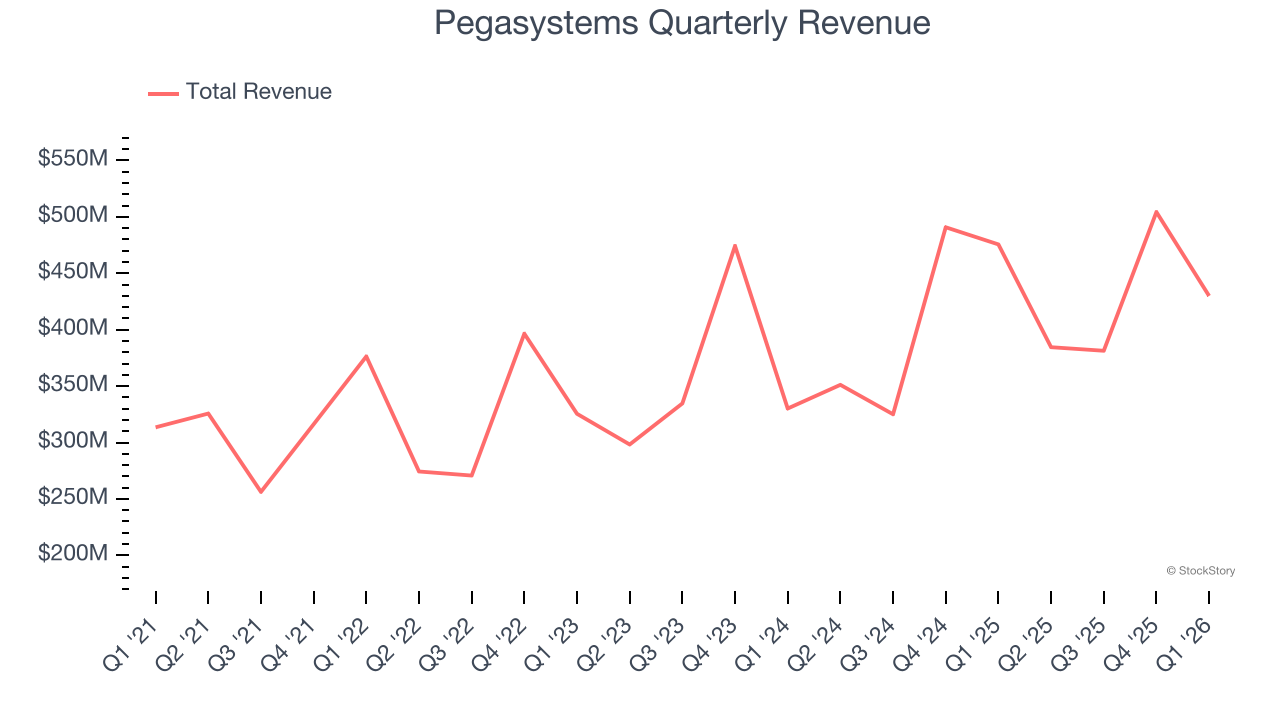
We at StockStory place the most emphasis on long-term growth, but within software, a half-decade historical view may miss recent innovations or disruptive industry trends. Pegasystems’s recent performance shows its demand has slowed as its annualized revenue growth of 8.8% over the last two years was below its five-year trend. We’re wary when companies in the sector see decelerations in revenue growth, as it could signal changing consumer tastes aided by low switching costs. 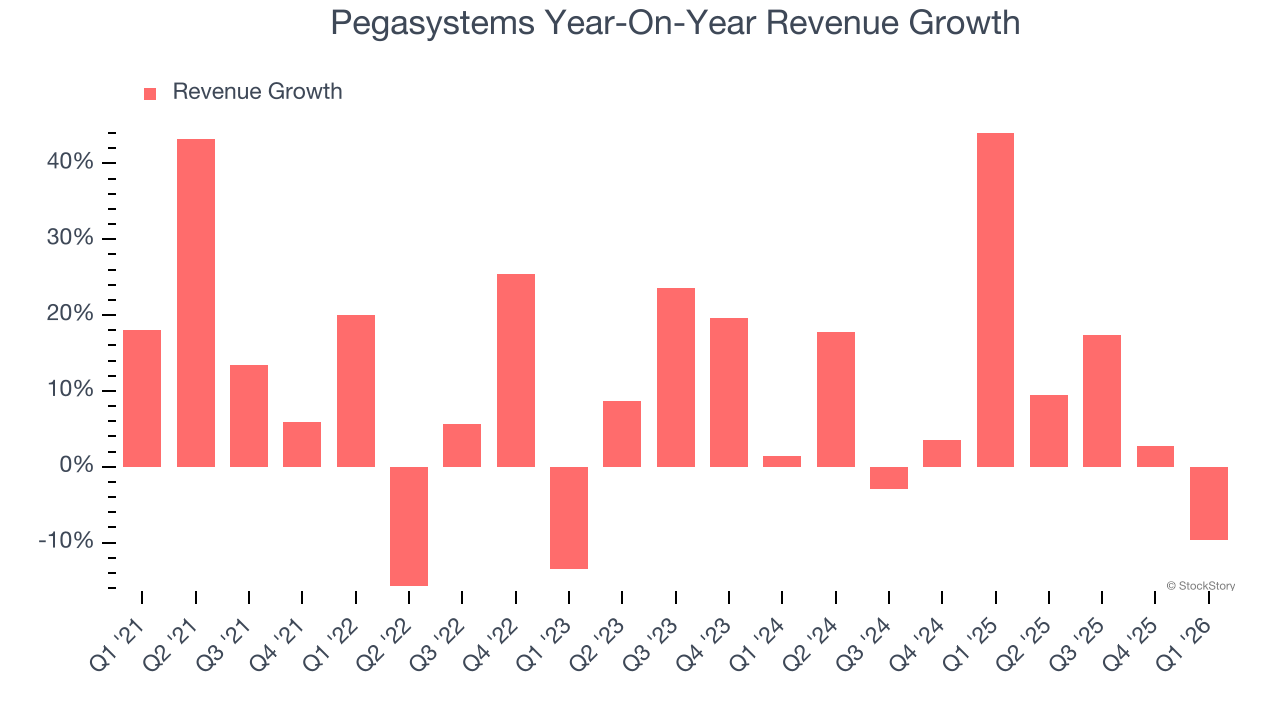
This quarter, Pegasystems missed Wall Street’s estimates and reported a rather uninspiring 9.6% year-on-year revenue decline, generating $430 million of revenue.
Looking ahead, sell-side analysts expect revenue to grow 21.4% over the next 12 months, an improvement versus the last two years. This projection is healthy and indicates its newer products and services will fuel better top-line performance.
WHILE YOU’RE HERE: The Next Palantir? One satellite company captures images of every point on Earth. Every single day. The Pentagon wants it. Hedge funds are using it to beat earnings. You’ve probably never heard of it.
This is what the early days of Palantir looked like before it became a $437 billion giant. Same playbook. Different technology. If you missed Palantir, you need to see this. Claim The Stock Ticker for Free HERE.
Annual Contract Value
While reported revenue for a SaaS business can include a range of one-time items like implementation fees, annual contract value (ACV) only considers contracted revenue, usually from recurring software subscriptions. This is the high-margin, predictable revenue stream that makes SaaS businesses so valuable.
Pegasystems’s ACV came in at $1.6 billion in Q1, and over the last four quarters, its growth slightly lagged the sector as it averaged 13.9% year-on-year increases. However, this alternate topline metric grew faster than total sales, which likely means that the contracted or more recurring portions of the business are growing faster than less predictable, choppier ones such as implementation fees. That could be a good sign for future revenue growth. 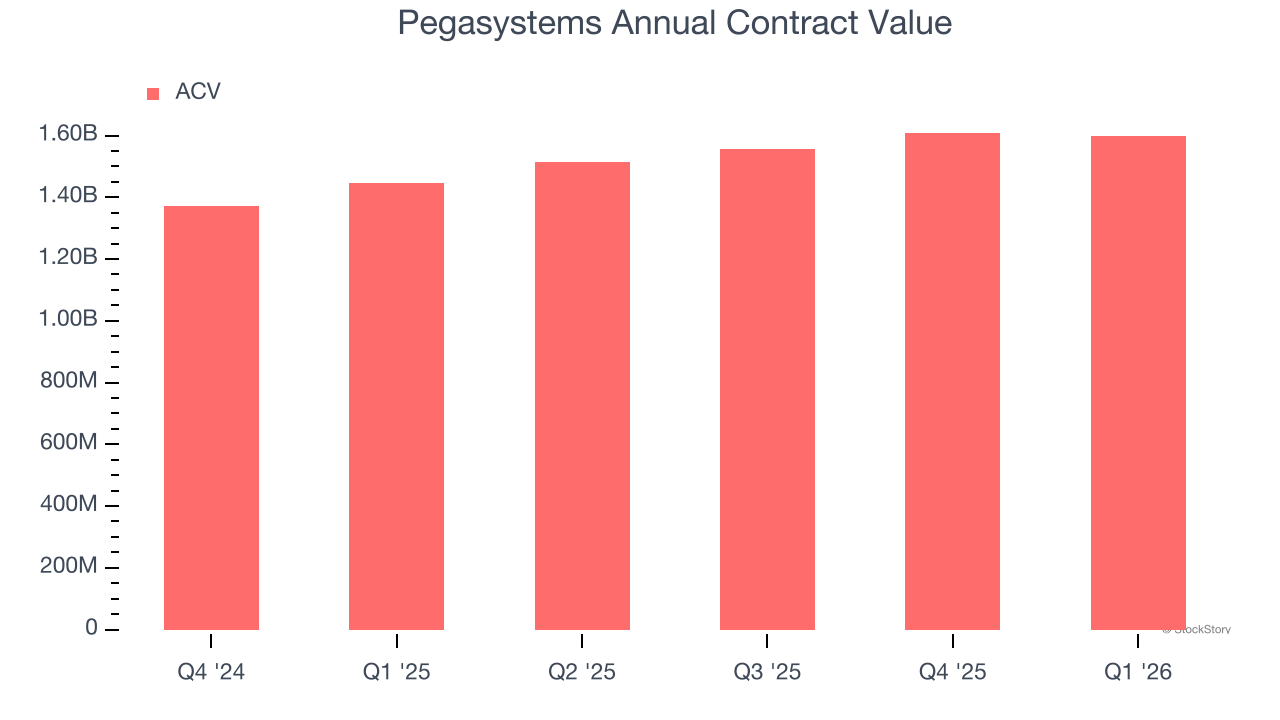
Customer Acquisition Efficiency
The customer acquisition cost (CAC) payback period measures the months a company needs to recoup the money spent on acquiring a new customer. This metric helps assess how quickly a business can break even on its sales and marketing investments.
Pegasystems’s recent customer acquisition efforts haven’t yielded returns as its CAC payback period was negative this quarter, meaning its incremental sales and marketing investments outpaced its revenue. The company’s inefficiency indicates it operates in a highly competitive environment where there is little differentiation between Pegasystems’s products and its peers.
Key Takeaways from Pegasystems’s Q1 Results
Revenue and total ACV missed. Operating income also fell short of estimates. Overall, this quarter could have been better. Still, the stock traded up 2.9% to $40.41 immediately following the results.
So should you invest in Pegasystems right now? When making that decision, it’s important to consider its valuation, business qualities, as well as what has happened in the latest quarter. We cover that in our actionable full research report which you can read here (it’s free).