As manufacturers across automotive, construction, HVAC, furniture, and industrial equipment sectors continue to pursue higher production accuracy and lower labor dependence, bending technology is drawing renewed attention in the global metal fabrication market. Industry demand is increasingly moving beyond traditional manual forming toward automated systems such as the CNC Pipe Bending Machine, CNC Tube Bender, and Electric Tube Bending Machine, which are designed to improve repeatability, reduce scrap, and support more complex tube and pipe forming requirements.
In this context, suppliers including SLS Machinery are presenting broader bending and pipe processing equipment portfolios aimed at helping buyers address increasingly specialized production needs.
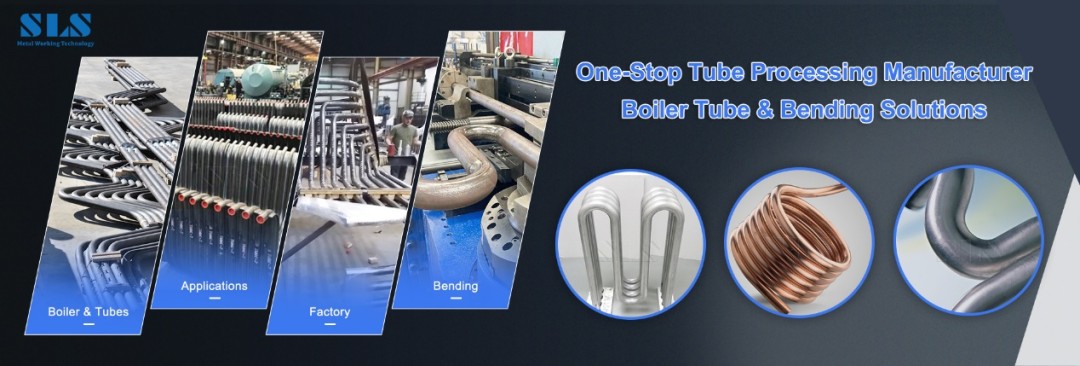
Bending Machines Remain Central to Modern Tube and Pipe Fabrication
A bending machine works by applying controlled force to a tube, pipe, or metal profile so that it can be formed to a required angle or radius. Compared with fabrication methods that rely on cutting and welding multiple sections together, bending allows manufacturers to reduce weld points, improve structural consistency, and create cleaner finished components.
This capability has become especially important in industries where bent tubing serves both structural and functional purposes. Applications range from exhaust systems and seat frames to handrails, heat exchanger tubes, fluid pipelines, and furniture components. As end users demand tighter tolerances and greater part uniformity, the role of the CNC Pipe Bending Machine has become more prominent in production planning.
The Working Principle Behind a Bending Machine
At a technical level, most bending machines operate with a combination of tooling and controlled motion. Core components typically include a bend die, clamp die, pressure die, and in some applications a mandrel. During the process, the workpiece is secured in position while the bending arm rotates around the bend die, gradually forming the material to a defined angle or radius.
Although the mechanical principle is relatively straightforward, the degree of automation differs significantly between machine types. In manual or semi-automatic systems, some steps may still rely on operator control. By contrast, a CNC Tube Bender can automatically coordinate feeding, rotation, and bending sequences, making it possible to produce complex multi-bend and three-dimensional parts with reduced manual repositioning.
This shift toward automation is one reason CNC-controlled systems are increasingly favored by manufacturers that require stable quality across medium- to high-volume production.
Material, Tooling, and Control All Influence Bending Quality
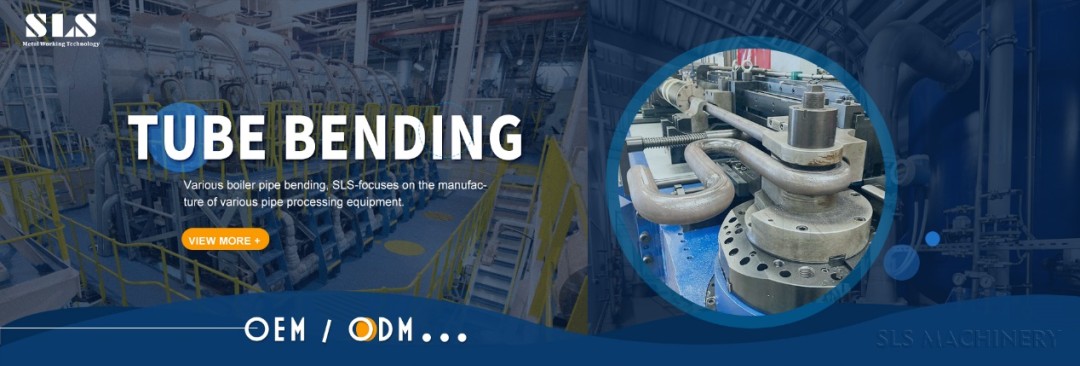
Industry specialists note that bending performance depends on more than the machine structure alone. Material type, wall thickness, tube diameter, bend radius, and tooling configuration all affect the final result.
Stainless steel, aluminum, copper, and carbon steel each respond differently during forming. Thin-wall tubes may require tighter process control to avoid wrinkling, cracking, or flattening, while tighter bend radii often call for more advanced tooling support. In these scenarios, the choice between a standard bending system and a more advanced CNC Pipe Bending Machine or Electric Tube Bending Machine can significantly influence final part quality.
Tooling precision also plays a critical role. High-quality clamping, die accuracy, and stable pressure control are essential for achieving repeatable bends, particularly where high output and tight tolerances are required.
Electric and CNC Technologies Gain More Market Attention
As production requirements become more sophisticated, electric and CNC-driven machines are receiving growing attention from buyers. A CNC Tube Bender is widely recognized for its ability to store programs, manage multi-axis motion, and deliver repeatable results across batch production. These features make it particularly suitable for manufacturers handling complex geometries or multiple part variations.
At the same time, the Electric Tube Bending Machine is attracting interest for its precision, cleaner operation, and energy efficiency. Servo-electric technology is often selected for applications where accurate angle control, reduced maintenance, and stable repeat performance are priorities.
Hydraulic systems still remain relevant in heavy-duty applications, particularly where larger tube sizes or higher force output are required. However, market interest in electric and hybrid solutions suggests that many manufacturers are now balancing force capacity with programmability, energy use, and ease of control.
Why CNC Pipe Bending Machines Are Being Evaluated More Closely
From a purchasing perspective, the discussion around how a bending machine works is increasingly linked to broader manufacturing efficiency goals. Buyers are no longer focused only on whether a machine can complete a bend. More often, the question is whether it can do so consistently, economically, and with minimal operator dependence.
A CNC Pipe Bending Machine can help manufacturers reduce setup variability, shorten production cycles, and improve part-to-part consistency. It can also support faster program switching for factories producing multiple tube configurations, which is particularly valuable in job shop and customized manufacturing environments.
As a result, CNC systems are being adopted not only by large-scale producers, but also by smaller fabrication companies looking to improve process stability and reduce rework.
Buyers Increasingly Focus on Application-Based Machine Selection
Industry suppliers report that machine selection is becoming more application-driven than model-driven. Instead of asking only for a machine specification sheet, buyers are more frequently evaluating equipment based on real production conditions, including pipe size, material, wall thickness, bend complexity, and expected output.
Other common questions involve voltage compatibility, tooling support, after-sales spare parts, and the supplier’s ability to recommend an appropriate configuration based on part drawings or production targets. This shift reflects a broader trend in the fabrication equipment sector, where machine suppliers are increasingly expected to provide process guidance in addition to standard equipment.
Public-facing information from SLS Machinery reflects this market direction, with the company presenting pipe and tube processing solutions that include CNC Pipe Bending Machine models, CNC Tube Bender systems, and related fabrication equipment for different application requirements.
SLS Machinery Highlights Broader Tube Processing Solutions

As market demand continues to evolve, SLS Machinery is among the suppliers emphasizing a more complete approach to pipe and tube fabrication equipment. In addition to bending systems, the company presents related processing solutions intended to support broader manufacturing workflows.
For buyers, this broader product positioning can be relevant when bending is only one step in a larger fabrication process. In many production settings, bending must work in coordination with cutting, end forming, punching, or other secondary operations. Suppliers that understand these workflow connections may be better positioned to support efficient equipment selection.
Within this competitive landscape, product categories such as the CNC Pipe Bending Machine, CNC Tube Bender, and Electric Tube Bending Machine continue to gain visibility as manufacturers seek more precise and scalable forming solutions.
Market Outlook Points to Continued Demand for Automated Bending Equipment
The growing emphasis on automation, product consistency, and labor efficiency suggests that bending technology will remain a key area of investment in metal fabrication. As manufacturers continue to upgrade production capabilities, automated systems are expected to play an increasingly important role in meeting tighter quality standards and more complex design requirements.
While the working principle of a bending machine remains fundamentally based on controlled force and tooling movement, modern equipment now integrates programming, axis coordination, and process optimization in ways that significantly expand production capability.
For manufacturers evaluating the next step in tube fabrication, the choice of a CNC Pipe Bending Machine, CNC Tube Bender, or Electric Tube Bending Machine may have a direct impact on operating efficiency, part quality, and long-term production flexibility. Suppliers such as SLS Machinery are positioning their offerings within this broader industry shift, where buyers increasingly prioritize both machine performance and application support.
Need a Custom Tube Bending Solution?
ContactSLS Machinery-a global leader in pipe bending equipment and CNC tube forming technology.
Media Contact
Company Name: SLS Machinery Co.,Ltd.
Contact Person: Evan
Email: Send Email
Phone: +86-181 0015 0701
City: Zhangjiagang
State: Jiangsu Province
Country: China
Website: www.slsmachinery.com