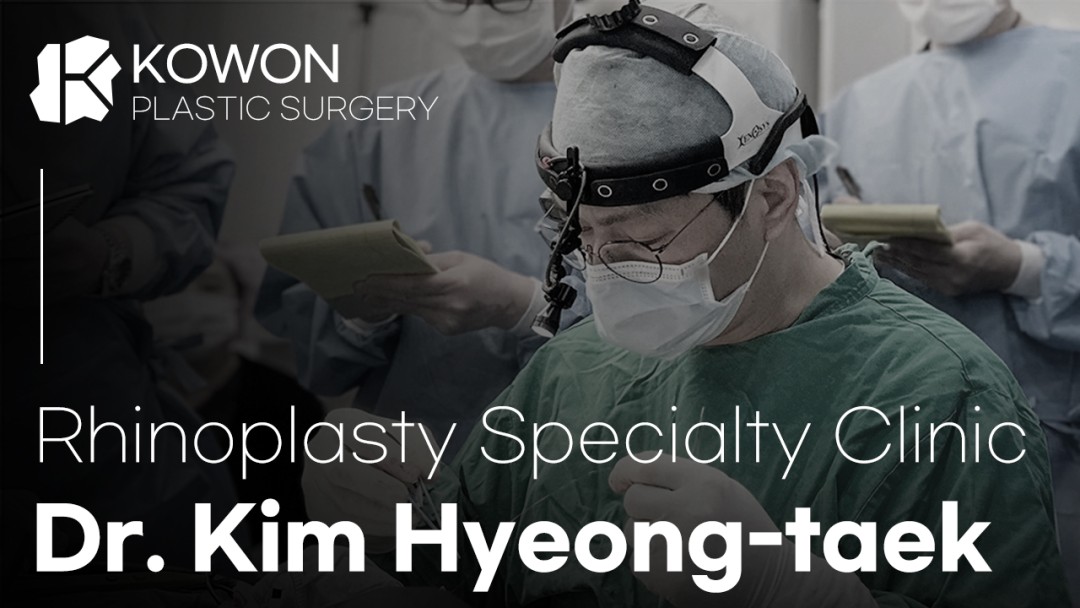
SEOUL, South Korea - Aug. 28, 2026 - An increasing number of patients are considering revision rhinoplasty due to complications such as inflammation or capsular contracture following previous rhinoplasty procedures. For patients whose nasal tips have become shortened or hardened after multiple surgeries, concerns about synthetic implants such as silicone are also not uncommon. As a result, interest is growing in biocompatible alternatives to conventional implants.
Dr. Hyung Taek Kim, Director of KOWON Plastic Surgery in Gangnam, Seoul, said, “Revision rhinoplasty is significantly more complex than primary rhinoplasty because patients often already have tissue damage or scar tissue from previous procedures. Therefore, the priority should go beyond simply improving appearance to restoring tissue function and ensuring stability. At our clinic, we carefully analyze the internal condition of the nose through a detailed diagnostic system and provide individualized revision surgery solutions to support patients in achieving a safe recovery.”
Recently, RIBFit, which utilizes autologous rib cartilage, has been used as one option for replacing synthetic implants.
Dr. Kim explained, “RIBFit involves processing a patient's own rib cartilage into fine particles and then compressing them to create an implant. Because it uses autologous tissue with high biocompatibility, it is considered relatively stable in terms of inflammation, rejection, and contracture associated with conventional silicone implants, while also addressing the artificial hardness that can occur with silicone.”
He continued, “In autologous dermal rhinoplasty, which has traditionally been used as an alternative to silicone, the rate of absorption after surgery can vary from patient to patient, creating variables in predicting surgical outcomes. It has also been noted that the resulting shape may appear somewhat blunt and less defined. RIBFit, which uses autologous rib cartilage, has a lower absorption rate and can create a more elevated nasal profile similar to silicone, allowing for relatively consistent outcomes and a more refined contour.”
For patients who have experienced repeated rejection reactions or inflammation from synthetic implants such as silicone, the use of autologous tissue may therefore offer an alternative that can help reduce both psychological and physical concerns.
Dr. Kim said, “RIBFit can also be used to extend nasal length that has become shortened due to contracture while creating a smooth dorsal line, making it an option that may be considered as an alternative to synthetic implants in a variety of cases.”
He added, “However, revision rhinoplasty is highly dependent on individual factors, including the amount of remaining tissue, skin thickness, and the degree of inflammation. Rather than relying solely on popular reviews or low-cost options, patients should have a thorough consultation with a surgeon who has extensive experience in the use of autologous tissue and develop a surgical plan appropriate for their individual condition. This is important in reducing the likelihood of requiring another revision procedure.”
About KOWON Plastic Surgery
KOWON Plastic Surgery is a plastic surgery clinic located in Gangnam, Seoul, South Korea, specializing in rhinoplasty and revision rhinoplasty. The clinic provides individualized surgical plans based on each patient's nasal structure, tissue condition, and previous surgical history, with a focus on natural-looking results and patient safety.
International patients interested in KOWON Plastic Surgery, RIBFit, or its rhinoplasty and revision rhinoplasty services can learn more through the clinic's official global website.
Media Contact
Company Name: KOWON plastic surgery
Contact Person: Rio
Email: Send Email
Country: South Korea
Website: https://kowonglobal.com