In a move that signals the next evolutionary leap for artificial intelligence infrastructure, Eaton (NYSE: ETN) and NVIDIA (NASDAQ: NVDA) have announced a strategic partnership to develop the Beam Rubin DSX, a revolutionary modular data center platform. Unveiled on March 16, 2026, during the keynote of the NVIDIA GTC conference in San Jose, the platform is designed specifically to support NVIDIA’s next-generation "Vera Rubin" GPU architecture. This collaboration marks a shift from treating data centers as collections of disparate components to viewing them as integrated "AI factories" where power, cooling, and compute are co-designed from the ground up.
The immediate implications of this partnership are profound. By integrating Eaton’s grid-to-chip power management systems directly into NVIDIA’s reference designs, the two companies aim to slash data center construction timelines from years to just months. For a market starved for compute capacity, the Beam Rubin DSX offers a standardized, repeatable blueprint that addresses the primary bottleneck of the AI era: the availability and management of massive amounts of electrical power.
Bridging the Gap Between Grid and GPU
The partnership is the culmination of nearly two years of intensive collaboration, spurred by the realization that traditional data center designs could no longer keep pace with the power densities required by large language model (LLM) training. The Beam Rubin DSX is engineered to support the Vera Rubin NVL72 systems, which demand power densities exceeding 130 kW per rack—nearly triple the requirements of just a few years ago. The platform introduces a pioneering 800-volt Direct Current (VDC) infrastructure, a technical shift that significantly reduces energy conversion losses and improves overall site efficiency.
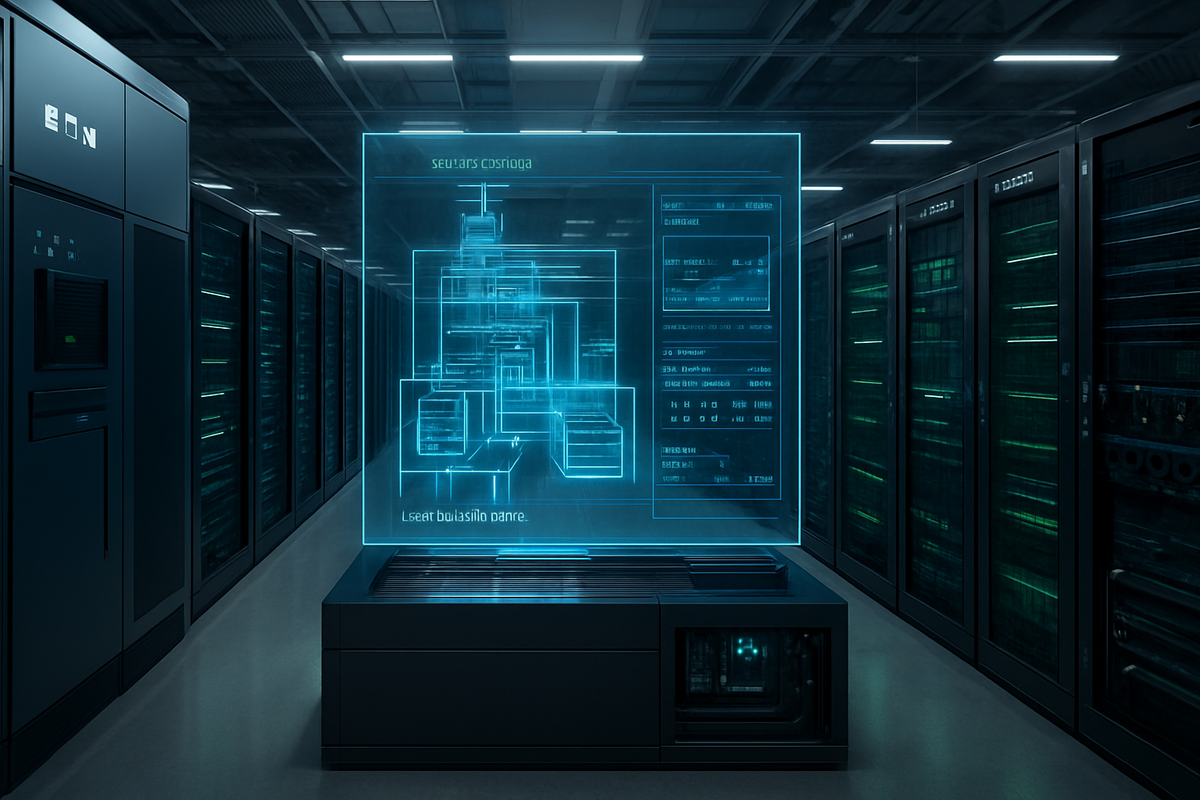
The timeline leading to this announcement has been marked by a series of strategic acquisitions by Eaton. Following its $9.5 billion purchase of Boyd Thermal in late 2025 and earlier integrations of modular specialists like Fibrebond and Flexnode, Eaton has built a "full-stack" infrastructure portfolio. At GTC 2026, NVIDIA CEO Jensen Huang and Eaton’s leadership demonstrated how these components come together within the NVIDIA Omniverse environment. Using "SimReady" 3D assets, engineers can now build a digital twin of a gigawatt-scale AI factory, simulating thermal loads and power fluctuations before a single piece of hardware is shipped.
Initial industry reaction has been overwhelmingly positive. Financial analysts from Barclays and Jefferies immediately raised their price targets for Eaton, noting that the company’s 40% project win rate in the data center sector is likely to climb further. The market sees this not just as a supply agreement, but as a technological lock-in that makes Eaton an indispensable partner for any hyperscaler deploying NVIDIA’s most advanced silicon.
The Infrastructure Arms Race: Winners and Losers
The clear winner in this development is Eaton (NYSE: ETN), which has successfully transitioned its brand from a legacy industrial manufacturer to a high-growth AI infrastructure play. By being the first to co-design with NVIDIA for the Vera Rubin architecture, Eaton gains a "first-mover" advantage that may take competitors years to replicate. Similarly, NVIDIA (NASDAQ: NVDA) wins by removing a major friction point for its customers; by providing a pre-validated power and cooling solution, they ensure that their chips don't sit idle in warehouses waiting for power permits.
However, the news creates a challenging environment for traditional infrastructure rivals. Vertiv (NYSE: VRT), while also a major player in the space, finds itself in a heated race to match Eaton’s grid-level integration. While Vertiv announced its own modular "OneCore" units at the same event, Eaton’s focus on the 800 VDC "grid-to-chip" pathway and its deep ties into utility-scale load management give it a perceived edge in large-scale deployments. Legacy electrical firms that have been slower to adopt liquid cooling or modular manufacturing may find themselves relegated to smaller, less lucrative enterprise projects as hyperscalers gravitate toward the "NVIDIA-certified" Eaton designs.
Public utilities and grid operators could also see mixed results. On one hand, the Eaton Beam Rubin DSX includes sophisticated load-balancing software designed to protect aging grids from "AI power bursts." On the other hand, the sheer speed at which these "AI factories" can now be deployed will place unprecedented pressure on utility commissions to fast-track interconnections, potentially leading to regulatory friction in regions with strained energy resources.
A Wider Significance: The "Grid-to-Chip" Revolution
The Eaton-NVIDIA partnership reflects a broader trend in the technology sector: the convergence of energy and information. As AI models grow, the industry is moving away from general-purpose data centers toward specialized facilities where the building itself is an extension of the computer. The move to 800 VDC power distribution is a historical precedent, reminiscent of the early "War of Currents," but now optimized for the digital age. By reducing the number of power conversion steps, Eaton is helping the industry squeeze more "tokens per watt" out of every megawatt provided by the grid.
Furthermore, the integration of NVIDIA Omniverse into the design process signals a shift toward "Software-Defined Infrastructure." The ability to create a digital twin of an entire power ecosystem allows for the mitigation of "subsynchronous oscillations"—high-speed power spikes that have been known to damage equipment during intensive AI training runs. This level of predictive maintenance and simulation was previously impossible, and it sets a new standard for how mission-critical infrastructure will be managed globally.
Regulatory bodies are also taking note. With the Beam Rubin DSX aiming to unlock up to 100 gigawatts of additional grid capacity through flexible load management, Eaton is positioning itself as a solution to the "AI energy crisis." This may lead to policy shifts where data center operators are given preferential grid access if they utilize "smart" infrastructure that can give power back to the grid during peak demand or operate with the efficiency levels promised by the DSX platform.
What Comes Next: The Gigawatt Era
Looking ahead, the short-term focus will be on the first wave of "Vera Rubin" deployments scheduled for late 2026 and early 2027. Investors should watch for the announcement of the first "Gigawatt-scale" project utilizing the Beam Rubin DSX, likely from a major hyperscaler like Microsoft (NASDAQ: MSFT) or Amazon (NASDAQ: AMZN). These massive projects will serve as the proving ground for Eaton’s claim that they can reduce build times by 50% or more.
In the long term, we may see a strategic pivot where Eaton and NVIDIA move toward "Autonomous Data Centers." With the infrastructure and the compute layers finally speaking the same language, the next step is a facility that can automatically adjust its cooling and power intake based on the specific AI workload being processed. Challenges remain, particularly in the global supply chain for high-voltage components and the specialized liquid cooling manifolds required for the Rubin chips, but the roadmap is clearer than ever.
Market Outlook and Final Thoughts
The partnership between Eaton and NVIDIA is a watershed moment for the financial markets, confirming that the "picks and shovels" of the AI revolution are just as critical as the chips themselves. Eaton has effectively vaulted itself into a leadership position, transforming the complex problem of AI power delivery into a standardized, scalable product. This move de-risks the rollout of next-generation AI for both the hardware providers and the cloud giants who buy them.
Moving forward, the market will be watching for Eaton’s quarterly earnings to see the translation of these "GTC wins" into a growing backlog. Investors should also monitor the competitive response from Vertiv and Schneider Electric (EPA: SU), as the "reference design" battle is far from over. Ultimately, the significance of the Beam Rubin DSX lies in its ability to turn the "AI factory" from a concept into a reality, ensuring that the next generation of artificial intelligence has the power it needs to change the world.
This content is intended for informational purposes only and is not financial advice.