The artificial intelligence sector is currently gripped by a level of anticipation not seen since the original launch of ChatGPT. As of April 14, 2026, the global financial markets are fixated on "Spud," the internal codename for OpenAI’s much-rumored GPT-6 model. With reports circulating that pre-training for the next-generation architecture concluded in late March, investors are positioning themselves for what analysts are calling the "Agentic Revolution"—a shift from AI that answers questions to AI that autonomously executes complex, multi-step business workflows.
The immediate implications are already being felt across the Nasdaq and NYSE. While the broader tech indices have shown volatility, the "Compute Heavyweights" are seeing a concentrated influx of capital. The speculation is not just about a smarter chatbot; it is about the activation of the first phase of the "Stargate" project—a $500 billion infrastructure roadmap that represents the largest capital investment in human history. As rumors of a late-Q2 release intensify, the market is aggressively repricing everything from energy utilities to semiconductor designers, signaling a definitive transition from the "AI Hype" of 2024 to the "Infrastructure Reality" of 2026.
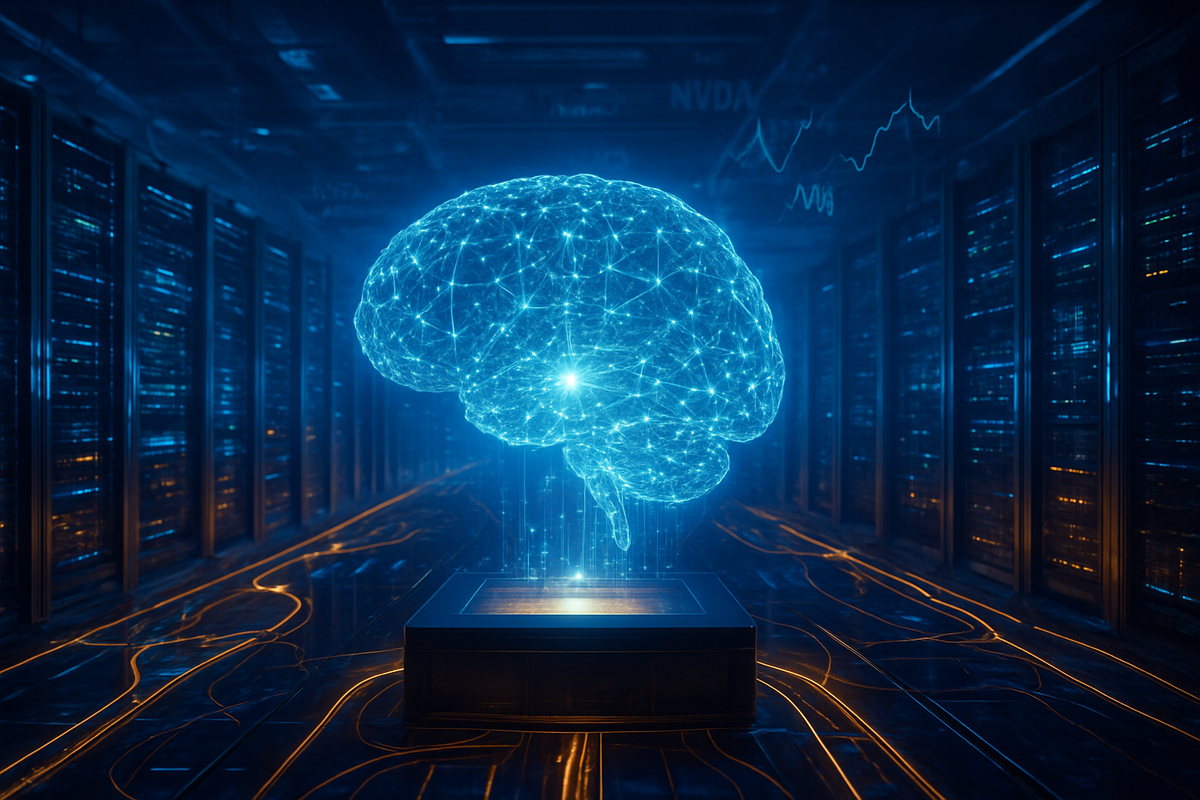
The road to GPT-6 has been paved with unprecedented engineering challenges and strategic pivots. According to internal sources and supply chain data, OpenAI completed the primary pre-training phase for GPT-6 on March 24, 2026, at its massive "Abilene" data center in Texas. This facility, a cornerstone of the broader Stargate initiative, reportedly utilizes a cluster of over 100,000 liquid-cooled (Nasdaq: NVDA) Nvidia H100 and B200 GPUs. The timeline of events leading to this moment was catalyzed by a "Code Red" internal memo at OpenAI in late 2025, which saw the company reallocate nearly all its inference resources—temporarily suspending its Sora video generation service—to ensure GPT-6 hit its training milestones before its competitors.
Key players in this drama extend beyond OpenAI CEO Sam Altman. The recent "triad deal" involving (Nasdaq: AVGO) Broadcom, (Nasdaq: GOOGL) Google, and Anthropic has added a layer of competitive urgency. In early April, Anthropic released "Claude Mythos," a model that briefly snatched the benchmark crown from OpenAI’s GPT-5.4. This move forced Altman’s hand, leading to a series of public appearances where he teased GPT-6’s "persistent memory" capabilities. Market reaction to these developments has been a mix of euphoria and caution; while the hardware sector surged on the news of the 100k-chip cluster, the software sector saw a sharp sell-off as investors worried that GPT-6’s native agentic capabilities might render many existing AI-SaaS platforms obsolete.
The "winners" and "losers" of the GPT-6 era are becoming increasingly clear, creating a bifurcation in the tech sector. (Nasdaq: NVDA) Nvidia continues to be the primary beneficiary, as the GPT-6 speculation reinforces the necessity of its Blackwell and upcoming "Rubin" architectures. Despite concerns over "concentration risk," Nvidia’s dominance remains unchallenged as it provides the literal "fuel" for the Stargate project. Similarly, (Nasdaq: AMD) AMD has emerged as a formidable winner, having secured a massive $60 billion deal with (Nasdaq: META) Meta and a secondary supply agreement with OpenAI, proving that the market can indeed support a "second source" for high-end AI silicon.
Conversely, some of the market’s former darlings are facing a valuation reckoning. (Nasdaq: MSFT) Microsoft has seen its stock slide 23% year-to-date as of April 2026. Investors are growing wary of the massive capital expenditures required to support OpenAI’s ambitions, coupled with rumors of a "de-coupling" in the partnership as OpenAI seeks diverse funding from the likes of SoftBank and (Nasdaq: AMZN) Amazon. Software-centric companies like (NYSE: PLTR) Palantir and (NYSE: CRM) Salesforce are also under pressure. The fear is that if GPT-6—integrated with the new "Atlas" autonomous browser—can perform data analysis and CRM updates natively, the premium currently paid for specialized AI software layers may evaporate.
The significance of the GPT-6 launch extends far beyond a simple product update; it represents a fundamental shift in the global economy's relationship with compute and energy. The scaling laws that governed the AI boom of 2023-2024 are hitting the hard limits of the electrical grid. The decision to place the "Stargate UK" project on hold in early April due to surging energy costs highlights a growing trend: AI development is no longer just a software race, but a geopolitical struggle for energy sovereignty. We are seeing the rise of "Sovereign AI," where nations are treating compute clusters with the same strategic importance as oil reserves or nuclear deterrents.
This event also draws historical parallels to the "Broadband Era" of the early 2000s. Just as fiber-optic infrastructure eventually enabled a new wave of services (streaming, social media, cloud), the Stargate infrastructure is enabling "Agentic AI." This shift poses a regulatory challenge that is yet to be fully addressed. As GPT-6 prepares to "operate" the web via the Atlas browser, policymakers in the EU and the US are scrambling to update the AI Act to account for autonomous agents that can make financial transactions and sign legal documents on behalf of human users.
Looking ahead, the short-term focus will be on the official launch event, which many expect to coincide with a surprise announcement during Google I/O in late May 2026. If GPT-6 delivers on the rumored 40% performance jump in reasoning, we may see a "Strategic Pivot" where companies stop building "AI features" and start rebuilding their entire operations around a "Model-First" architecture. The challenge for the market will be the "Inference Gap"—the massive cost of running these models at scale. If OpenAI cannot bring down the cost of a GPT-6 query, the model may remain a luxury tool for high-end enterprises rather than the "Work Operating System" Sam Altman envisions.
In the long term, the emergence of GPT-6 will likely trigger a massive wave of consolidation in the AI software space. Small-cap AI firms that raised capital on the promise of "GPT wrappers" are expected to face a liquidity crisis as the frontier models absorb their functionality. For investors, the opportunity will shift from the "pick and shovel" hardware plays to the "downstream" beneficiaries—industries like biotech, materials science, and legal services that can use the agentic reasoning of GPT-6 to compress decades of R&D into months.
In summary, the speculation surrounding GPT-6 marks the end of the "Early Adoption" phase of the AI era and the beginning of the "Infrastructure Integration" phase. The key takeaways for the market are the continued dominance of high-end hardware providers like Nvidia and AMD, the increasing strain on traditional software valuations, and the critical role of energy and physical infrastructure in sustaining AI progress. While the hype is substantial, it is now backed by hundreds of billions of dollars in committed capital expenditure, making this "bubble," if it is one, far more durable than the dot-com era.
Moving forward, the market will likely remain in a "wait and see" mode until the first independent benchmarks for GPT-6 are released. Investors should watch for three key indicators in the coming months: the performance of the "Atlas" browser in autonomous tasks, any further news regarding the expansion or contraction of the Stargate project, and the Q2 earnings reports from the "Magnificent Seven," which will reveal if the massive AI CapEx is finally translating into improved margins. The GPT-6 horizon is no longer a distant peak; it is the ground upon which the future of the market is currently being built.
This content is intended for informational purposes only and is not financial advice.