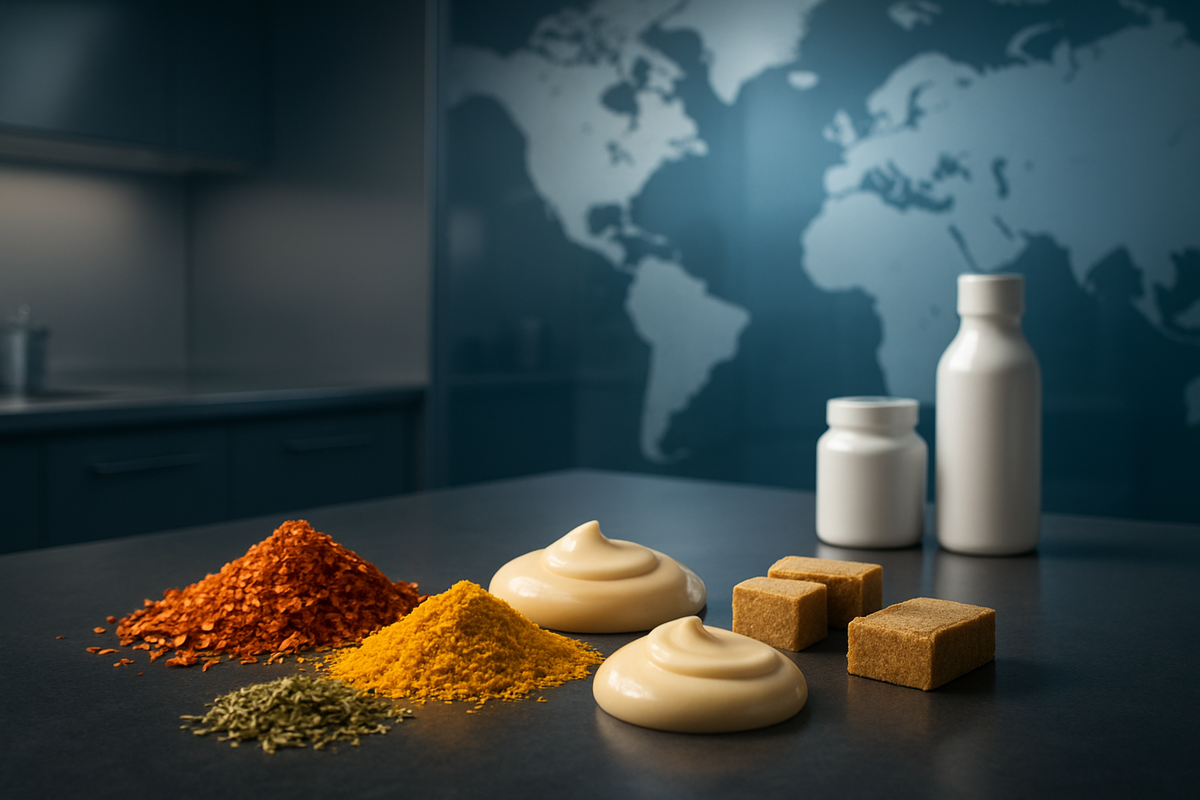
In a transaction that has sent shockwaves through the consumer staples sector, McCormick & Company (NYSE: MKC) and Unilever (NYSE: UL) announced on March 31, 2026, a definitive agreement to merge Unilever’s global food business with McCormick in a deal valued at approximately $65.8 billion. The massive tie-up, structured as a Reverse Morris Trust, effectively creates the world’s largest pure-play flavor and condiment company, uniting iconic brands like Knorr and Hellmann’s with McCormick’s dominant spice portfolio and Frank’s RedHot sauce.
The deal marks a definitive end to an era for Unilever, which is divesting its food heritage to become a focused personal care and beauty giant. For McCormick, the move is a bold, multi-billion-dollar bet on the "flavor-rich" future of food, positioning the company to dominate the global pantry as consumer habits shift toward healthier, more seasoned eating. With the transaction expected to close in mid-2027, the market is already beginning to price in a seismic shift in how the world’s largest food brands compete for a place on the dinner table.
The Mechanics of a Masterstroke: The Reverse Morris Trust
The complexity of the $65.8 billion deal is matched only by its scale. To execute the merger, the companies are utilizing a Reverse Morris Trust (RMT) structure, a sophisticated financial maneuver designed to minimize tax liabilities. Under the terms of the agreement, Unilever will spin off its global food division into a separate entity—temporarily dubbed "SpinCo"—which will then immediately merge with McCormick & Company. This structure is strategically advantageous: because Unilever shareholders will own a majority (65%) of the newly combined entity, the spin-off remains tax-free for both the parent corporation and its investors.
The timeline leading to this historic moment began in early 2024, when Unilever first signaled a radical restructuring under the "Growth Action Plan" led by CEO Fernando Fernandez. This strategy saw the successful spin-off of Unilever’s ice cream business in late 2025, clearing the path for this final divestment. McCormick, led by CEO Brendan Foley, will remain the surviving entity, headquartered in Hunt Valley, Maryland. McCormick will pay $15.7 billion in cash to Unilever as part of the arrangement, while Unilever shareholders will receive the lion's share of equity in the new, enlarged McCormick.
Initial market reactions were a mix of awe and caution. On the day of the announcement, McCormick & Company (NYSE: MKC) shares saw a 7% dip as investors digested the $15.7 billion cash payment and the significant equity dilution. However, by April 2, 2026, analysts began pivoting to a more bullish outlook, citing the $600 million in projected annual cost synergies and the sheer scale of the combined $20 billion revenue stream.
Winners and Losers in the Global Condiment War
The primary winner in this transaction appears to be McCormick & Company (NYSE: MKC), which transforms overnight from a dominant spice player into a diversified global leader in "flavoring calories." By acquiring Hellmann’s and Knorr, McCormick gains access to deep distribution networks in emerging markets where Unilever’s food business has long held a stronghold. McCormick is betting that even as consumers reduce calorie intake—driven by the widespread adoption of GLP-1 weight-loss drugs—they will spend more on high-quality sauces, seasonings, and dressings to make smaller portions more satisfying.
Conversely, competitors like The Kraft Heinz Company (NASDAQ: KHC) and Nestlé (SWX: NESN) face a daunting new reality. Kraft Heinz, which has spent years trying to revitalize its own condiment portfolio, now faces a rival with significantly greater scale and a more specialized focus on the "flavor-rich" segment. Nestlé, while more diversified, may find its Maggi brand under increased pressure from the newly combined Knorr-McCormick seasoning juggernaut.
On the "losing" side, some traditionalists at Unilever (NYSE: UL) may lament the loss of the company's historic food roots. However, for shareholders, the move is a win for clarity. Unilever emerges as a streamlined, high-growth beauty and home care company, potentially commanding a higher valuation multiple similar to peers like L'Oréal. The risk for Unilever lies in its increased dependence on the volatile beauty and personal care markets, but the $15.7 billion cash infusion provides a massive war chest for future acquisitions in those sectors.
Industry Significance: The Rise of the 'Flavor-Rich' Economy
This merger is more than just a corporate consolidation; it is a signal of a broader industry trend toward specialization. For decades, consumer packaged goods (CPG) giants sought to be "everything to everyone." Today, the market rewards focus. Unilever’s exit from food allows it to double down on high-margin categories like premium skincare, while McCormick is leaning into the "Flavoring Calories" philosophy. This strategy recognizes that while the volume of food consumed may plateau or decline in developed markets, the demand for premium, diverse, and healthy flavor profiles is accelerating.
The deal also highlights the growing influence of pharmaceutical trends on the food industry. As GLP-1 drugs like Ozempic and Wegovy change appetite patterns, McCormick is positioning itself as the solution for "palate fatigue." When people eat less, they want what they do eat to taste better. By owning the world’s most popular mayo, bouillon, and hot sauce brands, the new McCormick is perfectly positioned to capture "share of plate" in a world where quality matters more than quantity.
From a regulatory standpoint, the $65 billion deal is expected to face intense scrutiny in Europe and North America. Antitrust regulators will likely examine the combined market share in the seasonings and dressings categories. However, because McCormick and Unilever's food portfolios have surprisingly little direct overlap—Unilever dominates bouillon and mayonnaise, while McCormick leads in dry spices and hot sauce—many analysts believe the deal will clear with only minor divestitures.
What Comes Next: Integration and Innovation
The short-term focus for McCormick & Company (NYSE: MKC) will be the daunting task of integrating two global supply chains. Achieving $600 million in synergies will require significant streamlining of manufacturing facilities and back-office operations. Investors should watch for the announcement of a joint integration team in the coming months, which will be tasked with merging the cultures of a Maryland-based spice specialist and a London-based multinational food conglomerate.
Long-term, the combined company will likely pivot toward "flavor technology," investing in natural preservatives and low-sodium flavor enhancers. There is also the potential for McCormick to leverage Unilever’s extensive R&D in plant-based proteins to create a new generation of "flavor-first" meat alternatives. The market will be watching closely to see if the new McCormick can maintain its historical premium valuation while carrying the higher debt load required to fund the cash portion of the deal.
For Unilever (NYSE: UL), the next 18 months will be defined by a "buying spree" in the beauty sector. With billions in cash hitting the balance sheet, the company is expected to target high-growth, "prestige" beauty brands to bolster its portfolio. The challenge for CEO Fernando Fernandez will be to prove that a "purer" Unilever can deliver more consistent organic growth than the old, diversified model.
Wrap-Up: A New Era for the Dinner Plate
The McCormick-Unilever merger is a landmark event that reshapes the landscape of the global food industry. It is a clear declaration that the future of food is not just about calories, but about the experience of eating. By carving out a $65.8 billion empire dedicated to flavor, McCormick is betting that it can become the most essential company in the kitchen, regardless of what the primary protein or grain might be.
For investors, the key takeaway is the divergence of two giants. Unilever is heading toward a high-stakes, high-growth future in beauty and personal care, while McCormick is consolidating its grip on the global pantry. The success of this deal will depend on McCormick’s ability to manage the complexity of an RMT and prove that it can bring its "flavor-first" innovation to legacy Unilever brands like Knorr.
As we move toward the mid-2027 closing date, the market will be looking for signs of regulatory approval and early synergy wins. In the meantime, the "Flavor Powerhouse" is officially under construction, and the food industry may never be the same.
This content is intended for informational purposes only and is not financial advice.