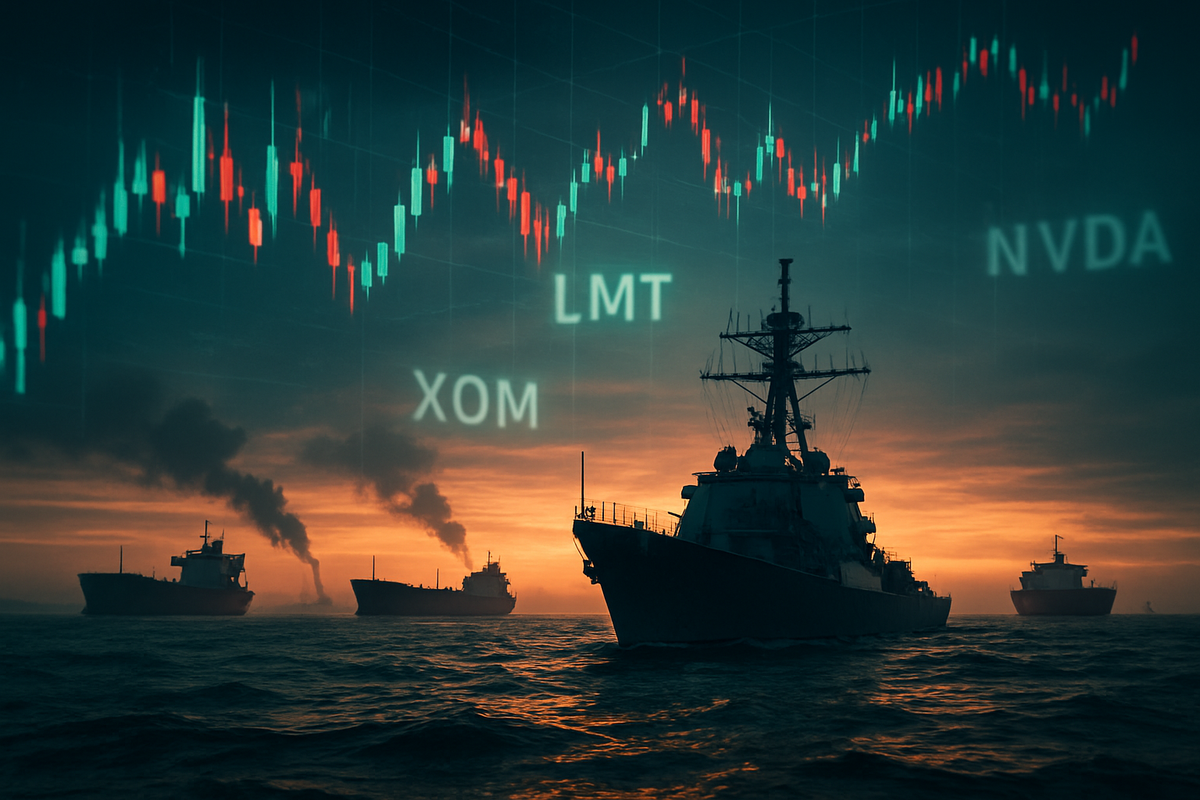
The global financial landscape is currently grappling with a period of historic volatility as the conflict between the United States and Iran enters a perilous new phase. Following the downing of a U.S. F-15E Strike Eagle and an A-10 Warthog over the Persian Gulf today, April 3, 2026, the S&P 500 and Nasdaq have experienced sharp intraday swings, reflecting an investor class caught between the "war premium" of surging energy prices and the chilling reality of potential regional escalation.
As the blockade of the Strait of Hormuz nears its sixth week, maritime traffic has plummeted by 98%, effectively strangling the world’s most vital oil artery. With an April 6 ultimatum looming—issued by the White House to "obliterate" Iranian infrastructure if the waterway is not cleared—markets are oscillating wildly. Every headline regarding potential diplomatic backchannels via Oman or renewed missile strikes in the UAE triggers high-frequency trading algorithms, leading to 600-point swings in the Dow and sudden "risk-off" rotations into defensive assets.
A Tenuous Timeline: From "Operation Epic Fury" to the April Ultimatum
The current crisis traces its roots to "Operation Epic Fury," a U.S.-led military campaign initiated on February 28, 2026, aimed at neutralizing drone launch sites and naval assets of the Islamic Revolutionary Guard Corps (IRGC). The conflict escalated throughout March as Iran deployed advanced naval mines and shore-based missile batteries to enforce a total blockade of the Strait of Hormuz. Today's loss of a U.S. F-15E Strike Eagle marks the highest-profile military setback for the coalition to date, sending shockwaves through the morning trading session as search-and-rescue operations continue for a missing pilot.
Beyond the immediate theater of war, the conflict has expanded into economic warfare. Iranian drone strikes have recently targeted water desalination plants and oil refineries in Saudi Arabia and the UAE, prompting a massive "flight to safety" in global currency and commodity markets. However, the traditional safe-haven narrative has been complicated by the current inflationary environment; gold, which shattered the $5,000 per ounce milestone in mid-March, has seen erratic selling pressure as the 10-year Treasury yield surges toward 4.4%.
Investors are now fixated on the April 6 deadline. President Trump’s recent threat to strike civilian power plants and bridges within Iran if the Strait is not reopened has created a "binary outcome" for the markets. If the blockade is lifted through diplomatic efforts—led by Oman—a historic relief rally is expected. If the deadline passes and major strikes occur, analysts warn of a "black swan" event that could see Brent Crude surge well past $150 per barrel.
Winners and Losers: Defense Primes Surge as Tech Giants Retreat
In this climate of heightened geopolitical risk, the market has undergone a violent rotation. Defense contractors and energy majors have emerged as the primary beneficiaries of the "war economy." Lockheed Martin (NYSE: LMT) and RTX Corporation (NYSE: RTX) have seen their order backlogs reach record highs, driven by the depletion of Patriot missile systems and the frontline deployment of F-35 fighters. Similarly, Northrop Grumman (NYSE: NOC) has seen sustained interest as its B-21 Raider remains a cornerstone of U.S. strategic posture in the region.
The energy sector has also provided a sanctuary for capital. ExxonMobil (NYSE: XOM) and Chevron (NYSE: CVX) are benefiting from Brent Crude prices hovering between $110 and $114 per barrel. While the blockade limits shipping, these majors are leveraging their global production diversified away from the Middle East to capture massive margins. Conversely, the shipping industry is in turmoil. ZIM Integrated Shipping (NYSE: ZIM) has faced extreme price volatility, trading near $26 as it navigates the astronomical costs of rerouting vessels around the Cape of Good Hope to avoid Iranian missile threats.
On the losing side, the technology sector is feeling the burn of "risk-off" sentiment and rising yields. Giants like Nvidia (NASDAQ: NVDA), Meta Platforms (NASDAQ: META), and Microsoft (NASDAQ: MSFT) have seen their valuations compressed as the Nasdaq entered official correction territory in late March. The high cost of capital, exacerbated by the 10-year Treasury yield hitting 4.3%, has made growth-oriented tech stocks less attractive than tangible assets. One notable exception in the tech space is Palantir Technologies (NYSE: PLTR), which gained 5.8% last month due to its critical role in U.S. military targeting and logistical software during the current operations.
Broader Significance: The End of the "Safe Haven" Treasury?
The 2026 Iran conflict is redefining market dynamics that have held true for decades. Historically, during a geopolitical crisis, investors would sell stocks and buy Treasuries. However, in the current environment, stocks and bonds are moving in tandem. The surge in energy prices has reignited fears of persistent inflation, preventing Treasuries from acting as an effective hedge. This "positive correlation" has forced hedge funds and institutional investors to seek safety in cash or specialized "war-time" commodities rather than the traditional 60/40 portfolio.
Furthermore, the conflict highlights a shift in global supply chain security. The 98% drop in Strait of Hormuz traffic is not just an oil story; it is a global trade story. Publicly traded shipping firms like A.P. Moller - Maersk (OTC: AMKBY) are now pricing in a "permanently dangerous" Middle East, which could lead to long-term structural changes in how goods are transported between Asia and Europe. This event mirrors the Red Sea disruptions of 2024 but on a significantly larger and more kinetic scale.
Regulators and central banks are also in a bind. The Federal Reserve now faces a "stagflationary" nightmare: a slowing economy caused by war-related disruptions, paired with rising prices due to energy shocks. If the Fed raises rates to combat war-induced inflation, they risk a deeper recession; if they cut rates to support the market, they risk an inflationary spiral. This policy paralysis is a major driver behind the intraday "whiplash" seen in the S&P 500.
Looking Ahead: The Looming April 6 Pivot
The immediate future of the global markets hinges on the events of the next 72 hours. There are two primary scenarios that market participants are currently pricing in. The first is a "Diplomatic De-escalation," where a backchannel deal mediated by Oman allows for a "humanitarian corridor" in the Strait of Hormuz. This would likely trigger a massive short-covering rally in the Nasdaq and a softening of oil prices.
The second, more volatile scenario is the "Hard Strike" outcome following the April 6 deadline. If the U.S. follows through with strikes on Iranian civilian and economic infrastructure, we could see a total "dark period" for energy markets. Strategic pivots would be required for almost every multinational corporation, as shipping costs would remain elevated for the remainder of 2026. In this scenario, market opportunities would likely shift toward domestic energy producers and firms specializing in alternative logistics and AI-driven supply chain management.
Market Wrap-Up and Investor Outlook
As of April 3, 2026, the market is essentially a hostage to the Strait of Hormuz. The key takeaway for investors is that traditional diversification is failing in the face of this specific geopolitical shock. The "flight to safety" is no longer a simple move into bonds or gold, but a complex rotation into defense, energy, and specific "mission-critical" technology firms.
Moving forward, the market will remain hyper-sensitive to every headline from the Persian Gulf. The S&P 500's ability to hold its current support levels depends entirely on whether the April 6 ultimatum leads to a resolution or a regional war. For the coming months, investors should keep a close eye on Treasury yield correlations and the "war premium" in oil. The current volatility is not just a passing storm; it is the birth of a new, more fragmented market reality where geopolitical risk is the primary driver of value.
This content is intended for informational purposes only and is not financial advice