Regional banking institution Bank of Hawaii (NYSE: BOH) missed Wall Street’s revenue expectations in Q3 2026, but revenue rose 6.8% year on year to $198.8 million. Its GAAP profit of $1.49 per share was 1.5% below analysts’ consensus estimates.
For more on Bank of Hawaii, read our free full research report.
Bank of Hawaii (BOH) Q3 2026 highlights:
- Net interest income: $156.1 million vs analysts’ consensus estimates of $158.5 million (14.2% year-on-year growth, 1.6% miss)
- Net interest margin: 2.8% vs analysts’ consensus estimates of 2.8% (in line)
- Revenue: $198.8 million vs analysts’ consensus estimates of $202.8 million (6.8% year-on-year growth, 2% miss)
- Efficiency ratio: 56.5% vs analysts’ consensus estimates of 55.6% (90 basis point miss)
- EPS (GAAP): $1.49 vs analysts’ consensus estimates of $1.51 (1.5% miss)
- Tangible book value per share: $36.97 vs analysts’ consensus estimates of $38.31 (4% year-on-year growth, 3.5% miss)
- Market capitalization: $2.79 billion
“Bank of Hawai‘i delivered another quarter of solid performance, supported by continued expense discipline,” said Jim Polk, President and CEO. “Net interest margin expanded for the tenth consecutive quarter, reflecting the ongoing benefit of asset repricing and the positive impact of deposit repricing actions. Loan balances increased from the prior quarter, our funding profile remained resilient, and credit quality stayed healthy. We remain focused on enhancing earnings while maintaining the financial strength and resilience that differentiate our franchise.”
Revenue growth
Two primary revenue streams drive bank earnings. While net interest income, which is earned by charging higher rates on loans than paid on deposits, forms the foundation, fee-based services across banking, credit, wealth management and trading operations provide additional income. Unfortunately, Bank of Hawaii’s 3.3% annualized revenue growth over the last five years was sluggish. This fell short of our benchmark for the banking sector.
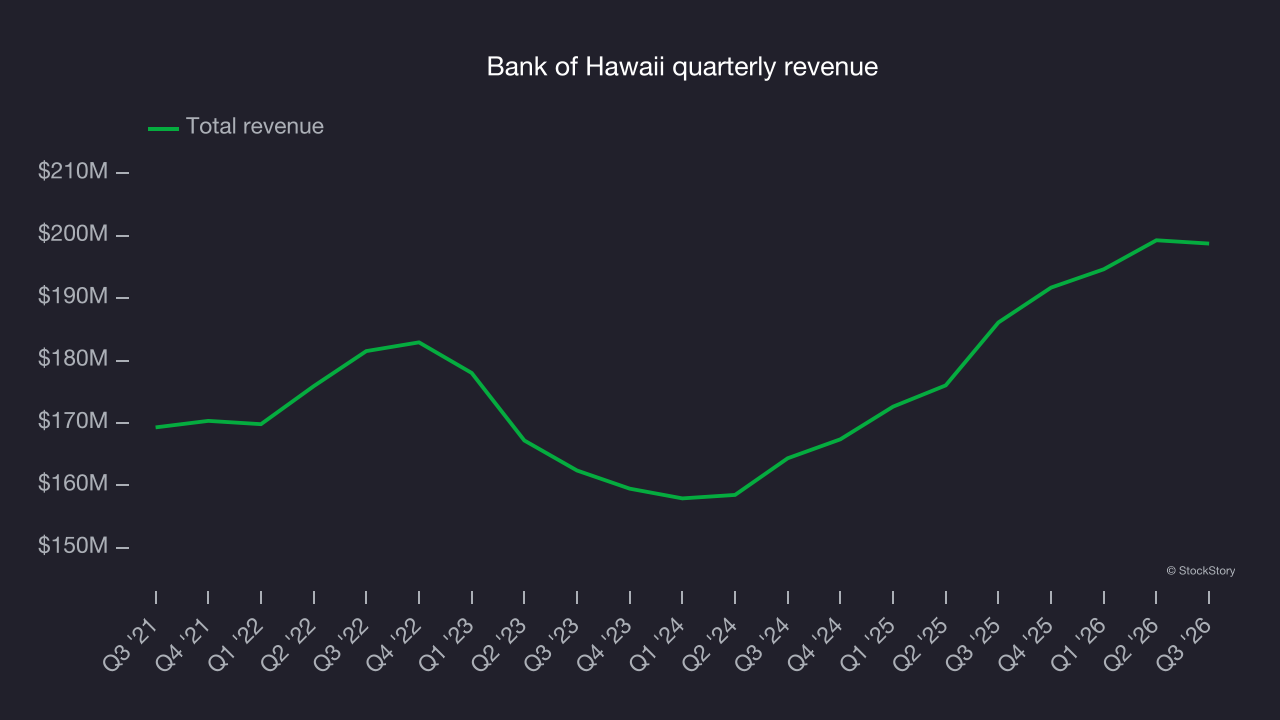
Long-term growth matters most, but within financials, a half-decade historical view may miss recent interest rate changes, market returns and industry trends. Bank of Hawaii’s annualized revenue growth of 10.7% over the last two years is above its five-year trend, suggesting some improvement. 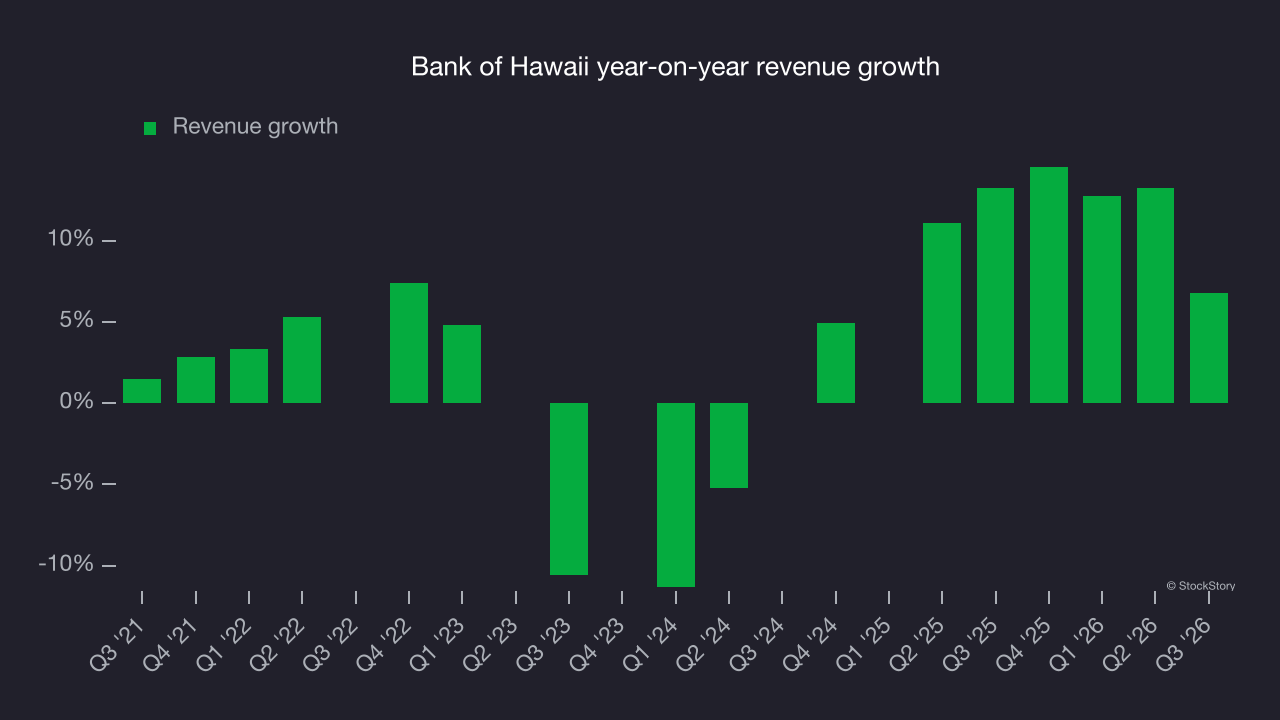 Note: Quarters not shown were determined to be outliers because they were impacted by outsized investment gains/losses that are not indicative of the recurring fundamentals of the business.
This quarter, Bank of Hawaii’s revenue grew by 6.8% year on year to $198.8 million, missing Wall Street’s consensus estimates.
Net interest income made up 74.7% of the company’s total revenue during the last five years, meaning lending operations are Bank of Hawaii’s largest source of revenue.
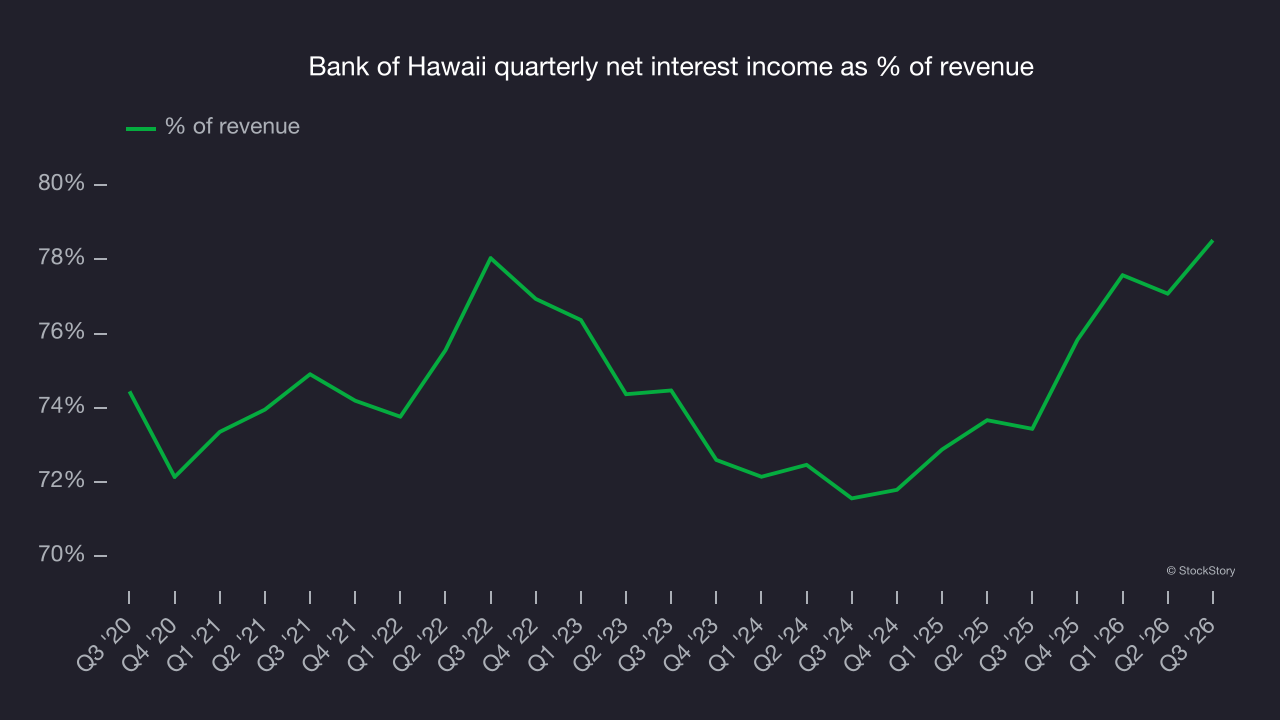
The market focuses primarily on a bank’s net interest income growth, as non-interest income is considered a lower-quality and non-recurring revenue source.
Tangible book value per share (TBVPS)
Banks profit by intermediating between depositors and borrowers, making them fundamentally balance sheet-driven enterprises. Market participants emphasize balance sheet quality and sustained book value growth when evaluating these institutions.
When analyzing banks, tangible book value per share (TBVPS) takes precedence over many other metrics. This measure isolates genuine per-share value by removing intangible assets of debatable liquidation worth. Traditional metrics like EPS are helpful but face distortion from M&A activity and loan loss accounting rules.
Bank of Hawaii’s TBVPS grew at a sluggish annual rate of 1.5% over the last five years. However, growth has accelerated recently, with TBVPS rising by 6.8% annually over the last two years from $32.43 to $36.97 per share.
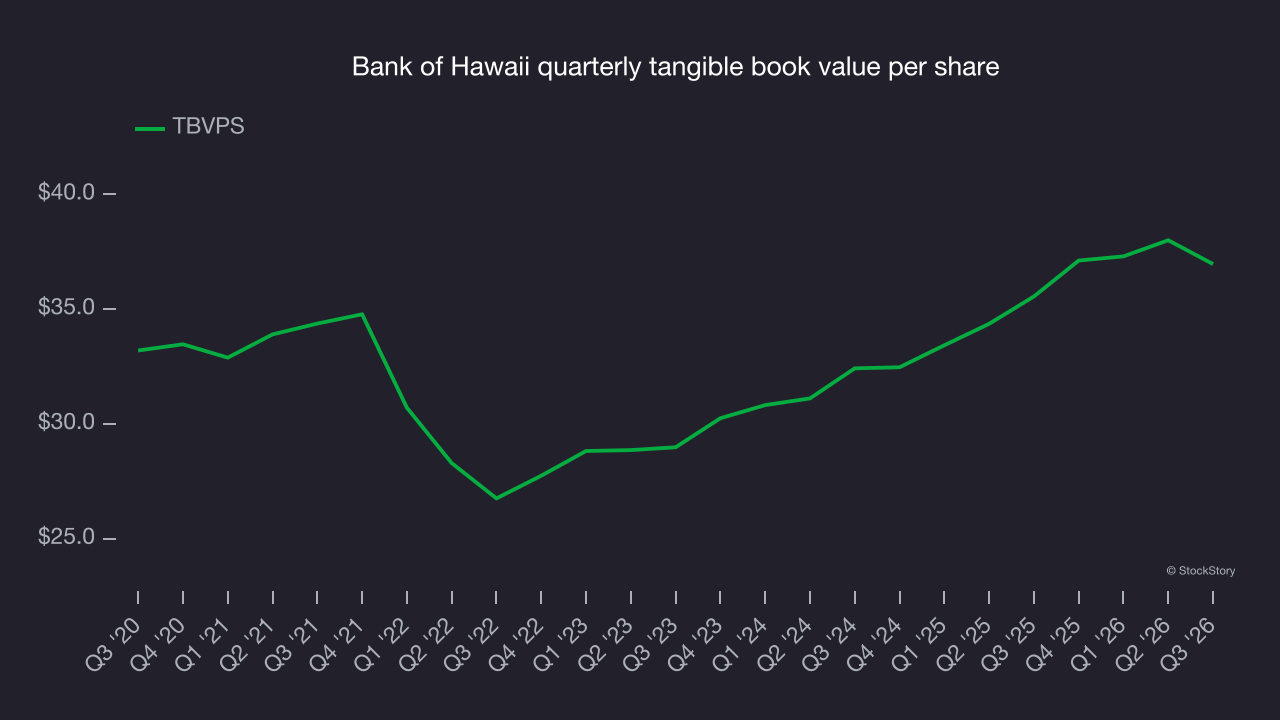
Over the next 12 months, consensus estimates call for Bank of Hawaii’s TBVPS to grow by 12.1% to $41.45, a mediocre growth rate.
Key takeaways from Bank of Hawaii’s Q3 results
Revenue and tangible book value per share both fell short of Wall Street’s consensus estimates, leaving few bright spots in a Bank of Hawaii quarter that could have been better. Shares edged higher 1% to $71.32 immediately after the results.
Bank of Hawaii’s latest quarter matters, but not nearly as much as longer-term fundamentals and valuation when deciding whether the stock is a buy. For more on Bank of Hawaii, read the full research report here (it’s free).