Home energy technology company Enphase (NASDAQ: ENPH) missed Wall Street’s revenue expectations in Q3 2026, with revenue falling 28.5% year on year to $293.3 million. Next quarter’s revenue guidance of $240 million underwhelmed, coming in 19.6% below analysts’ consensus estimates. Its non-GAAP profit of $0.41 per share was 18.7% below analysts’ consensus estimates.
For more on Enphase, read our full research report, available free.
Enphase (ENPH) Q3 2026 highlights:
- Revenue $293.3 million vs S&P analysts’ consensus estimates of $306.1 million (28.5% year-on-year decline, 4.2% miss)
- Adjusted EPS $0.41 vs S&P analysts’ consensus estimates of $0.50 (18.7% miss)
- Revenue guidance $240 million at the midpoint for Q4 2026, below analysts’ consensus estimates of $298.6 million
- Operating margin 2.2%, down from 16.1% in the same quarter last year
- Free cash flow -$11.37 million, down from $5.89 million in the same quarter last year
- Sales volumes fell 19.8% year on year (2.2% in the same quarter last year)
- Market capitalization $4.01 billion
Revenue growth
A company’s long-term performance is an indicator of its overall quality. Even a bad business can perform well for one or two quarters, but a top-tier one grows for years. Enphase struggled to consistently increase demand as its $1.21 billion in revenue for the trailing 12 months was close to its revenue five years ago. This fell below our standards and is a sign of poor business quality.
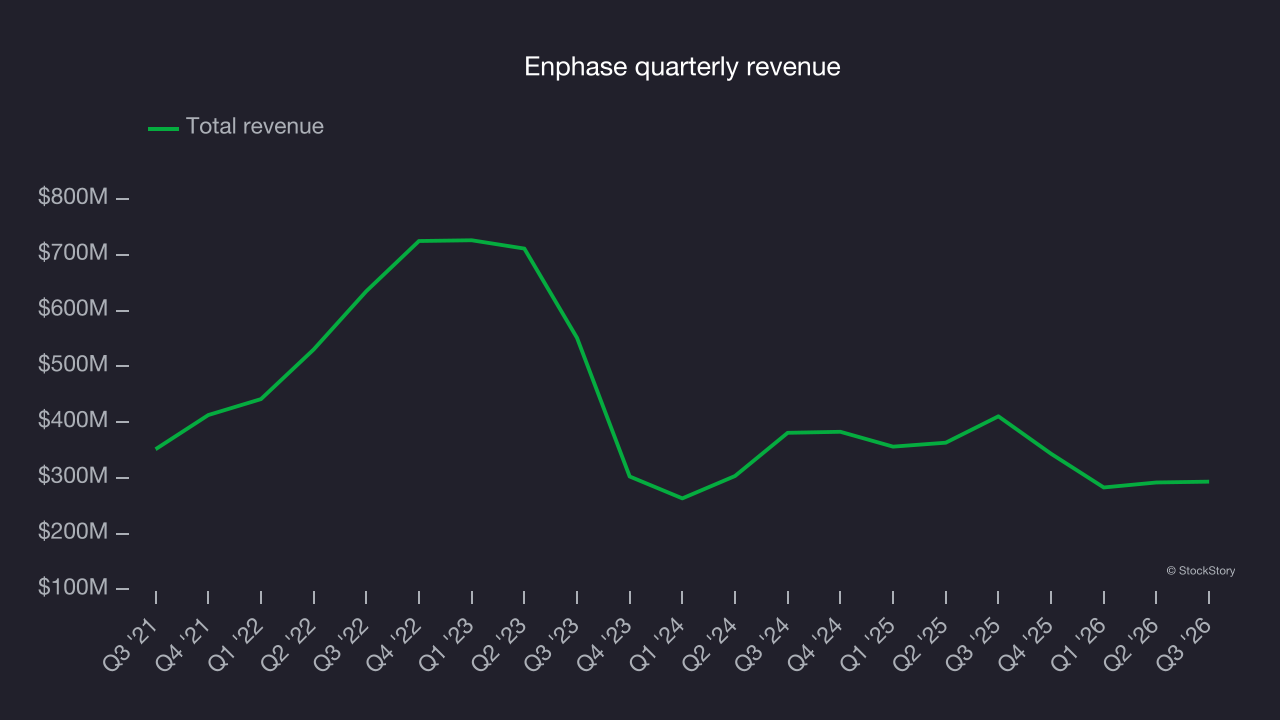
Long-term growth is the most important, but within industrials, a half-decade historical view may miss new industry trends or demand cycles. Enphase’s recent performance shows its demand remained suppressed as its revenue has declined by 1.6% annually over the last two years. 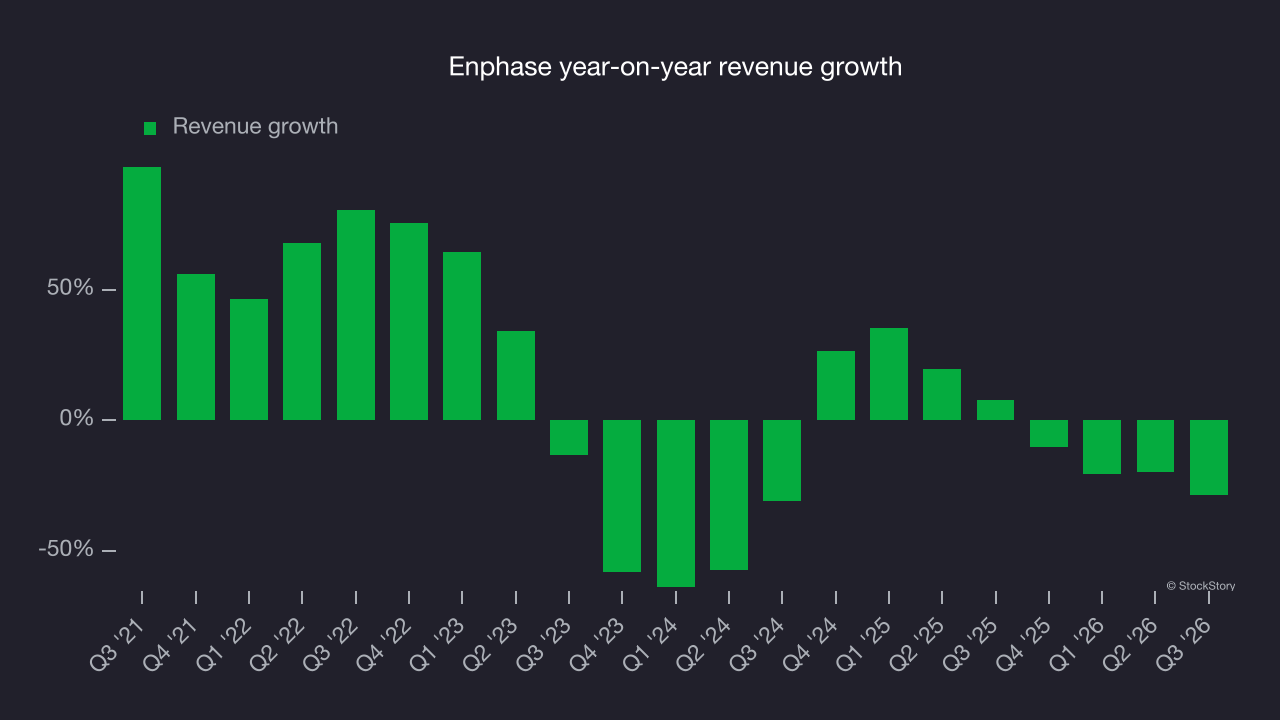
We can better understand the company’s revenue dynamics by analyzing its number of units sold, which reached 1.42 million in the latest quarter. Over the last two years, Enphase’s units sold averaged 8.2% year-on-year declines. Revenue growth outpaced unit sales growth, indicating that the company benefited from price increases. 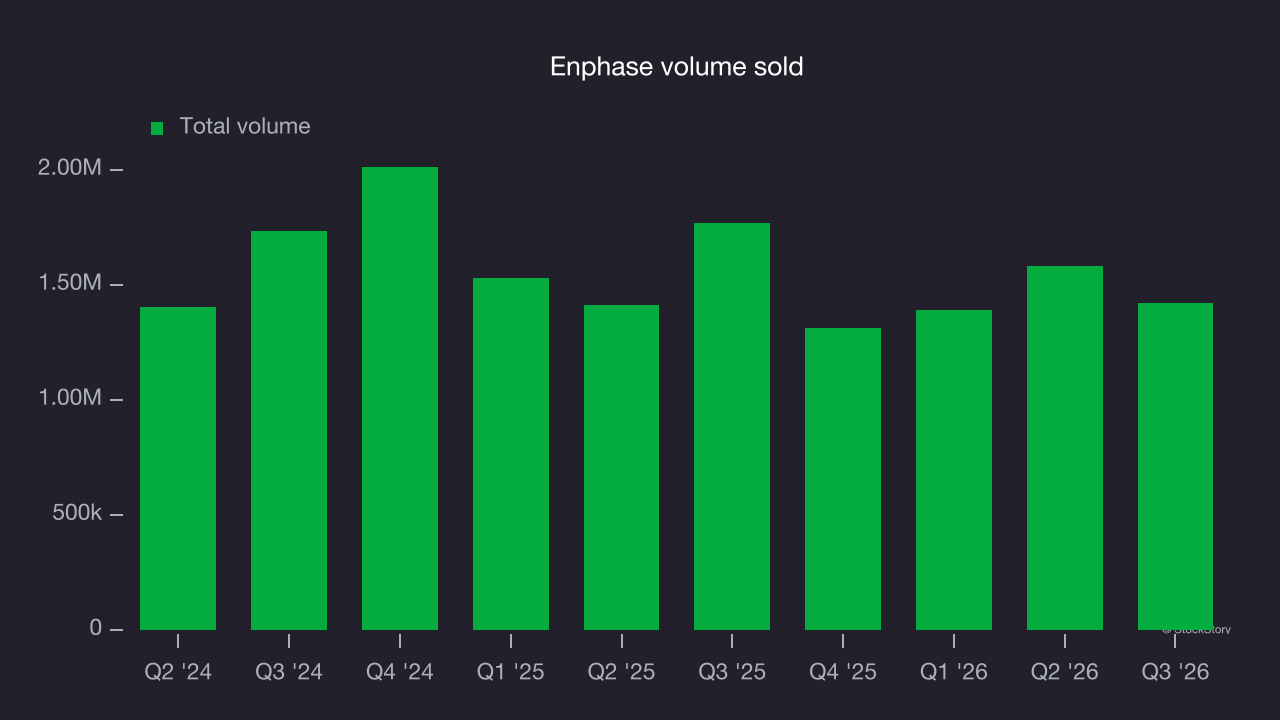
This quarter, Enphase missed Wall Street’s consensus estimates and reported an uninspiring 28.5% year-on-year revenue decline, generating $293.3 million of revenue. Management is currently guiding for a 30.1% year-on-year decline in revenue next quarter.
Looking further ahead, sell-side analysts expect revenue to decline by 4.1% over the next 12 months, according to S&P, a slight deceleration versus the last two years. This uninspiring projection indicates its products and services will face some demand challenges.
Operating margin
Enphase has been an efficient company over the last five years. It was one of the more profitable businesses in the industrials sector, with an average operating margin of 14%. That result is unsurprising given its high gross margin, which provides a favorable starting point.
Analyzing the trend in its profitability, Enphase’s operating margin decreased by 13.1 percentage points over the last five years. Even though its historical margin was healthy, shareholders will want to see Enphase become more profitable in the future.
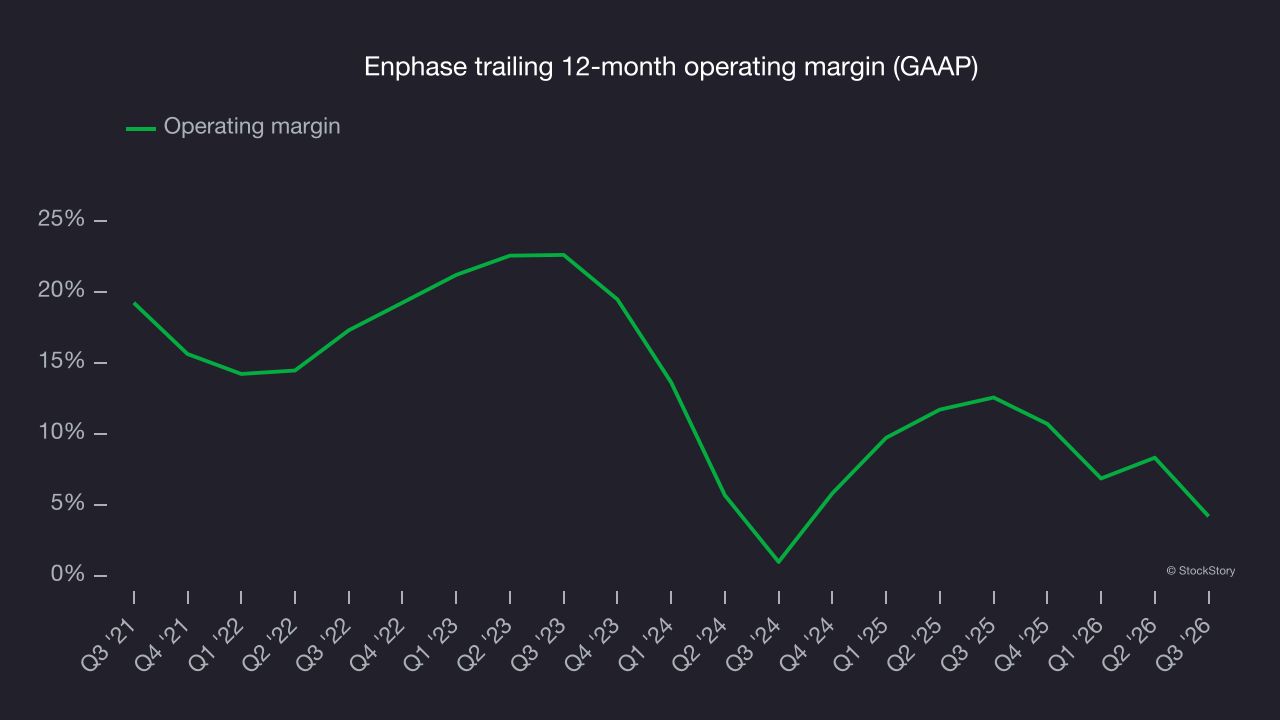
This quarter, Enphase generated an operating margin of 2.2%, down 13.9 percentage points year on year. Conversely, its gross margin rose, suggesting its recent inefficiencies were driven by increased operating expenses such as marketing, R&D and administrative overhead.
Earnings per share
Revenue trends explain a company’s historical growth, but the long-term change in earnings per share (EPS) points to the profitability of that growth. For example, a company could inflate its revenue through excessive spending on advertising and promotions.
Enphase’s EPS declined by 1.4% annually over the last five years. Companies with falling revenue and EPS warrant caution, as diminishing earnings could imply changing secular trends and preferences. If conditions shift unexpectedly, Enphase’s low margin of safety could leave its stock price susceptible to large declines.
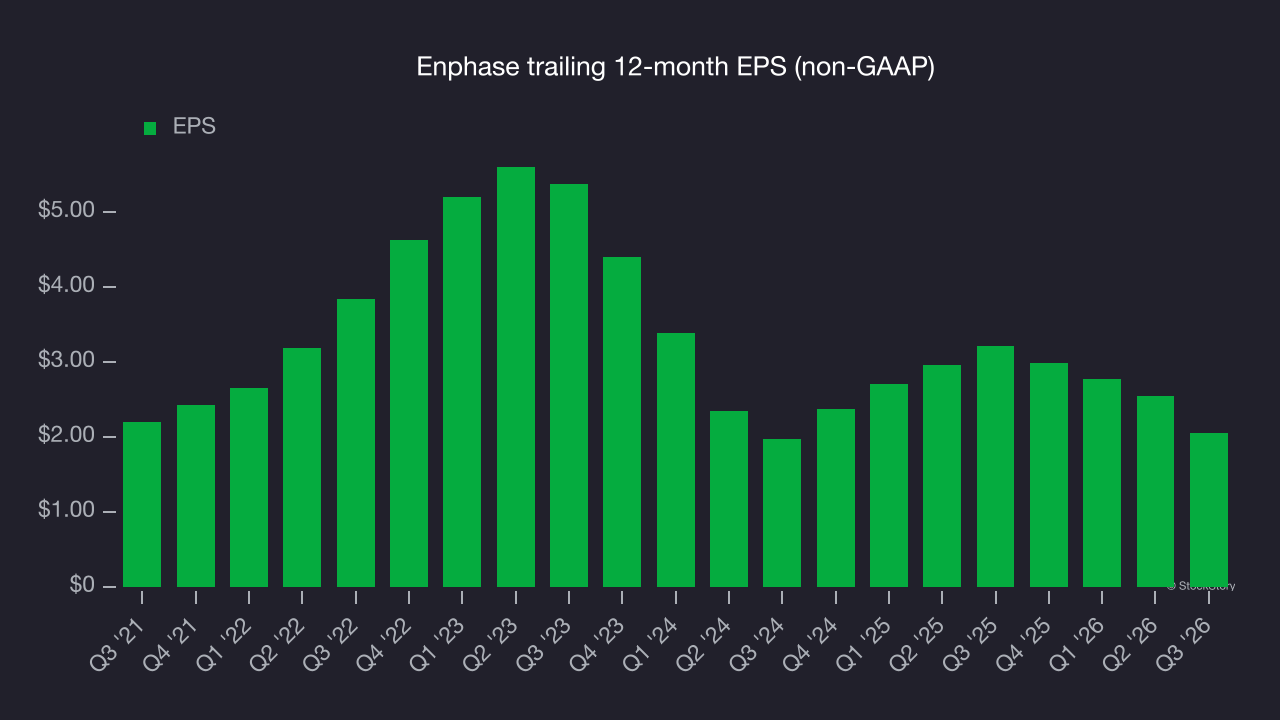
As with revenue, we analyze EPS over a shorter period to see if we are missing a change in the business.
Although underwhelming, Enphase’s two-year annual EPS growth of 2% topped its two-year revenue performance.
A closer look at Enphase’s earnings helps explain the drivers of its performance. A two-year view shows that Enphase has repurchased its stock, shrinking its share count by 3.4%. This indicates its EPS outperformed its revenue not because of increased operational efficiency but financial engineering, as buybacks boost per share earnings. 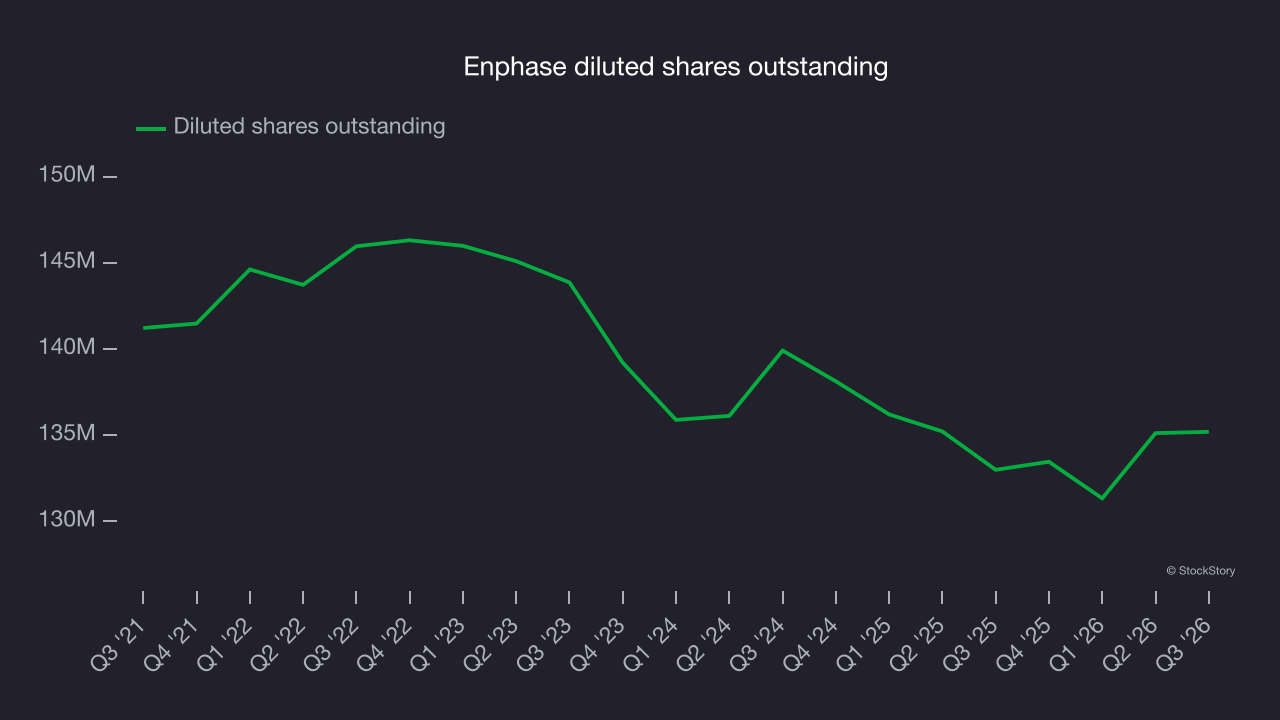
In Q3, Enphase reported adjusted EPS of $0.41, down from $0.90 in the same quarter last year. This result missed analysts’ consensus estimates. Over the next 12 months, Wall Street expects Enphase’s full-year EPS to shrink by 2.8% from $2.05 to $1.99, according to S&P.
Key takeaways from Enphase’s Q3 results
Enphase’s quarter offered few positives: Revenue fell short of Wall Street’s consensus estimates, and next-quarter revenue guidance also missed expectations. It was a softer quarter overall. Shares plunged 12.9% to $26.04 immediately after the results.
Enphase fell short this quarter. When deciding whether to buy the stock, consider the bigger picture of valuation, business quality and the latest earnings. For more on Enphase, read our full research report here (it’s free).