As we enter 2026, the landscape of artificial intelligence has shifted from simple conversational interfaces to proactive, autonomous agents. Leading this charge is Alphabet Inc. (NASDAQ: GOOGL), which has successfully transitioned its Gemini ecosystem from a reactive chatbot into a sophisticated "agentic" platform. At the heart of this transformation are Gemini 2.0 and Project Mariner—a powerful Chrome extension that allows AI to navigate the web, fill out complex forms, and conduct deep research with human-like precision.
The release of these tools marks a pivotal moment in tech history, moving beyond the "chat box" paradigm. By leveraging a state-of-the-art multimodal architecture, Google has enabled its AI to not just talk about the world, but to act within it. With Project Mariner now hitting a record-breaking 83.5% score on the WebVoyager benchmark, the dream of a digital personal assistant that can handle the "drudgery" of the internet—from booking multi-city flights to managing insurance claims—has finally become a reality for millions of users.
The Technical Backbone: Gemini 2.0 and the Power of Project Mariner
Gemini 2.0 was designed from the ground up to be "agentic native." Unlike its predecessors, which primarily processed text and images in a static environment, Gemini 2.0 Flash and Pro models were built to reason across diverse inputs in real-time. With context windows reaching up to 2 million tokens, these models can maintain a deep understanding of complex tasks that span hours of interaction. This architectural shift allows Project Mariner to interpret the browser window not just as a collection of code, but as a visual field. It identifies buttons, text fields, and interactive elements through "pixels-to-action" mapping, effectively seeing the screen exactly as a human would.
What sets Project Mariner apart from previous automation tools is its "Transparent Reasoning" engine. While earlier attempts at web automation relied on fragile scripts or specific APIs, Mariner uses Gemini 2.0’s multimodal capabilities to navigate any website, regardless of its underlying structure. During a task, a sidebar displays the agent's step-by-step plan, allowing users to watch as it compares prices across different tabs or fills out a 10-page mortgage application. This level of autonomy is backed by Google’s recent shift to Cloud Virtual Machines (VMs), which allows Mariner to run multiple tasks in parallel without slowing down the user's local machine.
The AI research community has lauded these developments, particularly the 83.5% success rate on the WebVoyager benchmark. This score signifies a massive leap over previous models from competitors like OpenAI and Anthropic, which often struggled with the "hallucination of action"—the tendency for an AI to think it has clicked a button when it hasn't. Industry experts note that Google’s integration of "Teach & Repeat" features, where a user can demonstrate a workflow once for the AI to replicate, has effectively turned the browser into a programmable workforce.
A Competitive Shift: Tech Giants in the Agentic Arms Race
The launch of Project Mariner has sent shockwaves through the tech industry, forcing competitors to accelerate their own agentic roadmaps. Microsoft (NASDAQ: MSFT) has responded by deepening the integration of its "Copilot Actions," while OpenAI has continued to iterate on its "Operator" platform. However, Google’s advantage lies in its ownership of the world’s most popular browser and the Android operating system. By embedding Mariner directly into Chrome, Google has secured a strategic "front-door" advantage that startups find difficult to replicate.
For the wider ecosystem of software-as-a-service (SaaS) companies, the rise of agentic AI is both a boon and a threat. Companies that provide travel booking, data entry, or research services are seeing their traditional user interfaces bypassed by agents that can aggregate data directly. Conversely, platforms that embrace "agent-friendly" designs—optimizing their sites for AI navigation rather than just human clicks—are seeing a surge in automated traffic and conversions. Google’s "AI Ultra" subscription tier, which bundles these agentic features for enterprise clients, has already become a major revenue driver, positioning AI as a form of "digital labor" rather than just software.
The competitive implications also extend to the hardware space. As Google prepares to fully replace the legacy Google Assistant with Gemini on Android devices this year, Apple (NASDAQ: AAPL) is under increased pressure to enhance its "Apple Intelligence" suite. The ability for an agent to perform cross-app actions—such as taking a receipt from an email and entering the data into a spreadsheet—has become the new baseline for what consumers expect from their devices in 2026.
The Broader Significance: Privacy, Trust, and the New Web
The move toward agentic AI represents the most significant shift in the internet's "social contract" since the advent of social media. We are moving away from a web designed for human eyeballs toward a web designed for machine execution. While this promises unprecedented productivity, it also raises critical concerns regarding privacy and security. If an agent like Project Mariner can navigate your bank account or handle sensitive medical forms, the stakes for a security breach are higher than ever.
To address these concerns, Google has implemented a "Human-in-the-Loop" safety model. For any action involving financial transactions or high-level data changes, Mariner is hard-coded to pause and request explicit human confirmation. Furthermore, the use of "Sandboxed Cloud VMs" ensures that the AI’s actions are isolated from the user’s primary system, providing a layer of protection against malicious sites that might try to "prompt inject" the agent.
Comparing this to previous milestones, such as the release of GPT-4 or the first AlphaGo victory, the "Agentic Era" feels more personal. It isn't just about an AI that can write a poem or play a game; it's about an AI that can do your work for you. This shift is expected to have a profound impact on the global labor market, particularly in administrative and research-heavy roles, as the cost of "digital labor" continues to drop while its reliability increases.
Looking Ahead: Project Astra and the Vision of 2026
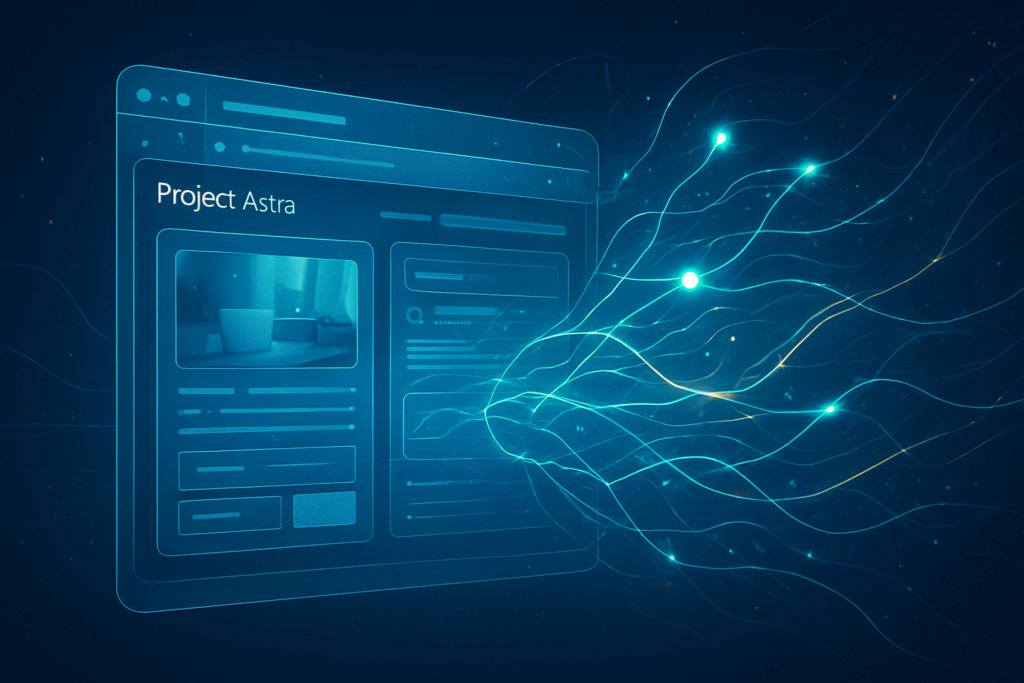
The next frontier for Google is the full integration of Project Astra’s multimodal features into the Gemini app, a milestone targeted for completion throughout 2026. Project Astra represents the "eyes and ears" of the Gemini ecosystem. While Mariner handles the digital world of the browser, Astra is designed to handle the physical world. By the end of this year, users can expect their Gemini app to possess "Visual Memory," allowing it to remember where you put your keys or identify a specific part needed for a home repair through a live camera feed.
Experts predict that the convergence of Mariner’s web-navigating capabilities and Astra’s real-time vision will lead to the first truly "universal" AI assistant. Imagine an agent that can see a broken appliance through your phone's camera, identify the necessary replacement part, find the best price for it on the web, and complete the purchase—all within a single conversation. The challenges remain significant, particularly in the realm of real-time latency and the high compute costs associated with continuous video processing, but the trajectory is clear.
In the near term, we expect to see Google expand its "swarm" of specialized agents. Beyond Mariner for the web, "Project CC" is expected to revolutionize Google Workspace by autonomously managing calendars and drafting complex documents, while "Jules" will continue to push the boundaries of AI-assisted coding. The goal is a seamless web of agents that communicate with each other to solve complex, multi-domain problems.
Conclusion: A New Chapter in AI History
The arrival of Gemini 2.0 and Project Mariner marks the end of the "chatbot era" and the beginning of the "agentic era." By achieving an 83.5% success rate on the WebVoyager benchmark, Google has proven that AI can be a reliable executor of complex tasks, not just a generator of text. This development represents a fundamental shift in how we interact with technology, moving from a world where we use tools to a world where we manage partners.
As we look forward to the full integration of Project Astra in 2026, the significance of this moment cannot be overstated. We are witnessing the birth of a digital workforce that is available 24/7, capable of navigating the complexities of the modern world with increasing autonomy. For users, the key will be learning how to delegate effectively, while for the industry, the focus will remain on building the trust and security frameworks necessary to support this new level of agency.
In the coming months, keep a close eye on how these agents handle real-world "edge cases"—the messy, unpredictable parts of the internet that still occasionally baffle even the best AI. The true test of the agentic era will not be in the benchmarks, but in the millions of hours of human time saved as we hand over the keys of the browser to Gemini.
This content is intended for informational purposes only and represents analysis of current AI developments.
TokenRing AI delivers enterprise-grade solutions for multi-agent AI workflow orchestration, AI-powered development tools, and seamless remote collaboration platforms.
For more information, visit https://www.tokenring.ai/.