JELD-WEN’s stock price has taken a beating over the past six months, shedding 33.2% of its value and falling to $1.49 per share. This may have investors wondering how to approach the situation.
Is there a buying opportunity in JELD-WEN, or does it present a risk to your portfolio? See what our analysts have to say in our full research report, it’s free.
Why Do We Think JELD-WEN Will Underperform?
Despite the more favorable entry price, we're swiping left on JELD-WEN for now. Here are three reasons why JELD doesn't excite us and a stock we'd rather own.
1. Core Business Falling Behind as Demand Declines
We can better understand Home Construction Materials companies by analyzing their organic revenue. This metric gives visibility into JELD-WEN’s core business because it excludes one-time events such as mergers, acquisitions, and divestitures along with foreign currency fluctuations - non-fundamental factors that can manipulate the income statement.
Over the last two years, JELD-WEN’s organic revenue averaged 11.6% year-on-year declines. This performance was underwhelming and implies it may need to improve its products, pricing, or go-to-market strategy. It also suggests JELD-WEN might have to lean into acquisitions to grow, which isn’t ideal because M&A can be expensive and risky (integrations often disrupt focus). 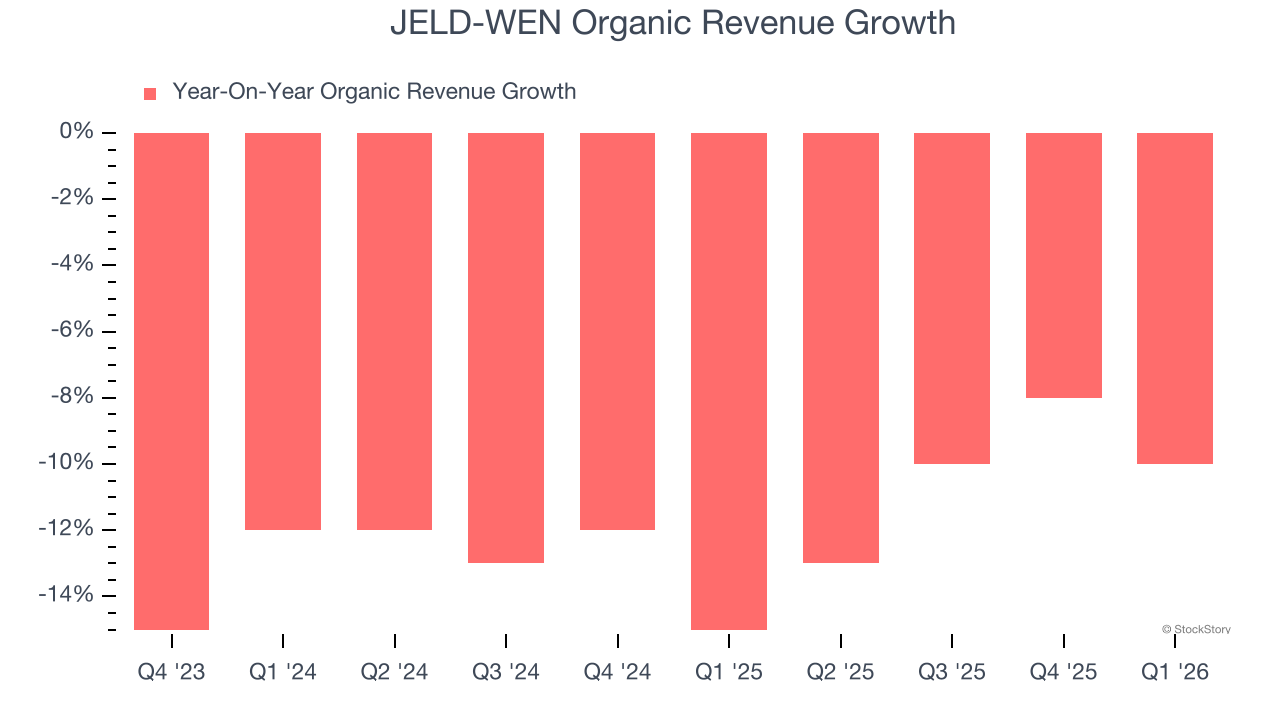
2. New Investments Fail to Bear Fruit as ROIC Declines
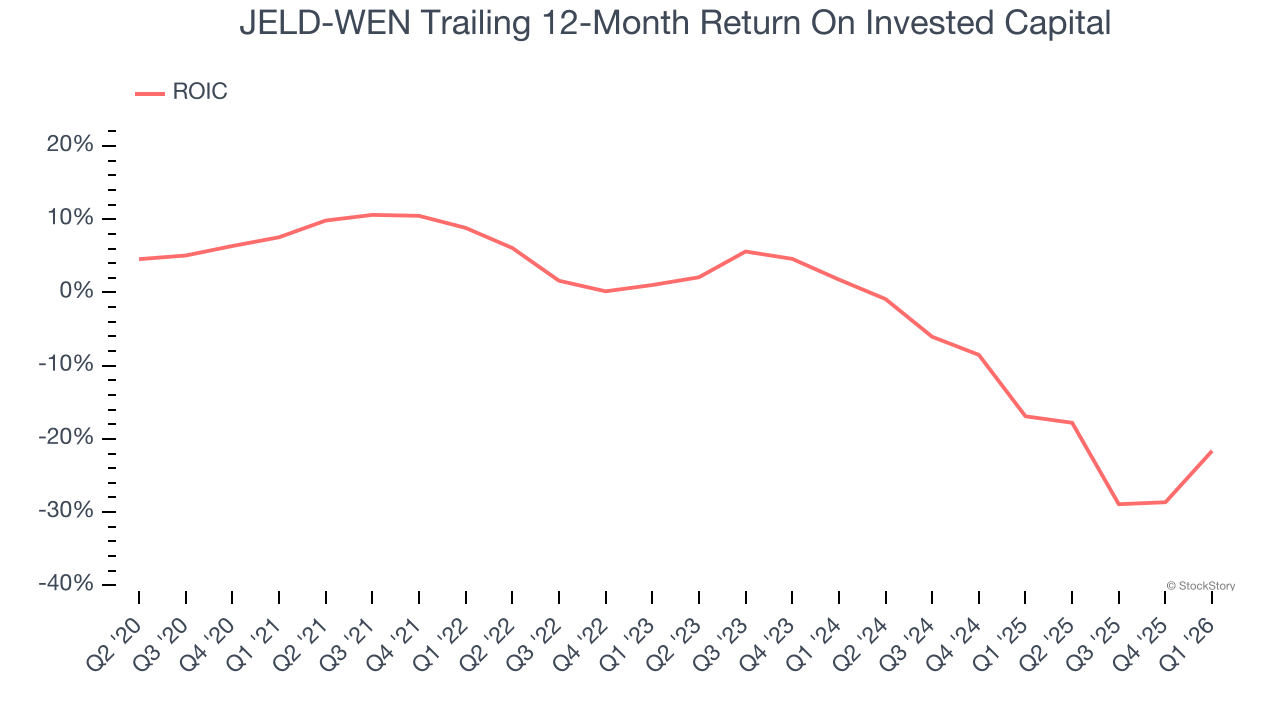
ROIC, or return on invested capital, is a metric showing how much operating profit a company generates relative to the money it has raised (debt and equity).
We like to invest in businesses with high returns, but the trend in a company’s ROIC is what often surprises the market and moves the stock price. Unfortunately, JELD-WEN’s ROIC has decreased significantly over the last few years. Paired with its already low returns, these declines suggest its profitable growth opportunities are few and far between.
3. Short Cash Runway Exposes Shareholders to Potential Dilution
As long-term investors, the risk we care about most is the permanent loss of capital, which can happen when a company goes bankrupt or raises money from a disadvantaged position. This is separate from short-term stock price volatility, something we are much less bothered by.
JELD-WEN burned through $132.7 million of cash over the last year, and its $1.21 billion of debt exceeds the $50.36 million of cash on its balance sheet. This is a deal breaker for us because indebted loss-making companies spell trouble.
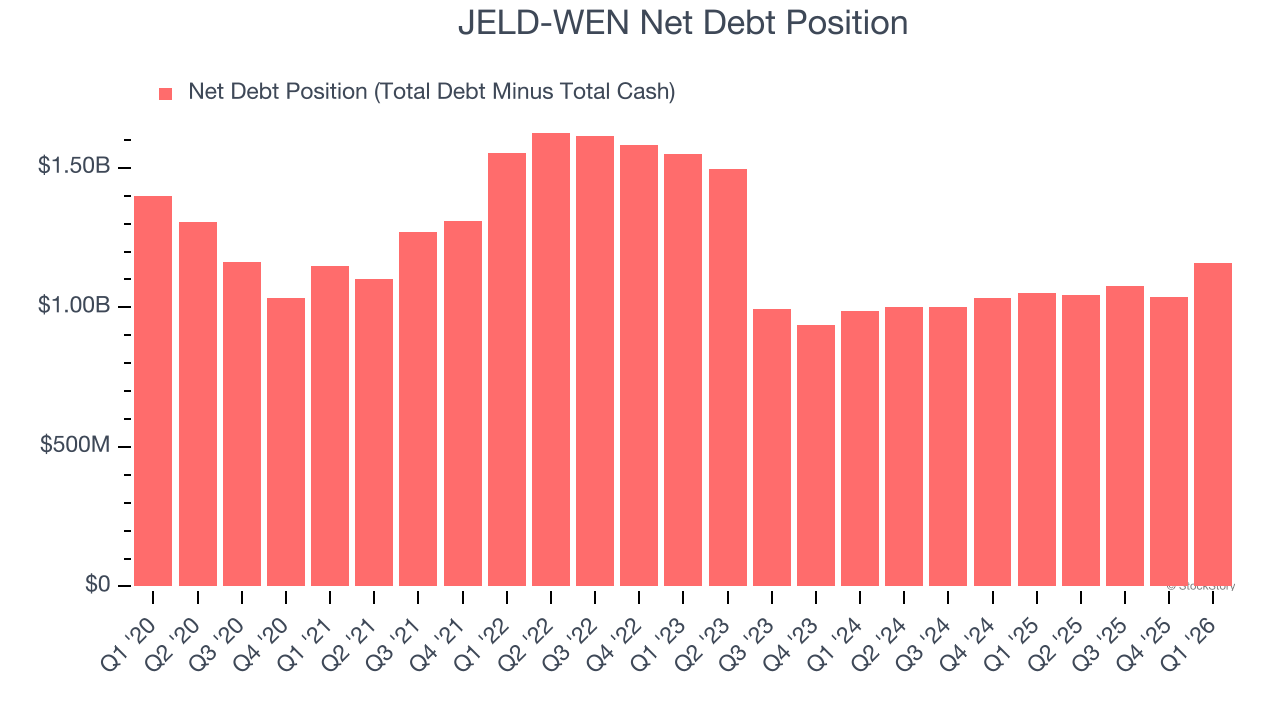
Unless the JELD-WEN’s fundamentals change quickly, it might find itself in a position where it must raise capital from investors to continue operating. Whether that would be favorable is unclear because dilution is a headwind for shareholder returns.
We remain cautious of JELD-WEN until it generates consistent free cash flow or any of its announced financing plans materialize on its balance sheet.
Final Judgment
We see the value of companies helping their customers, but in the case of JELD-WEN, we’re out. Following the recent decline, the stock trades at 10.3× forward EV-to-EBITDA (or $1.49 per share). This valuation tells us a lot of optimism is priced in - we think there are better opportunities elsewhere. We’d recommend looking at a top digital advertising platform riding the creator economy.
Stocks We Like More Than JELD-WEN
ONE MORE THING: Top 6 Stocks for This Week. This market is separating quality stocks from expensive ones fast. AI taking down whole sectors with no warning. In a rotation this fast, you need more than a list of good companies.
Our AI system flagged Palantir before it ran 1,662%. AppLovin before it ran 753%. Nvidia before it ran 1,178%. Each week it produces 6 new names that pass the same tests. Get Our Top 6 Stocks for Free HERE.
Stocks that have made our list include now familiar names such as Nvidia (+1,326% between June 2020 and June 2025) as well as under-the-radar businesses like the once-micro-cap company Kadant (+351% five-year return). Find your next big winner with StockStory today.