Luxury electric car manufacturer Lucid (NASDAQ: LCID) fell short of the market’s revenue expectations in Q1 CY2026, but sales rose 20.2% year on year to $282.5 million. Its non-GAAP loss of $2.82 per share was 22.8% below analysts’ consensus estimates.
Is now the time to buy Lucid? Find out by accessing our full research report, it’s free.
Lucid (LCID) Q1 CY2026 Highlights:
- Revenue: $282.5 million vs analyst estimates of $377 million (20.2% year-on-year growth, 25.1% miss)
- Adjusted EPS: -$2.82 vs analyst expectations of -$2.30 (22.8% miss)
- Adjusted EBITDA: -$780.6 million (-276% margin, 38.5% year-on-year decline)
- Adjusted EBITDA Margin: -276%, down from -240% in the same quarter last year
- Free Cash Flow was -$1.44 billion compared to -$589.9 million in the same quarter last year
- Sales Volumes were flat year on year (58.1% in the same quarter last year)
- Market Capitalization: $2.43 billion
"First quarter results demonstrated the strength of our technology and product portfolio. A supplier issue resolved during the quarter had an impact, but January and March deliveries were ahead of the same periods in the prior year," said Marc Winterhoff, Interim Chief Executive Officer at Lucid.
Company Overview
Founded by a former Tesla Vice President, Lucid Group (NASDAQ: LCID) designs, manufactures, and sells luxury electric vehicles with long-range capabilities.
Revenue Growth
Examining a company’s long-term performance can provide clues about its quality. Any business can put up a good quarter or two, but many enduring ones grow for years. Over the last five years, Lucid grew its sales at an incredible 206% compounded annual growth rate. Its growth beat the average industrials company and shows its offerings resonate with customers.
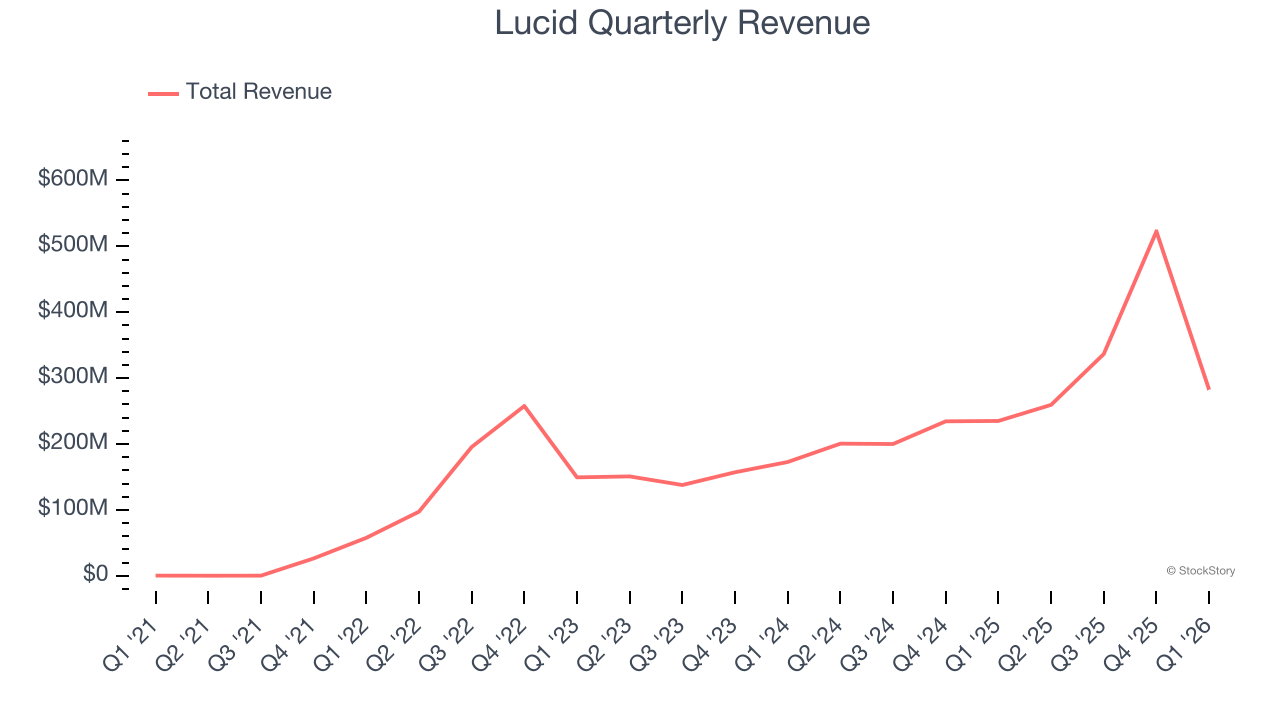
We at StockStory place the most emphasis on long-term growth, but within industrials, a half-decade historical view may miss cycles, industry trends, or a company capitalizing on catalysts such as a new contract win or a successful product line. Lucid’s annualized revenue growth of 50.5% over the last two years is below its five-year trend, but we still think the results suggest healthy demand. 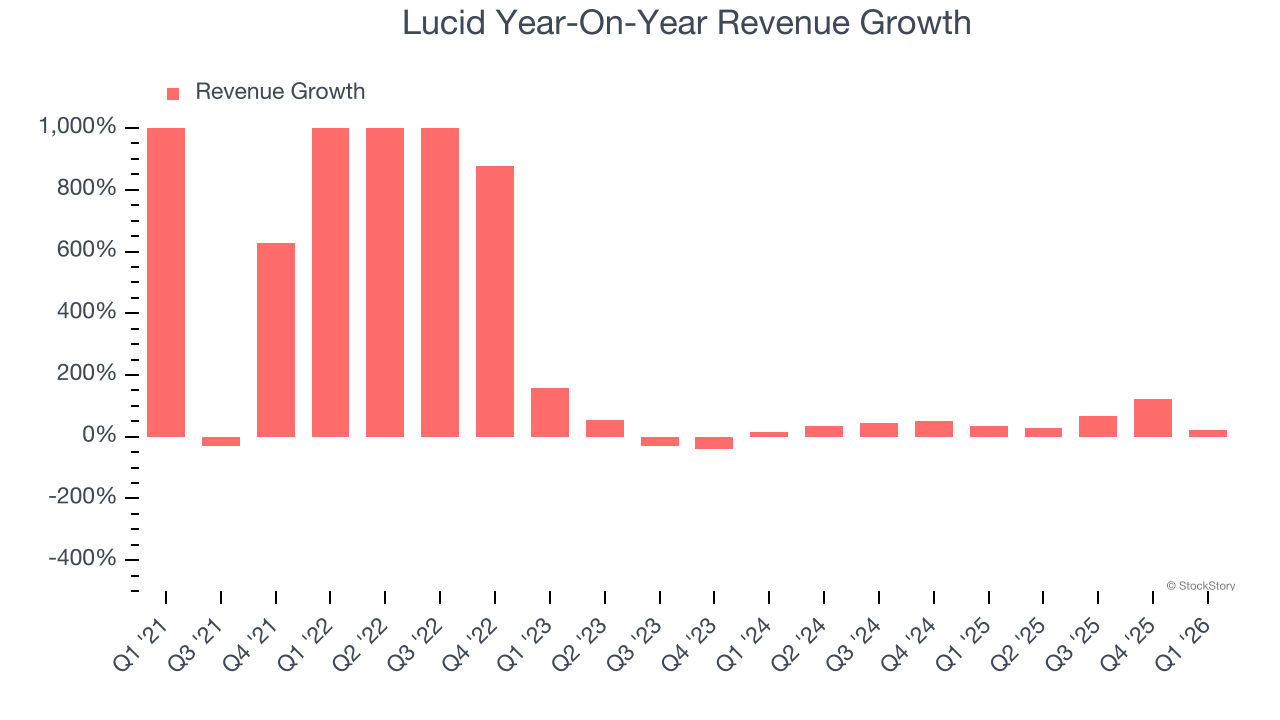
Lucid also reports its number of units sold, which reached 3,093 in the latest quarter. Over the last two years, Lucid’s units sold grew by 39.1% annually. Because this number is lower than its revenue growth, we can see the company benefited from price increases. 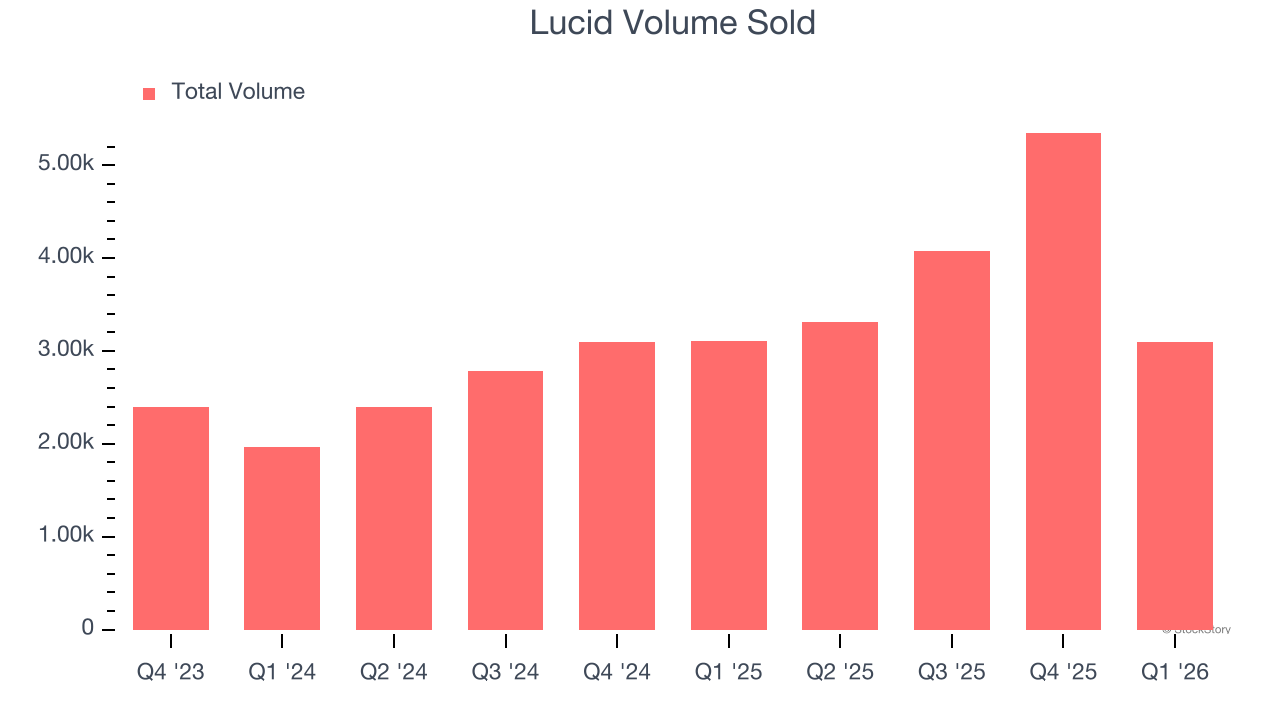
This quarter, Lucid generated an excellent 20.2% year-on-year revenue growth rate, but its $282.5 million of revenue fell short of Wall Street’s high expectations.
Looking ahead, sell-side analysts expect revenue to grow 86% over the next 12 months, an improvement versus the last two years. This projection is eye-popping and indicates its newer products and services will spur better top-line performance.
ONE MORE THING: The $21 AI Application Stock Wall Street Forgot. While Wall Street obsesses over who’s building AI, one company is already using it to print money. And nobody’s paying attention.
AI chip stocks trade at ridiculous valuations. This company processes a trillion consumer signals monthly using AI and trades at a third of the price. The gap won’t last. The institutions will figure it out. You need to see this first. Read the FREE Report Before They Notice.
Operating Margin
Lucid’s high expenses have contributed to an average operating margin of negative 393% over the last five years. Unprofitable industrials companies require extra attention because they could get caught swimming naked when the tide goes out. It’s hard to trust that the business can endure a full cycle.
On the plus side, Lucid’s operating margin rose over the last five years, as its sales growth gave it operating leverage. Still, it will take much more for the company to reach long-term profitability.
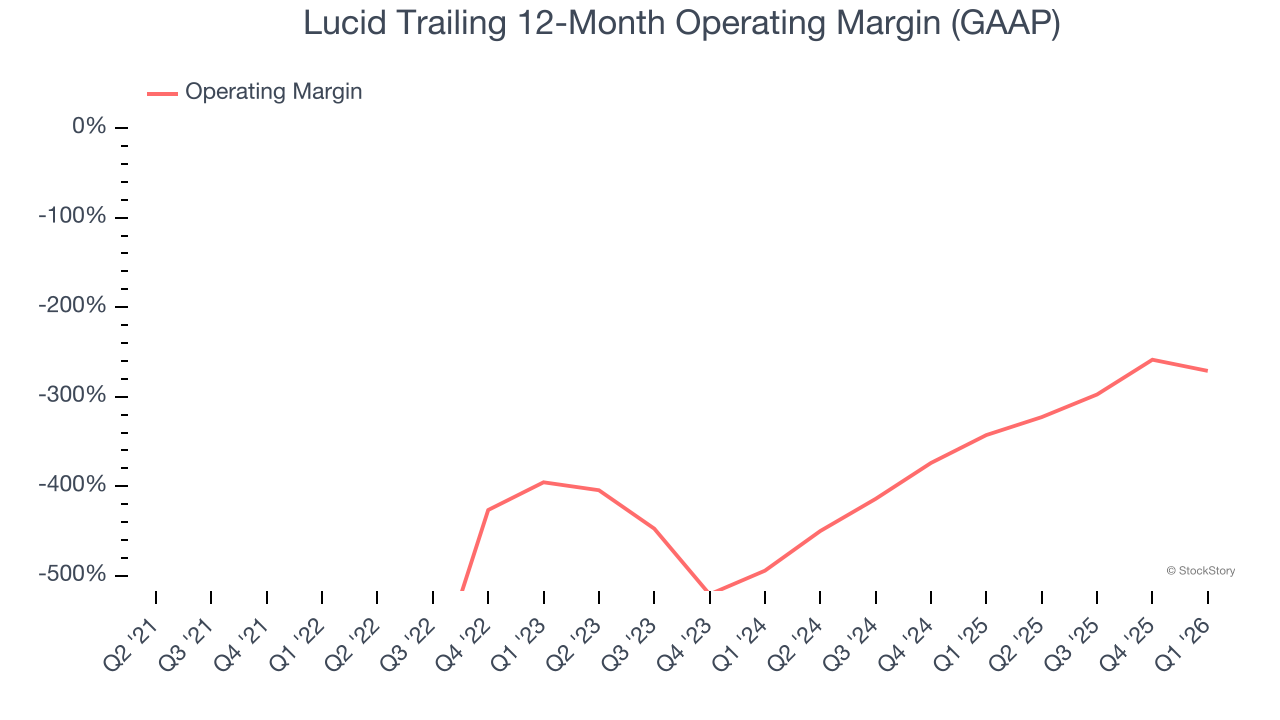
In Q1, Lucid generated a negative 350% operating margin.
Earnings Per Share
Revenue trends explain a company’s historical growth, but the long-term change in earnings per share (EPS) points to the profitability of that growth – for example, a company could inflate its sales through excessive spending on advertising and promotions.
Although Lucid’s full-year earnings are still negative, it reduced its losses and improved its EPS by 5.5% annually over the last four years. The next few quarters will be critical for assessing its long-term profitability. We hope to see an inflection point soon.
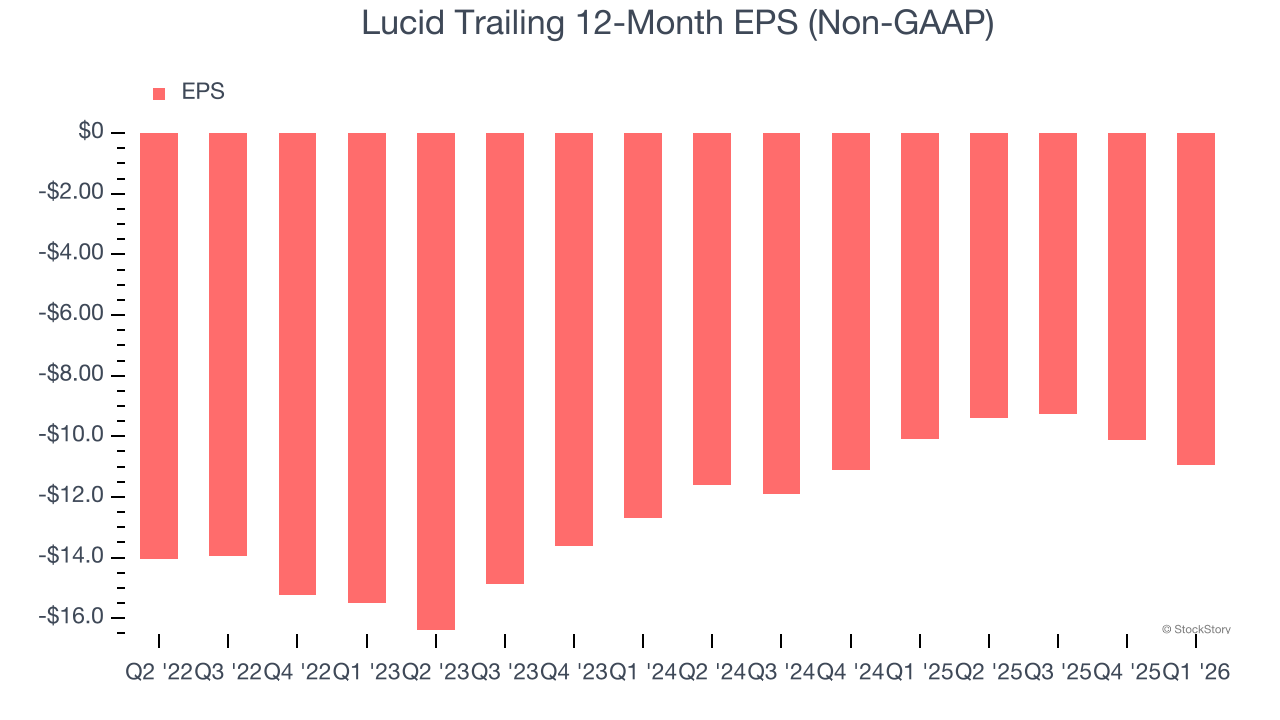
Like with revenue, we analyze EPS over a shorter period to see if we are missing a change in the business.
For Lucid, its two-year annual EPS growth of 7.1% was higher than its four-year trend. Its improving earnings is an encouraging data point, but a caveat is that its EPS is still in the red.
In Q1, Lucid reported adjusted EPS of negative $2.82, down from negative $2 in the same quarter last year. This print missed analysts’ estimates. We also like to analyze expected EPS growth based on Wall Street analysts’ consensus projections, but there is insufficient data.
Key Takeaways from Lucid’s Q1 Results
We struggled to find many positives in these results. Its revenue missed and its adjusted operating income fell short of Wall Street’s estimates. Overall, this quarter could have been better. The stock traded down 3% to $6.12 immediately following the results.
The latest quarter from Lucid’s wasn’t that good. One earnings report doesn’t define a company’s quality, though, so let’s explore whether the stock is a buy at the current price. The latest quarter does matter, but not nearly as much as longer-term fundamentals and valuation, when deciding if the stock is a buy. We cover that in our actionable full research report which you can read here (it’s free).