Global high protein yogurt market grows as Europe and North America lead demand, driven by clean-label trends, functional nutrition, and strong players like Danone and Chobani.
NEWARK, DE / ACCESS Newswire / March 26, 2026 / According to analysis by Future Market Insights (FMI), the global high protein yogurt market is entering a phase of accelerated expansion as consumers increasingly shift from empty-calorie snacks to nutrient-dense, protein-rich food options. The convergence of functional nutrition, clean-label demand, and advancements in dairy processing technologies is reshaping product innovation and value creation across the category.
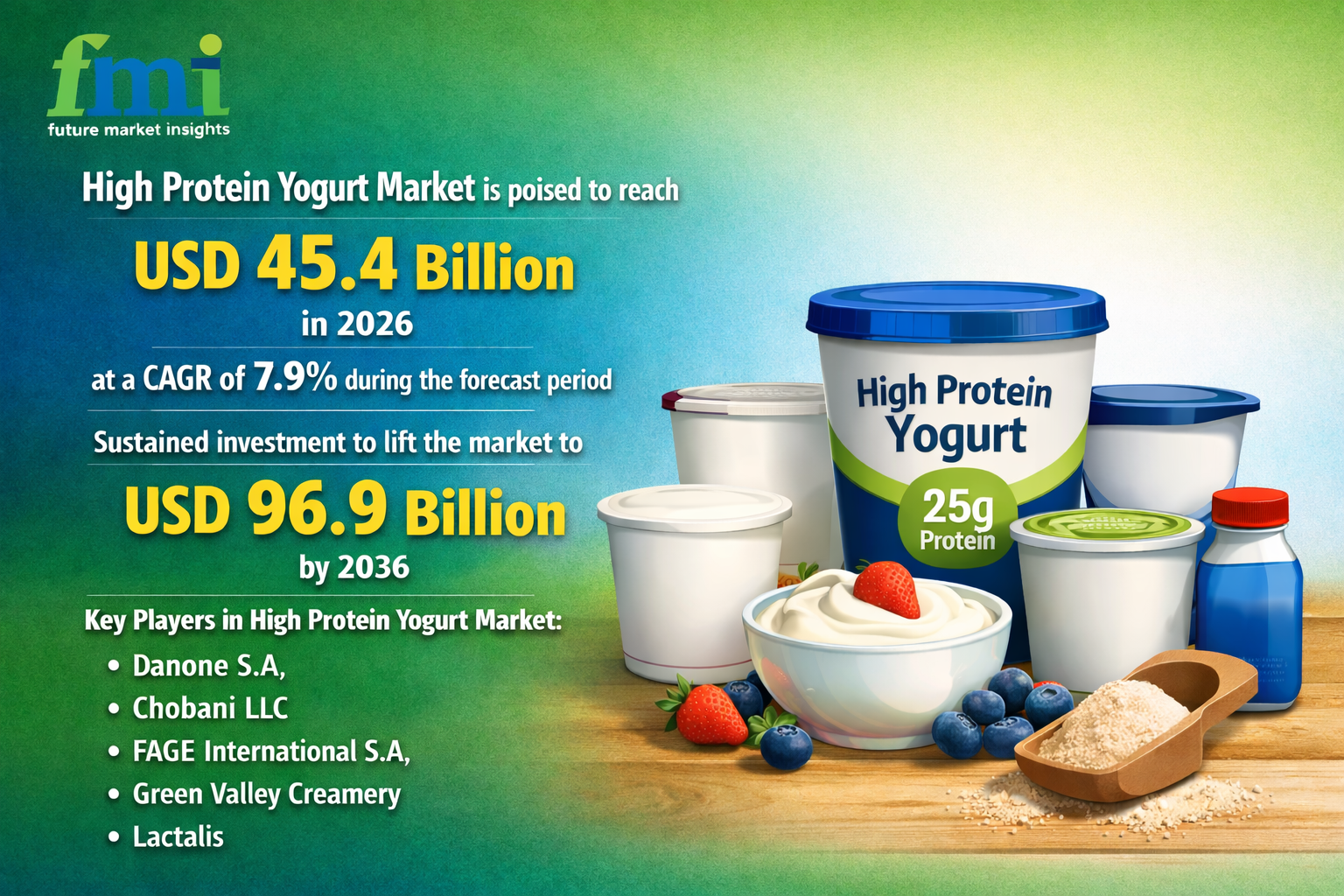
The market was valued at USD 42.4 billion in 2025 and is projected to reach USD 45.4 billion in 2026. Over the forecast period, demand is expected to grow at a CAGR of 7.9%, ultimately reaching USD 96.9 billion by 2036. This growth trajectory reflects sustained consumer preference for high-protein foods that support satiety, muscle maintenance, and overall metabolic health.
Get Access of Report Sample: https://www.futuremarketinsights.com/reports/sample/rep-gb-12012
Functional Nutrition Shift Driving Market Demand
A fundamental driver of the high protein yogurt market is the structural shift in consumer perception of protein consumption. No longer limited to post-workout recovery, protein is now viewed as an essential daily macronutrient. This shift is pushing consumers away from isolated supplements toward whole-food sources such as yogurt that offer both nutritional density and convenience.
Dairy processors are responding by enhancing formulations to increase protein content while maintaining taste and texture. As a result, high protein yogurt has evolved into a core functional food category, appealing to a wide consumer base ranging from fitness enthusiasts to aging populations seeking easily digestible nutrition.
Clean-Label and Low-Sugar Trends Reshaping Formulation Strategies
Increasing scrutiny of added sugars is forcing manufacturers to rethink formulation approaches. Instead of relying on carbohydrate-heavy compositions, producers are focusing on protein density to deliver satiety and nutritional value.
This trend is accelerating innovation in ultrafiltration and enzymatic processing technologies, enabling manufacturers to achieve higher protein concentrations without compromising flavor or mouthfeel. Companies that fail to deliver clean-label, high-performance products risk losing shelf space to emerging hybrid functional dairy alternatives.
Segmental Insights: Spoonable and Dairy-Based Products Lead
By product type, spoonable yogurt is expected to dominate the market, accounting for 67.5% share in 2026. The natural viscosity of high-protein formulations aligns with spoonable formats, making them more appealing to consumers seeking meal-like satiety.
In terms of source, dairy-based yogurt holds the leading position with an estimated 89.0% market share. This dominance is driven by the superior amino acid profile of bovine milk and the well-established ultrafiltration infrastructure within the dairy industry.
By storage type, chilled and frozen products account for 70.6% of the market, reflecting the necessity of preserving live active cultures and maintaining protein stability.
Regional Growth Dynamics Highlight Emerging Opportunities
The high protein yogurt market exhibits diverse growth patterns across key global regions:
United Kingdom: 10.1% CAGR
Japan: 9.6% CAGR
India: 8.5% CAGR
Germany: 6.1% CAGR
United States: 5.7% CAGR
The United Kingdom leads growth due to strong private-label expansion, making premium functional products more accessible. Japan's growth is driven by its aging population and demand for highly digestible protein formats, while India benefits from abundant milk production and increasing adoption of functional dairy products.
Technological Advancements Unlocking New Potential
Advancements in membrane filtration, ultrafiltration, and enzymatic treatments are playing a crucial role in overcoming formulation challenges associated with high protein concentrations. These technologies help reduce chalkiness and improve texture, enabling manufacturers to deliver premium-quality products.
Additionally, innovation in hybrid functional formulations-combining protein with prebiotics and probiotics-is opening new avenues for product differentiation and consumer engagement.
Value Chain Evolution Strengthens Brand-Led Growth
The high protein yogurt value chain demonstrates increasing margin expansion toward the downstream end. While raw milk suppliers operate under commodity pricing pressures, processors and branded manufacturers capture higher value through formulation expertise, product differentiation, and retail presence.
Companies with integrated supply chains and strong brand positioning are best positioned to capitalize on premium pricing opportunities and evolving consumer preferences.
Competitive Landscape
The market is characterized by intense competition among multinational dairy companies and specialized functional brands. Key players are focusing on innovation, clean-label formulations, and expanding product portfolios to maintain a competitive edge.
Leading companies include:
Danone S.A.
Chobani LLC
FAGE International S.A.
Green Valley Creamery
Lactalis
These players are leveraging strong brand equity, advanced processing capabilities, and targeted nutritional positioning to strengthen their market presence.
Market Outlook: Protein Density Becomes the New Standard
The long-term outlook for the high protein yogurt market remains highly positive, driven by the continued mainstream adoption of functional nutrition. As consumers increasingly prioritize satiety, convenience, and health benefits, high protein yogurt is expected to solidify its position as a staple in daily diets.
However, success in this evolving market will depend on the ability of manufacturers to balance high protein content with superior taste, texture, and digestive tolerance. Companies that effectively integrate technological innovation with consumer-centric product development will be best positioned to capture long-term growth opportunities.
For an in-depth analysis of evolving formulation trends and to access the complete strategic outlook for the High Protein Yogurt Market through 2036, Full Report Request - https://www.futuremarketinsights.com/reports/high-protein-yogurt-market
Browse More Reports from Food and Beverages:
High Protein Flour Market: https://www.futuremarketinsights.com/reports/high-protein-flour-market
High Protein Powders Market: https://www.futuremarketinsights.com/reports/high-protein-powders-market
High-Protein Pudding Market: https://www.futuremarketinsights.com/reports/high-protein-pudding-market
High-Protein Feed Market: https://www.futuremarketinsights.com/reports/high-protein-feed-market
About Future Market Insights (FMI)
Future Market Insights (FMI) is a leading provider of market intelligence and consulting services, serving clients in over 150 countries. Headquartered in Delaware, USA, with a global delivery center in India and offices in the UK and UAE, FMI delivers actionable insights to businesses across industries including automotive, technology, consumer products, manufacturing, energy, and chemicals.
An ESOMAR-certified research organization, FMI provides custom and syndicated market reports and consulting services, supporting both Fortune 1,000 companies and SMEs. Its team of 300+ experienced analysts ensures credible, data-driven insights to help clients navigate global markets and identify growth opportunities.
For Press & Corporate Inquiries
Rahul Singh
AVP - Marketing and Growth Strategy
Future Market Insights, Inc.
+91 8600020075
For Sales - sales@futuremarketinsights.com
For Media - Rahul.singh@futuremarketinsights.com
For web - https://www.futuremarketinsights.com
SOURCE: Future Market Insights, Inc.
View the original press release on ACCESS Newswire