
Photo Courtesy: Alexandra Kash
NEW YORK, NY - Certified Personal Trainer and Behavior Change Specialist Alexandra Kash has released her latest book, Muscle of Habit: Why Change Feels So Hard Even When You Know What to Do. Now available through Amazon, the book reframes habits as a fundamental system influencing how people live, think, and connect across every area of daily life.
Kash, based in New York, brings years of professional experience in fitness and behavioral science to a subject that extends well beyond the gym. Her new work argues that habits are not isolated routines but an interconnected system shaping physical health, relationships, emotional responses, and long-term life outcomes.
What Gap Does Muscle of Habit Address?
Most people already know what they should be doing. Eat better. Move more. Sleep enough. Manage stress. The space between knowing and doing is where Kash's new book begins.
Muscle of Habit examines why that space exists and what drives people to repeat patterns even when those patterns no longer serve them. Rather than offering a checklist or a 30-day program, the book draws on behavioral science and neuroscience to explain how habits form at a neurological level, why they persist, and what conditions allow them to shift. Kash makes the case that willpower is not the missing ingredient. Lasting change, she writes, depends on understanding the brain's relationship with environment, emotion, and repetition.
The book spans habit domains that include movement, sleep, stress response, cognitive function, and social connection. Kash treats these not as separate goals to pursue individually but as interconnected outcomes of a single behavioral framework operating beneath the surface of daily life.
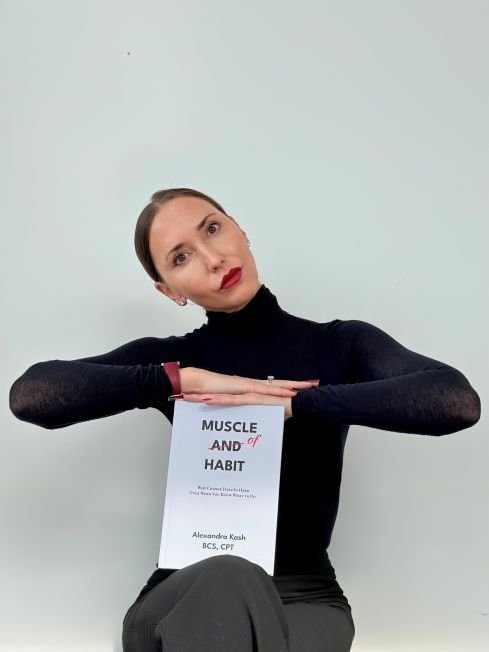
Photo Courtesy: Alexandra Kash
Why Does Consistency Feel So Difficult?
One of the book's central arguments is that struggling with consistency is not a personal failure. The human brain is wired to protect existing routines because familiar behaviors require less energy than new ones. When someone repeatedly starts and stops a habit, that cycle reflects how the brain processes change rather than a lack of discipline.
Environment plays a larger role than most people recognize. Physical surroundings, daily schedules, social circles, and emotional states all create cues that either reinforce existing patterns or make new ones harder to sustain. Kash breaks down these dynamics in practical, accessible language and offers readers a framework for identifying their own behavioral triggers before attempting to override them.
"People don't fail at habits because they lack motivation," Kash has noted. "They fail because they're working against systems they don't fully understand."
Who Is the Book Written For?
Kash identifies her primary audience as adults between 30 and 55 who have experienced repeated cycles of starting and stopping healthy behaviors. These readers are not short on information. They often know exactly what they should be doing, but cannot sustain it over weeks and months.
A secondary audience includes professionals who maintain discipline in their careers but find it harder to apply that same consistency to personal health or stress management. The book speaks directly to the frustration of understanding a problem intellectually while feeling unable to solve it in practice.
How Does This Build on Kash's Earlier Work?
Kash previously published Longevity Through Physical Activity: The 15-Minute Habit, which focused on building sustainable exercise routines through small, consistent daily actions. Her new release expands that foundation considerably. Where the earlier book concentrated on physical activity as a single habit domain, Muscle of Habit applies the same evidence-based thinking across multiple dimensions of life, from sleep and stress to friendships and decision-making.
Her credentials as a Certified Personal Trainer (CPT) and Behavior Change Specialist (BCS) inform both works. Years of working directly with individuals facing the challenge of building and maintaining habits shaped the book's practical tone and its emphasis on realistic, incremental progress rather than dramatic overhaul.
What Readers Will Find Inside
The book does not promise quick fixes or overnight results. It positions well-being and longevity not as distant targets but as natural outcomes of consistently aligned daily behaviors across physical, emotional, and social dimensions.
Readers will find a structured explanation of how habits operate at the neurological level, paired with strategies for reshaping patterns in everyday settings. Kash prioritizes sustainability over speed throughout. The book is designed for people who have tried prescriptive programs, found them difficult to maintain, and want to understand why those approaches did not stick.
Muscle of Habit: Why Change Feels So Hard Even When You Know What to Do is now available on Amazon.
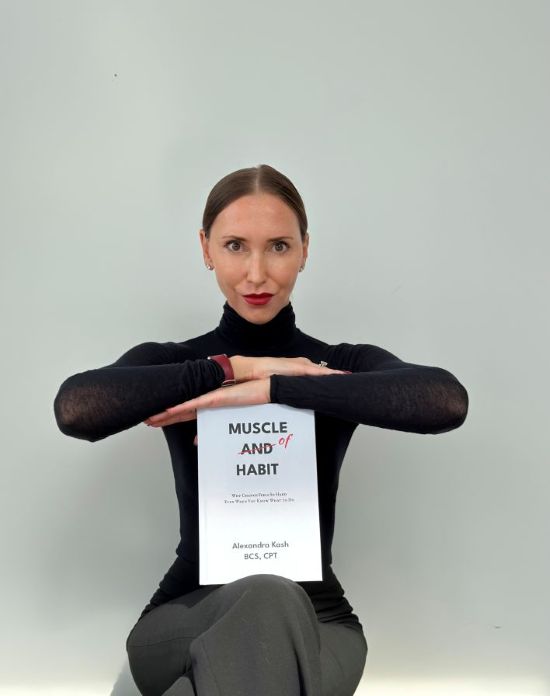
Photo Courtesy: Alexandra Kash
About Alexandra Kash
Alexandra Kash is a Certified Personal Trainer (CPT) and Behavior Change Specialist (BCS) based in New York. She is the author of Muscle of Habit: Why Change Feels So Hard Even When You Know What to Do and Longevity Through Physical Activity: The 15-Minute Habit. Her work focuses on the science of habit formation and its application across physical health, cognitive function, relationships, and long-term well-being.
Media Contact
Company Name: Pump It Lab
Contact Person: Alexandra Kash
Email: Send Email
Phone: 1 (929) 634-0908
Country: United States
Website: https://a.co/d/0hgNEmjF