SAN FRANCISCO — January 9, 2026 — Elon Musk’s artificial intelligence venture, xAI, has reported a staggering widening of its quarterly losses, sending ripples through the technology and robotics sectors. Internal financial disclosures for the final quarter of 2025 reveal that the company’s net loss surged to an estimated $1.85 billion, up from $1.46 billion in the previous quarter. This aggressive burn rate is largely attributed to the massive capital expenditures required to scale the "Colossus" supercomputer and the intensive research and development phase of the "Grok-R" engine—the specialized neural backbone designed to power Tesla, Inc. (NASDAQ: TSLA) and its humanoid robot, Optimus.
The financial results underscore the immense cost of competing in the top-tier AI race, where the price of entry is now measured in tens of billions of dollars in hardware and energy. Despite the heavy losses, Musk remains defiant, framing the expenditure as a necessary investment in "embodied AI." The immediate implication for the market is a sharpening focus on the viability of Musk’s multi-company ecosystem, as xAI increasingly functions as the high-level reasoning laboratory for Tesla’s physical hardware, effectively tethering the financial health of the private AI firm to the future of the world’s most valuable automaker.
The Billion-Dollar Burn: Scaling the Silicon Frontier
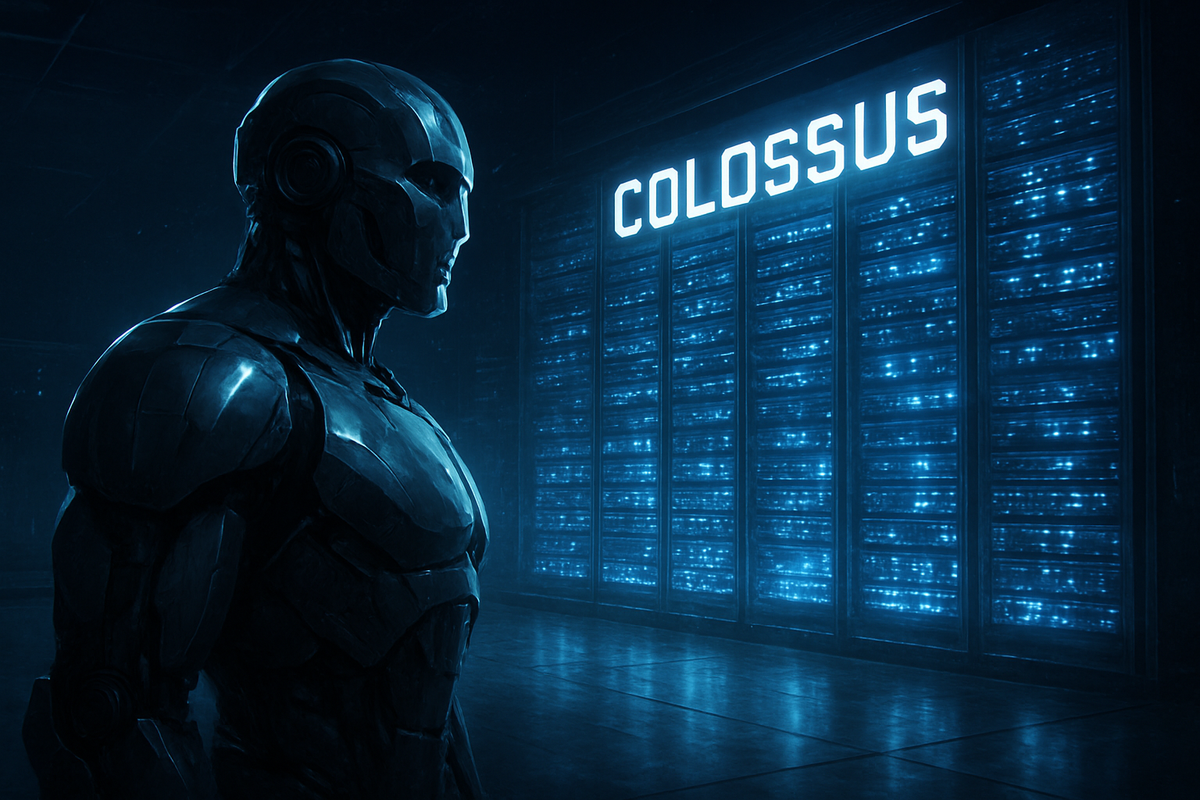
The road to xAI’s current financial position has been paved with unprecedented hardware acquisitions. Throughout 2025, the company aggressively expanded its Memphis-based supercomputer, Colossus. What began in late 2024 with 100,000 NVIDIA (NASDAQ: NVDA) H100 GPUs has, as of this January, scaled toward the ambitious goal of one million interconnected units. This expansion has driven xAI’s monthly cash burn to nearly $1.2 billion, a figure that includes not only the staggering cost of the silicon itself but also the massive energy requirements—now exceeding 500 megawatts—and the premium salaries paid to lure top-tier researchers from rivals like OpenAI and Google, a subsidiary of Alphabet Inc. (NASDAQ: GOOGL).
The timeline leading to this quarterly report reflects a frantic pace of development. In mid-2025, xAI released Grok-3, which achieved parity with leading LLMs in reasoning benchmarks. However, the pivot toward "Grok-R" (the Robotics variant) in late 2025 marked a shift from purely conversational AI to spatial and tactile reasoning. This transition was necessitated by the accelerating production schedule of Tesla’s Optimus Gen 3. Key stakeholders, including major investors from Fidelity and Sequoia Capital, have reportedly been briefed that while the losses are historic, the "Macrohard" software suite—xAI’s enterprise AI platform—is expected to begin generating significant licensing revenue by late 2026.
Initial industry reactions have been polarized. While some venture capitalists view the burn as a visionary "land grab" for the future of labor, institutional analysts have raised concerns about the lack of a clear firewall between xAI’s private losses and Tesla’s public balance sheet. The integration of xAI’s software into Optimus has led to renewed calls for transparency regarding the licensing fees Tesla will eventually pay to Musk’s private entity, a move that could significantly impact Tesla’s margins as it moves toward mass-market robot deployment.
Winners and Losers in the Embodied AI Arms Race
The primary beneficiary of xAI’s aggressive spending remains NVIDIA (NASDAQ: NVDA). As the sole provider of the H200 and Blackwell-series chips powering Colossus, Nvidia continues to capture the lion's share of xAI’s capital expenditures. For Nvidia, xAI represents not just a customer, but a "lighthouse" account that pushes the boundaries of what a single-cluster supercomputer can achieve. Similarly, infrastructure providers like Honeywell International Inc. (NASDAQ: HON), which supplies advanced cooling and sensor systems for the Memphis facility, have seen a steady uptick in specialized industrial contracts.
On the losing side, traditional robotics firms that lack a massive, proprietary AI "brain" are finding themselves increasingly marginalized. While Boston Dynamics, owned by Hyundai Motor Company (OTC: HYMTF), remains a leader in mechanical agility, the sheer scale of xAI’s compute-heavy approach to "reasoning" is forcing competitors to seek expensive partnerships with Microsoft Corp (NASDAQ: MSFT) or Amazon.com, Inc. (NASDAQ: AMZN) to keep pace. Furthermore, Chinese humanoid manufacturers like UBTECH Robotics (HKG: 9880) are feeling the pressure; although they lead in current shipment volumes, the "intelligence gap" between their lower-cost models and the xAI-powered Optimus is widening, potentially relegating them to simpler, repetitive industrial tasks rather than general-purpose labor.
Tesla (NASDAQ: TSLA) occupies a precarious middle ground. While the successful integration of xAI’s "brain" into Optimus could give Tesla a multi-year lead in the humanoid market, the financial "incest" between Musk’s companies remains a point of contention for shareholders. If xAI requires further multi-billion dollar infusions, the pressure on Tesla to provide a direct investment or a lucrative pre-paid licensing deal could weigh on the stock’s short-term performance.
The Wider Significance: From Chatbots to Physical Labor
The widening losses at xAI signal a broader industry trend: the transition from "Generative AI" (text and images) to "Embodied AI" (physical interaction). This shift represents the second act of the AI revolution. In 2023 and 2024, the market was captivated by chatbots; by 2026, the focus has shifted to how those brains can inhabit physical forms to solve the global labor shortage. xAI’s massive investment in Colossus is effectively a bet that the first company to solve "General Purpose Robotics" will capture a market significantly larger than the current software-as-a-service (SaaS) industry.
This event also highlights a growing regulatory and policy debate regarding "AI Compute Concentration." With xAI and a handful of other giants controlling the vast majority of high-end GPUs, the barrier to entry for new startups is becoming nearly insurmountable. This has drawn the attention of the Federal Trade Commission (FTC), which is reportedly looking into the cross-ownership and data-sharing agreements between Musk’s various entities. Historically, this level of vertical integration—owning the AI, the supercomputer, and the robot factory—is reminiscent of the early 20th-century industrial titans, raising questions about market fairness and the potential for a "robotic monopoly."
The Road Ahead: 2027 and the Profitability Pivot
In the short term, xAI is expected to seek another massive funding round, potentially valuing the company north of $80 billion despite its losses. This capital will be essential to complete the 1-million GPU expansion and to finalize the "Macrohard" enterprise suite. The strategic pivot required in 2026 will be the transition from "training" to "inference"—moving from building the brain to running it efficiently on the edge within the Optimus hardware. This will require a breakthrough in model compression to ensure that the robot can operate for 8-hour shifts without being tethered to a data center.
Long-term, the scenario for xAI hinges on the 2027 profitability target. If Optimus can achieve a "Time to Task" of under one hour—meaning a robot can be unboxed and performing useful work in a factory within 60 minutes—the demand will be virtually limitless. However, the challenge remains the cost of energy. As xAI’s power needs grow, the company may be forced to follow in the footsteps of Microsoft and invest directly in nuclear or fusion energy projects to stabilize its operational costs.
Wrap-Up: A High-Stakes Gamble on the Future of Work
The latest financial disclosures from xAI confirm what many suspected: the race for the ultimate AI "brain" is the most expensive technological pursuit in human history. With quarterly losses approaching $2 billion, Elon Musk is doubling down on a future where silicon-based intelligence is the primary driver of economic value. The integration with Tesla’s Optimus is no longer just a side project; it is the central pillar of xAI’s existence and the primary justification for its massive burn rate.
For investors, the coming months will be a period of intense scrutiny. The key metrics to watch will not be traditional P/E ratios, but rather the "Compute-to-Capability" ratio and the progress of Optimus pilot programs in Tesla’s Gigafactories. If the synergy between xAI’s reasoning and Tesla’s hardware delivers a truly autonomous worker, the current losses will be seen as a footnote in the creation of a new industrial era. If the "brain" remains too costly or the "body" too clumsy, the financial fallout could trigger a significant realignment across the entire Musk ecosystem.
This content is intended for informational purposes only and is not financial advice.