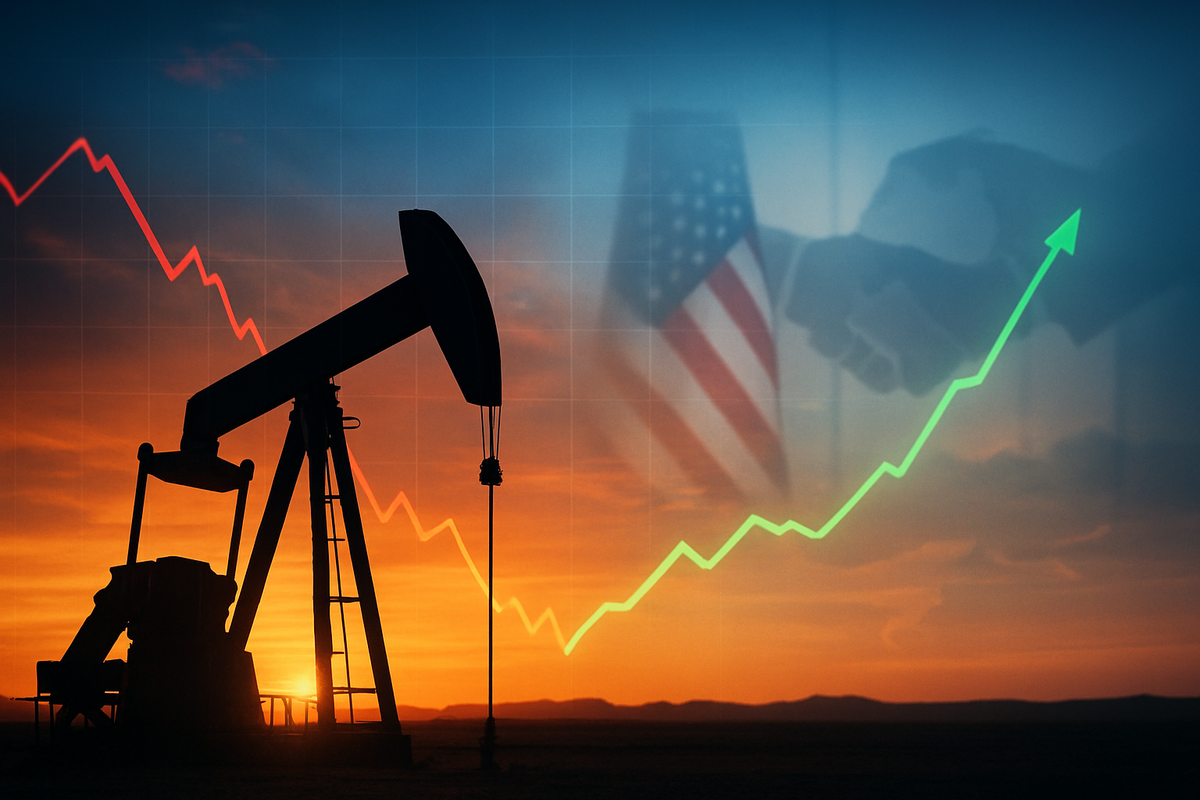
Energy markets experienced a seismic shift on Tuesday, April 14, 2026, as West Texas Intermediate (WTI) crude oil plummeted nearly 8% to settle at $91.20 per barrel. This sharp decline followed growing optimism that a permanent peace deal between the United States and Iran is within reach, potentially bringing an end to the "2026 Iran War" and restoring stability to the volatile Middle Eastern energy corridors. The sudden cooling of prices has provided a much-needed tailwind for the broader stock market, alleviating fears that high energy costs would spark a period of prolonged stagflation.
The immediate implications of this price drop are being felt across Wall Street, where the S&P 500 and the Nasdaq Composite saw significant gains. As the "war premium" evaporates from crude futures, investors are pivoting away from defensive energy plays and toward growth-oriented sectors. This rotation signals a renewed confidence in the global economy's ability to maintain momentum without the drag of triple-digit oil prices, provided the diplomatic breakthrough in the Middle East holds.
A Breakthrough in the "2026 Iran War"
The collapse in oil prices was triggered by official signals from the White House and Iranian leadership indicating that a second round of high-level peace negotiations is being organized, likely to take place in Islamabad, Pakistan. This development follows a fragile two-week ceasefire that was announced on April 7, 2026. Prior to this pause, the conflict had severely disrupted global energy supplies, with the International Energy Agency (IEA) estimating a massive loss of 10.1 million barrels per day in March due to the closure of the Strait of Hormuz.
The timeline leading to this moment has been one of extreme tension. After months of naval skirmishes and economic blockades, the prospect of a permanent treaty has shifted market sentiment from "fear-driven" to "aggressively optimistic." President Trump characterized the conflict as being "very close to being over," a sentiment echoed by reports that Iran is considering a temporary cessation of maritime disruptions to facilitate the peace talks. This diplomatic pivot has acted as a "relief valve" for global supply constraints that many analysts feared would push WTI well over $120 per barrel.
Initial market reactions were swift and decisive. On the day of the price collapse, the Nasdaq Composite (INDEXNASDAQ: .IXIC) rose 1.96%, marking its tenth consecutive day of gains, while the S&P 500 (INDEXSP:.INX) gained 1.18% to close near the historic 7,000 mark. The VIX, often referred to as the market's "fear gauge," dropped to 18.36, indicating that the immediate panic surrounding a broader regional war has begun to subside.
Winners and Losers: A Sectoral Shift
The primary beneficiaries of the $91 oil settlement are the transportation and logistics sectors, which have struggled under the weight of surging fuel costs. The airline industry, in particular, witnessed a massive relief rally. American Airlines (NASDAQ: AAL) surged 8.9%, as the carrier—which lacks a comprehensive fuel-hedging program—is highly sensitive to fluctuations in jet fuel prices. Similarly, Delta Air Lines (NYSE: DAL) and United Airlines (NASDAQ: UAL) saw gains of 10.6% and 4% respectively, with the latter also buoyed by rumors of potential industry consolidation.
Logistics and freight giants also saw their margins expand in the eyes of investors. United Parcel Service (NYSE: UPS) and FedEx (NYSE: FDX) had both faced significant sell-offs in March when oil prices were peaking. The April 14 reversal allowed for a rapid repricing of these firms; lower "uncontrollable" fuel inputs are expected to significantly boost their bottom lines in the coming quarters. Other winners included regional freight operators like J.B. Hunt Transport Services (NASDAQ: JBHT) and Old Dominion Freight Line (NASDAQ: ODFL), both of which saw high single-digit percentage gains.
Conversely, the energy sector acted as the market's primary laggard. Major oil producers like Exxon Mobil (NYSE: XOM) and Chevron (NYSE: CVX) faced immediate selling pressure as the lucrative war-driven margins began to shrink. The Energy Select Sector SPDR ETF (NYSEARCA:XLE) declined by more than 2% during the session. ConocoPhillips (NYSE: COP) also saw institutional outflows as money moved back into technology and consumer discretionary stocks, reflecting a shift away from the "energy hedge" that dominated portfolios in the first quarter of 2026.
Analyzing the Wider Significance
This event fits into a broader global trend of cooling inflation and a potential "soft landing" for the economy. For months, the primary risk to the 2026 economic outlook was a supply-side energy shock that would force central banks to keep interest rates higher for longer. With WTI now back near $91, those stagflationary fears are receding. Deutsche Bank analysts noted that the de-escalation of the U.S.-Iran conflict eases the pressure on the Federal Reserve, potentially opening a window for rate cuts later in the year if inflation continues its downward trajectory.
The ripple effects extend beyond just stock prices; they touch upon the very architecture of global trade. The potential reopening of the Strait of Hormuz would stabilize global shipping lanes that have been rerouted at great expense over the last several months. Historically, sharp oil price drops following geopolitical tensions have often preceded periods of robust consumer spending. Larry Fink, CEO of BlackRock (NYSE: BLK), recently suggested on Mad Money that if the peace deal is finalized, oil could eventually stabilize in the $40–$55 range, providing a permanent "stimulus check" to the global consumer.
Furthermore, this shift represents a pivot in geopolitical risk assessment. For the past decade, the "Iran risk" has been a persistent variable in energy modeling. A permanent peace deal would not only remove a major source of market volatility but could also lead to the reintegration of Iranian crude into the global market, further increasing supply and potentially putting a long-term cap on oil prices. This would fundamentally alter the strategic planning of OPEC+ and non-OPEC producers alike.
What Comes Next: Diplomacy and Delivery
In the short term, the market will be hyper-focused on the details emerging from the Islamabad negotiations. While the 8% drop in oil reflects high expectations, any sign of a breakdown in talks could lead to a violent reversal in prices. Investors will be watching for a definitive agreement regarding the Strait of Hormuz and a timeline for the lifting of energy sanctions. Strategic pivots will be required from energy companies, many of which had ramped up production or exploration under the assumption of a "high-for-longer" price environment.
Long-term possibilities include a restructuring of the global energy map. If Iran becomes a stable contributor to the global oil supply, the reliance on other high-cost production regions may diminish. This could accelerate the transition of capital toward green energy initiatives, as the "energy security" argument for fossil fuels loses its immediate urgency. Market opportunities may emerge in the consumer discretionary sector, as lower gas prices translate into higher disposable income for households during the summer travel season.
The ultimate success of this market rally depends on the transition from a temporary ceasefire to a permanent, verifiable peace treaty. Scenarios range from a full diplomatic normalization, which could see WTI fall toward $60, to a "frozen conflict" where prices remain volatile near the $85–$95 range. Analysts will be closely monitoring satellite imagery of oil tankers and diplomatic rhetoric for any signs of the deal's fragility.
Summary and Investor Outlook
The decline of WTI crude to $91 per barrel marks a potential turning point for the 2026 financial landscape. The primary takeaways are the significant relief provided to fuel-dependent industries like airlines and logistics, and the broader psychological boost to an equity market that had been weighed down by geopolitical uncertainty. While energy producers are seeing their recent gains trimmed, the overall health of the market appears to be improving as the threat of an energy-driven recession fades.
Moving forward, the market is likely to remain in a "wait-and-see" mode regarding the U.S.-Iran negotiations. Investors should watch for the expiration of the current ceasefire on April 21, as this will be the first major test of the diplomatic breakthrough. If the peace process remains on track, the tailwind for the broader market could extend well into the second half of the year, supporting a continued rally in the S&P 500 and the Nasdaq.
In the coming months, the focus will shift from "geopolitical hedging" back to "fundamental earning." With the energy tax on the economy being lifted, the strength of the consumer and corporate earnings growth will once again take center stage. For now, the "Islamabad Breakthrough" represents a beacon of hope for a market that has been navigating through a storm of global instability.
This content is intended for informational purposes only and is not financial advice.