As prediction markets move from the fringes of the internet to the center of the American financial landscape, a new battle is brewing over the integrity of the information they produce. On January 9, 2026, Representative Ritchie Torres (D-NY) introduced the Public Integrity in Financial Prediction Markets Act of 2026 (H.R. 7004), a landmark bill designed to prohibit federal officials from trading on non-public information. The legislation has found an enthusiastic, if strategic, ally in Tarek Mansour, the CEO of Kalshi, who views the bill not just as a regulatory necessity, but as a crucial step in fulfilling the industry's destiny as an "antidote" to misinformation.
Despite the high-profile support from tech leaders and over 30 Democratic co-sponsors—including Speaker Emerita Nancy Pelosi—traders remain deeply skeptical that the bill will clear a divided Congress during a tumultuous midterm election year. On the political forecasting platform PredictIt, the market for "Will H.R. 7004 pass in 2026?" is currently trading at just 12 cents, implying a meager 12% probability of success. Nevertheless, the debate surrounding the bill has ignited a conversation about the "InfoFi" (Information Finance) sector’s ability to serve as a definitive source of unbiased truth.
The Market: What's Being Predicted
The primary market under the microscope is the legislative fate of H.R. 7004. While the bill itself is the subject of intense lobbying, traders are using multiple platforms to hedge their bets on the future of prediction market regulation.
- PredictIt: The "Will H.R. 7004 pass in 2026?" contract has seen steady volume since the bill’s introduction, but prices have struggled to break above the 15-cent mark.
- Kalshi: While Kalshi does not host a contract on the specific bill (avoiding a potential conflict of interest), it has listed a proxy market: "Will the CFTC adopt new insider trading rules by year-end?" This contract is currently trading at a 20% probability, suggesting that traders see administrative action by the Commodity Futures Trading Commission as more likely than a formal act of Congress.
- Manifold: On the decentralized front, traders are betting on "Federal Preemption," with an 81% probability that federal law will eventually override state-level bans. This suggests that while H.R. 7004 might fail, some form of federal legitimization is viewed as an inevitability.
The resolution criteria for these markets typically require the bill to be signed into law by the President or for the CFTC to finalize a rule in the Federal Register by December 31, 2026.
Why Traders Are Betting
The sudden urgency for H.R. 7004 was triggered by what has become known in trading circles as the "Maduro Trade." In early January 2026, an anonymous account on the decentralized platform Polymarket placed a $32,000 bet that Venezuelan President Nicolás Maduro would be ousted. Hours later, a U.S.-led special forces operation resulted in his capture. The trader netted over $400,000, sparking a firestorm of allegations that the bet was placed with material non-public information.
"This was the smoking gun," says one high-volume trader on PredictIt. "If someone can bet on a military raid before the public knows about it, the market isn't a forecast—it's a leak. That’s what is driving the 12% odds. People want the ban, but they don't think Congress can move fast enough to stop the 'leakers' who might be sitting in the very rooms where these decisions are made."
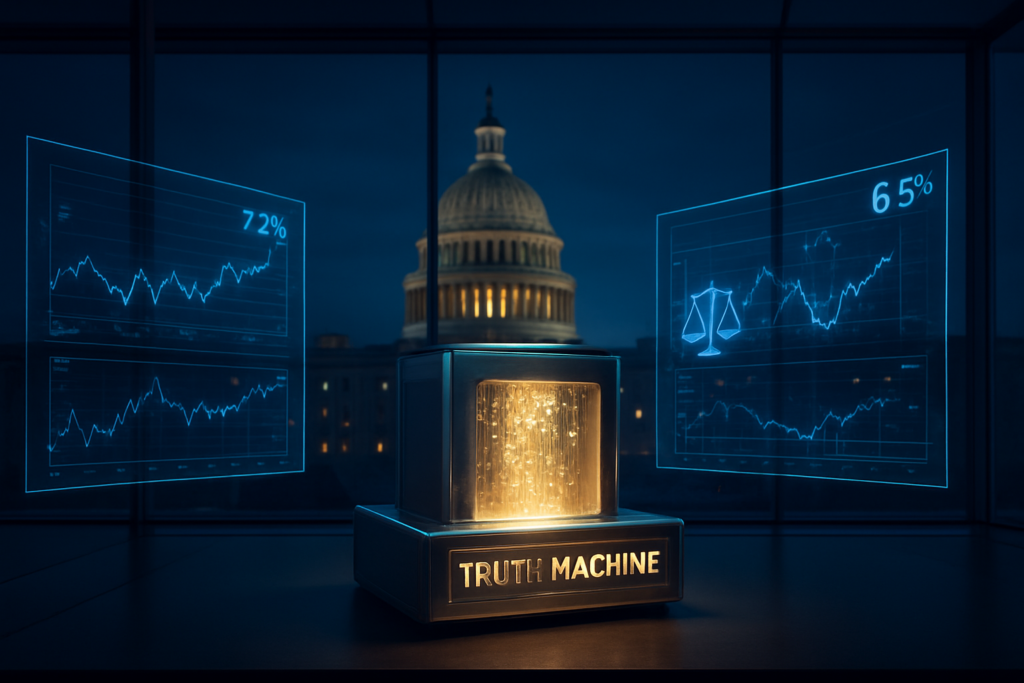
Public companies are also entering the fray. Interactive Brokers (NASDAQ: IBKR), through its affiliate exchange ForecastEx, has emerged as a vocal proponent of the legislation. By establishing federal guardrails, IBKR aims to transition prediction markets from "casinos" to "Truth Machines" that institutional investors can trust. Similarly, Robinhood (NASDAQ: HOOD) has voiced support for the bill as it expands its own "Prediction Markets Hub," seeking a stable regulatory environment to compete with offshore giants.
Broader Context and Implications
Tarek Mansour’s support for the bill is central to his vision for Kalshi. He has repeatedly described prediction markets as the ultimate "antidote to misinformation." In his view, the "skin in the game" required to trade forces a level of honesty that traditional polling and media narratives cannot replicate. By supporting a ban on political insider trading, Mansour is attempting to shield the "purity" of the data.
"Kalshi is supportive of the bill Ritchie Torres is looking to introduce… because we already implement it," Mansour stated in a recent public address. He argues that for prediction markets to serve as a source of unbiased truth, they must be free from the distortion of "governing for profit."
This push for regulation marks a significant divide in the industry. While regulated U.S. exchanges like Kalshi and ForecastEx seek to align with federal law, decentralized platforms have historically operated in a gray area. However, even the broader crypto ecosystem is leaning toward cooperation. Coinbase (NASDAQ: COIN) is currently lobbying for the Digital Asset Market CLARITY Act, which shares many of the same goals as H.R. 7004: providing a clear federal framework that would legitimize the sector. Even Intercontinental Exchange (NYSE: ICE), the parent company of the New York Stock Exchange, is watching closely after making a significant investment in the sector late last year.
What to Watch Next
The next major milestone for H.R. 7004 will be its first hearing in the House Financial Services Committee, expected in late February. Traders will be looking for signs of bipartisan support; if the bill picks up Republican co-sponsors, the PredictIt odds could see a significant "step up" toward the 30-40 cent range.
Additionally, keep a close eye on the CFTC’s upcoming open meetings. If the Commission moves to preemptively issue a "Notice of Proposed Rulemaking" regarding event contracts and insider trading, it could effectively render H.R. 7004 redundant, causing those legislative markets to collapse while the "CFTC Rules" proxy markets on Kalshi spike.
Finally, the behavior of "whales"—large-volume traders—on platforms like Polymarket will continue to serve as a catalyst. Any further "suspicious" windfalls tied to government action will likely increase the political pressure on Congress to act, potentially turning H.R. 7004 from a 12% long shot into a front-burner priority.
Bottom Line
The battle over H.R. 7004 represents a maturation point for the prediction market industry. Whether the bill passes or not, the "Truth Machine" narrative championed by Tarek Mansour is winning the cultural war. The market’s 12% probability of passage isn't a reflection of the bill's popularity, but rather a cynical (and often accurate) assessment of Congressional gridlock.
Ultimately, the support from CEOs like Mansour and major financial players like Interactive Brokers (NASDAQ: IBKR) suggests that the era of the "unregulated wild west" in prediction markets is drawing to a close. If these platforms are to fulfill their promise as an antidote to misinformation, they must first prove they can keep the insiders out of the game.
This article is for informational purposes only and does not constitute financial or betting advice. Prediction market participation may be subject to legal restrictions in your jurisdiction.
PredictStreet focuses on covering the latest developments in prediction markets. Visit the PredictStreet website at https://www.predictstreet.ai/.