As 2025 draws to a close, a series of sobering year-end reports have confirmed a long-feared structural shift in the global labor market. According to the latest data from Challenger, Gray & Christmas and corroborated by the Forbes AI Workforce Report, artificial intelligence was explicitly cited as the primary driver for over 50,000 job cuts in the United States this year alone. Unlike the broad tech layoffs of 2023 and 2024, which were largely attributed to post-pandemic over-hiring and high interest rates, the 2025 wave is being defined by "The Great Agentic Displacement"—a surgical removal of entry-level white-collar roles as companies transition from human-led "copilots" to fully autonomous AI agents.
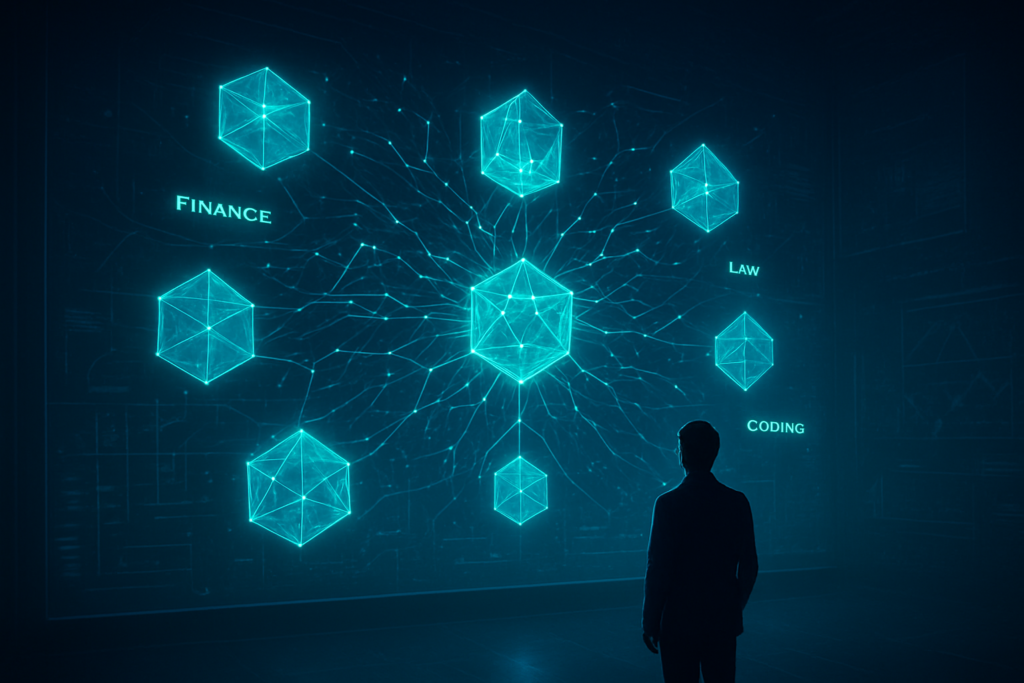
This shift marks a critical inflection point in the AI revolution. For the first time, the "intelligence engine" is no longer just assisting workers; it is beginning to replace the administrative and analytical "on-ramps" that have historically served as the training grounds for the next generation of corporate leadership. With nearly 5% of all 2025 layoffs now directly linked to AI deployment, the industry is witnessing the practical realization of "digital labor" at scale, leaving fresh graduates and junior professionals in finance, law, and technology facing a fundamentally altered career landscape.
The Rise of the Autonomous Agent: From Chatbots to Digital Workers
The technological catalyst for this displacement is the maturation of "Agentic AI." Throughout 2025, the industry moved beyond simple Large Language Models (LLMs) that require constant human prompting to autonomous systems capable of independent reasoning, planning, and execution. Leading the charge was OpenAI’s "Operator" and Microsoft (NASDAQ: MSFT) with its refined Copilot Studio, which allowed enterprises to build agents that don't just write emails but actually navigate internal software, execute multi-step research projects, and debug complex codebases without human intervention. These agents differ from 2024-era technology by utilizing "Chain-of-Thought" reasoning and tool-use capabilities that allow them to correct their own errors and see a task through from inception to completion.
Industry experts, including Anthropic CEO Dario Amodei, had warned earlier this year that the leap from "assistive AI" to "agentic AI" would be the most disruptive phase of the decade. Unlike previous automation cycles that targeted blue-collar repetitive labor, these autonomous agents are specifically designed to handle "cognitive routine"—the very tasks that define junior analyst and administrative roles. Initial reactions from the AI research community have been a mix of technical awe and social concern; while the efficiency gains are undeniable, the speed at which these "digital employees" have been integrated into enterprise workflows has outpaced most labor market forecasts.
Corporate Strategy: The Pivot to Digital Labor and High-Margin Efficiency
The primary beneficiaries of this shift have been the enterprise software giants who have successfully monetized the transition to autonomous workflows. Salesforce (NYSE: CRM) reported that its "Agentforce" platform became its fastest-growing product in company history, with CEO Marc Benioff noting that AI now handles up to 50% of the company's internal administrative workload. This efficiency came at a human cost, as Salesforce and other tech leaders like Amazon (NASDAQ: AMZN) and IBM (NYSE: IBM) collectively trimmed thousands of roles in 2025, explicitly citing the ability of AI to absorb the work of junior staff. For these companies, the strategic advantage is clear: digital labor is infinitely scalable, operates 24/7, and carries no benefits or overhead costs.
This development has created a new competitive reality for major AI labs and tech companies. The "Copilot era" focused on selling seats to human users; the "Agent era" is increasingly focused on selling outcomes. ServiceNow (NYSE: NOW) and SAP have pivoted their entire business models toward providing "turnkey digital workers," effectively competing with traditional outsourcing firms and junior-level hiring pipelines. This has forced a massive market repositioning where the value of a software suite is no longer measured by its interface, but by its ability to reduce headcount while maintaining or increasing output.
A Hollowing Out of the Professional Career Ladder
The wider significance of the 2025 job cuts lies in the "hollowing out" of the traditional professional career ladder. Historically, entry-level roles in sectors like finance and law served as a vital apprenticeship period. However, with JPMorgan Chase (NYSE: JPM) and other banking giants deploying autonomous "LLM Suites" that can perform the work of hundreds of junior research analysts in seconds, the "on-ramp" for young professionals is vanishing. This trend is not just about the 50,000 lost jobs; it is about the "hidden" impact of non-hiring. Data from 2025 shows a 15% year-over-year decline in entry-level corporate job postings, suggesting that the entry point into the middle class is becoming increasingly narrow.
Comparisons to previous AI milestones are stark. While 2023 was the year of "wow" and 2024 was the year of "how," 2025 has become the year of "who"—as in, who is still needed in the loop? The socio-economic concerns are mounting, with critics arguing that by automating the bottom of the pyramid, companies are inadvertently destroying their future leadership pipelines. This mirrors the broader AI landscape trend of "efficiency at all costs," raising urgent questions about the long-term sustainability of a corporate model that prioritizes immediate margin expansion over the development of human capital.
The Road Ahead: Human-on-the-Loop and the Skills Gap
Looking toward 2026 and beyond, experts predict a shift from "human-in-the-loop" to "human-on-the-loop" management. In this model, senior professionals will act as "agent orchestrators," managing fleets of autonomous digital workers rather than teams of junior employees. The near-term challenge will be the massive upskilling required for the remaining workforce. While new roles like "AI Workflow Designer" and "Agent Ethics Auditor" are emerging, they require a level of seniority and technical expertise that fresh graduates simply do not possess. This "skills gap" is expected to be the primary friction point for the labor market in the coming years.
Furthermore, we are likely to see a surge in regulatory scrutiny as governments grapple with the tax and social security implications of a shrinking white-collar workforce. Potential developments include "automation taxes" or mandated "human-centric" hiring quotas in certain sensitive sectors. However, the momentum of autonomous agents appears unstoppable. As these systems move from handling back-office tasks to managing front-office client relationships, the definition of a "white-collar worker" will continue to evolve, with a premium placed on high-level strategy, emotional intelligence, and complex problem-solving that remains—for now—beyond the reach of the machine.
Conclusion: 2025 as the Year the AI Labor Market Arrived
The 50,000 job cuts recorded in 2025 will likely be remembered as the moment the theoretical threat of AI displacement became a tangible economic reality. The transition from assistive tools to autonomous agents has fundamentally restructured the relationship between technology and the workforce, signaling the end of the "junior professional" as we once knew it. While the productivity gains for the global economy are projected to be in the trillions, the human cost of this transition is being felt most acutely by those at the very start of their careers.
In the coming weeks and months, the industry will be watching closely to see how the education sector and corporate training programs respond to this "junior crisis." The significance of 2025 in AI history is not just the technical brilliance of the agents we created, but the profound questions they have forced us to ask about the value of human labor in an age of digital abundance. As we enter 2026, the focus must shift from how much we can automate to how we can build a future where human ingenuity and machine efficiency can coexist in a sustainable, equitable way.
This content is intended for informational purposes only and represents analysis of current AI developments.
TokenRing AI delivers enterprise-grade solutions for multi-agent AI workflow orchestration, AI-powered development tools, and seamless remote collaboration platforms.
For more information, visit https://www.tokenring.ai/.